The History
In the spring of 1986, the superhero myth underwent a hostile corporate takeover. Before the publication of Batman: The Dark Knight Returns, the Caped Crusader existed in a vacuum of primary colors and weightless camp—a relic of the Silver Age that felt increasingly out of step with the jagged, neon-lit cynicism of the mid-1980s. Author and artist Frank Miller executed a surgical, industrial redesign of the asset’s structural ecosystem. Miller recognized that for a mythic figure to survive a decade defined by urban decay, Cold War paranoia, and institutional rot, he couldn’t operate as a simple man in a costume; he had to function as an architectural force. The production stripped away weightless comic styling and replaced it with the cold, heavy-metal weight of urban brutalism. By anchoring Bruce Wayne’s physical chassis to the asphalt, the narrative transformed Batman into a creature of physics, trauma, and structural engineering. The suit was re-engineered as a high-tensile containment unit, featuring a wide, blocky Bat-symbol designed as a reinforced armor plate to draw gunfire toward the strongest point of the cowl. This era also introduced the Bat-Tank—a three-lane-wide riot control beast that bridged the gap between a classic detective vehicle and heavy paramilitary hardware, establishing the direct blueprint for modern cinematic adaptations.
The Numbers
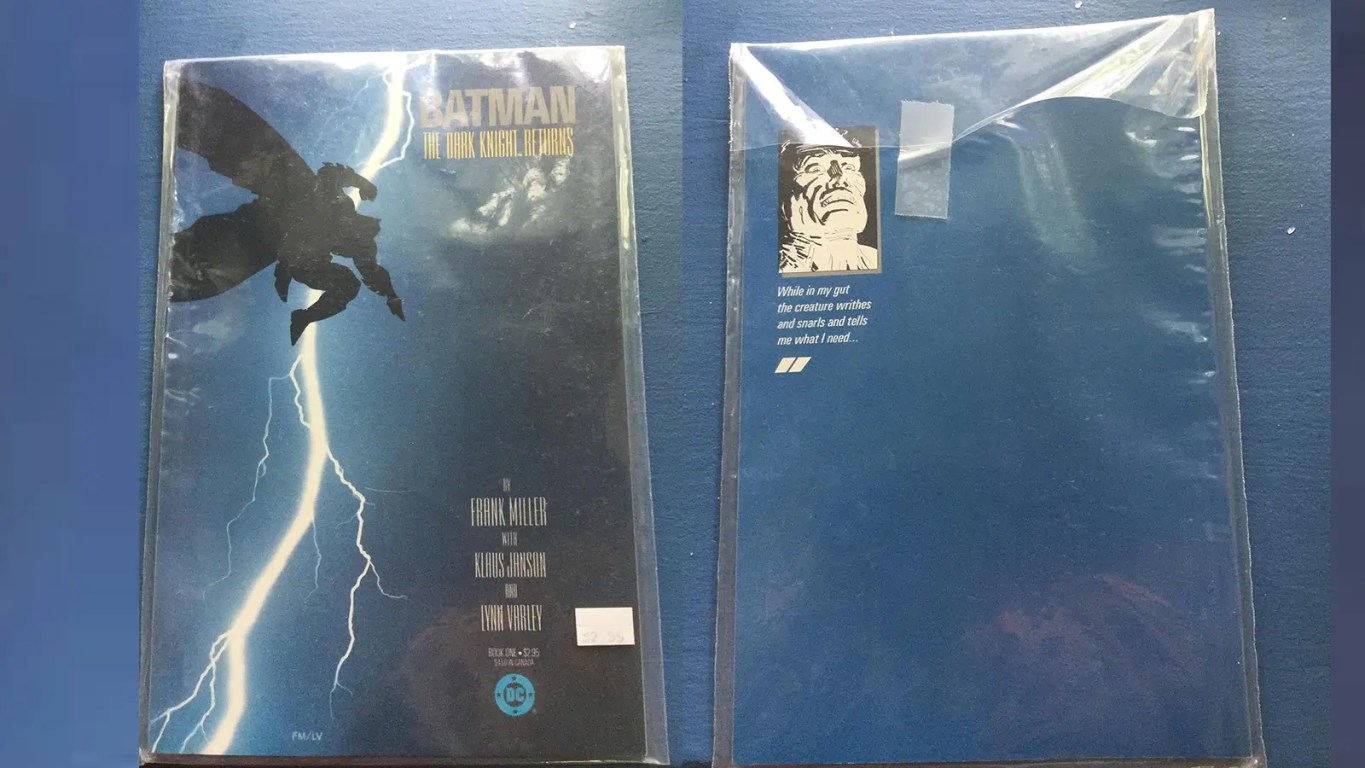
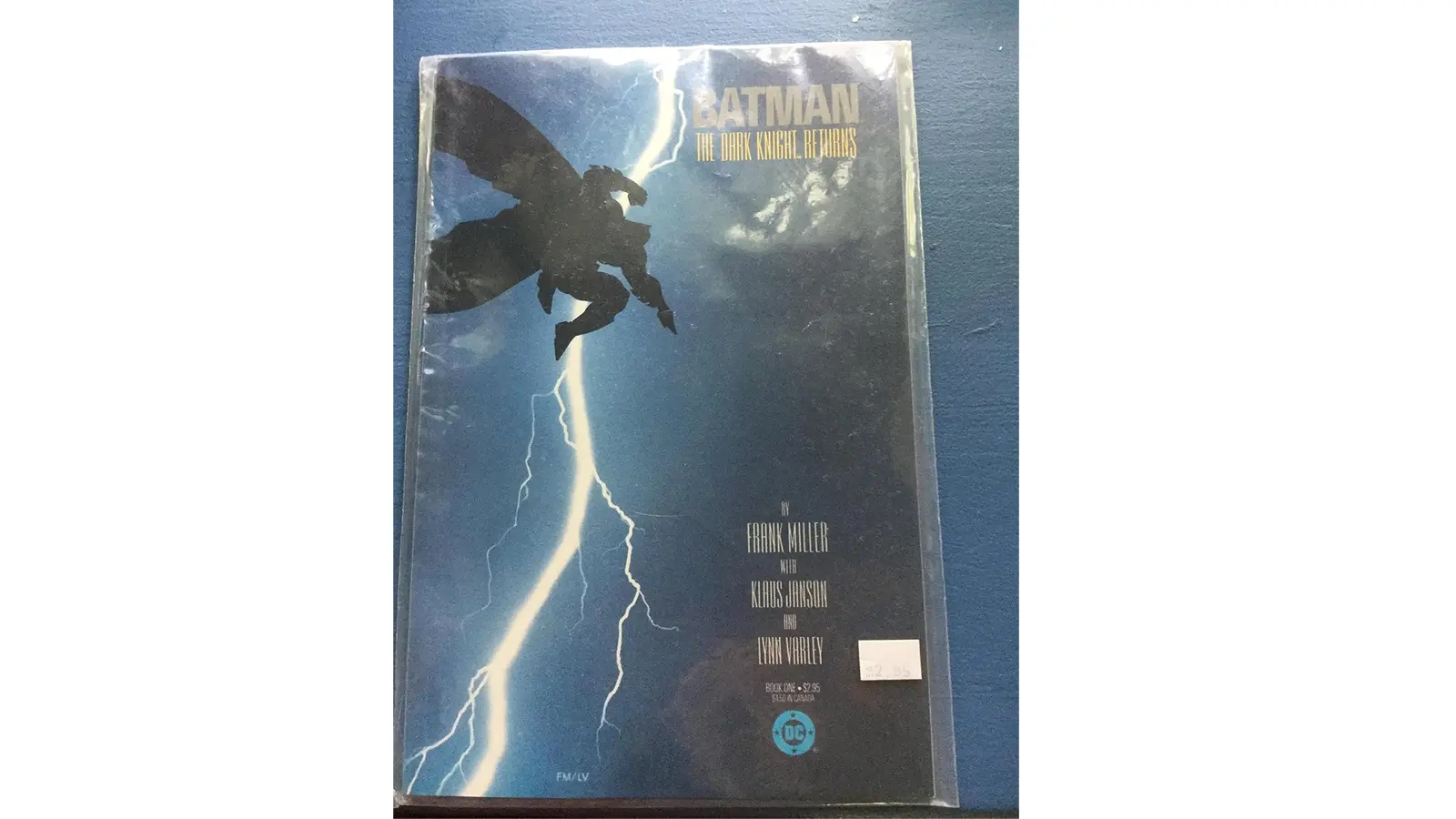
The technical print specifications and financial data architecture for The Dark Knight Returns represent a historic benchmark in the monetization of graphic literature. Originally deployed at a premium unit price of $2.95 per issue across a four-part prestige format, the initial cycle operated as a high-risk corporate pivot, doubling the cost of standard newsstand books to target an adult-tier consumer demographic. The initial 1986 print run shattered traditional sales metrics, moving over 1 million units and proving that the medium could be distributed as a high-value commodity rather than a disposable asset. This foundational blueprint served as the direct infrastructure for the 2012 multi-part animated film adaptation, which was budgeted as a sleek field test and generated over $5.8 million in localized domestic home video sales. Today, the inflation-adjusted equity added to the broader intellectual property by the 1986 Miller Shift exceeds an estimated $350 million, while the modern cinematic eras directly derived from this dark, tank-heavy industrial aesthetic have collectively generated over $5.0 billion in global box office revenue. For modern film and print preservationists, original first-edition printings of Issue 1 command a premium valuation of $150.00 USD, while standard anniversary archival volumes consistently track at $30.00 USD across secondary collector nodes.
The Verdict
“A monumental, concrete-heavy masterpiece that permanently shattered the boundaries of sequential art. By completely swapping weightless Silver Age tropes for rigid brutalist architecture and heavy military-grade physics, Miller constructed an immortal industrial legacy that serves as the definitive structural foundation for modern pop culture mythmaking.”
The Blueprint

Photo: Wikipedia
The Archival Staple
DISCLOSURE: This post contains affiliate links. If you make a purchase through these links, Decked Out may earn a small commission which helps support our independent research and reporting

Batman – The Dark Knight Returns 1+2 (Blu-Ray)
Photo: Amazon
And a preview of the future…or the past.