
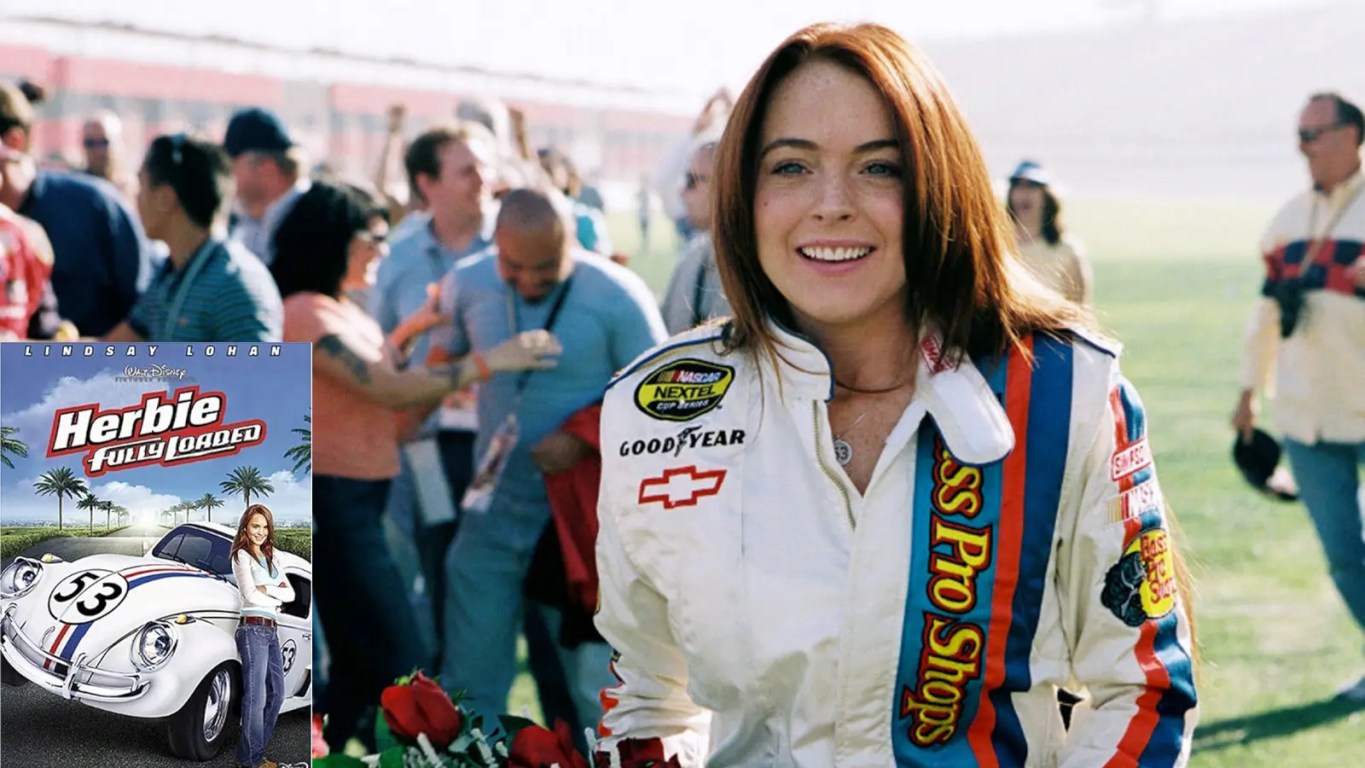
- Status: Hardware Audit / Production Profile
- Subject: Herbie: Fully Loaded (Disney)
- Release Date: June 22, 2005
- Lead Hardware: 1963 Volkswagen Beetle L87 (Pearl White)
In 2005, Disney faced a massive technical hurdle: how do you realistically place a 40-year-old, air-cooled economy car into a 190 mph NASCAR pack without it looking like a cartoon? Herbie: Fully Loaded was the answer—a production that blended old-school hot-rodding with cutting-edge animatronics to give Number 53 a modern performance floor. For Lindsay Lohan, it was a high-octane farewell to her Disney era, filmed amidst 250,000 real-world race fans at the California Speedway.
RELATED: [THE FILES] 046 | Archive: Get a Clue (2002)
Table of Contents
The Racing Specs: The FAT Performance ‘Type 1’ Build
While the “street” Herbies were standard 1.6L bugs, the NASCAR-spec cars were legitimate racing machines engineered for high-speed tracking.
- The Powerplant: The three “Race Herbies” were powered by FAT Performance 2332 cc Type 1 race motors. Featuring dual 48IDF Weber carburetors and a 10.5:1 compression ratio, these air-cooled 4-cylinder engines were tuned to push 190 horsepower—nearly six times the power of a stock 1963 Beetle.
- The Chassis Rig: To handle the banked turns of Auto Club Speedway, the car was built on a 2-inch steel tube subframe with a full 1.5-inch roll cage. The suspension utilized FOX nitrogen coilovers and Sway-Away torsion bars to keep the 13-inch rims and Goodyear medium compound race tires glued to the asphalt at 130+ mph.
- The Fleet: The production managed a massive inventory of 38 different Herbies. This included “Junk Herbies” for the demolition derby, “Street Herbies,” and highly specialized animatronic cars used for close-up performance work.
The Animatronic Hardware: Physical Personality
Before the industry shifted entirely to CGI, Herbie: Fully Loaded utilized sophisticated practical rigs to make the car “emote.”
- Mechanical Expressions: The special effects team developed an animatronic headlight system that could tilt and “blink,” along with a flexible front bumper that could “smile” or “frown.” These were operated by off-camera technicians via remote control, allowing Lohan to interact with a physical, responsive co-star on set.
- Sound Engineering: Sound designers avoided generic engine noises, instead layering authentic flat-four VW notes with a customized library of mechanical “breaths” and “sighs,” giving the hardware a sub-vocal personality without the need for dialogue.
The Production Log: High-Stakes NASCAR Access
The technical authenticity of Herbie: Fully Loaded relied on Disney’s unprecedented access to NASCAR events.
- The Real Crowd: The film’s racing climax was shot during the Pop Secret 500 at California Speedway. The production had to coordinate with NASCAR officials to film Herbie on the actual track in front of 250,000 fans, utilizing a specialized camera car to capture Number 53 drafting alongside the real V8 stock cars of Jeff Gordon and Jimmie Johnson.
- The Casting: Lindsay Lohan underwent specialized driving lessons to handle the race-prepped VW, though most of the high-speed maneuvers were handled by professional stunt drivers behind the wheel of the FAT Performance-spec bugs.
The Digital Rig: Herbie: Fully Loaded (Game Boy Advance)
Released alongside the film in June 2005, the video game adaptation was a hardware-exclusive title developed by Climax Handheld Games and published by Buena Vista Games. Unlike the cinematic version, which relied on high-fidelity NASCAR realism, the GBA title functioned as a pocket-sized arcade racer designed to maximize the limited processing power of the 32-bit handheld.
Conclusion: The Last Stand of Practical Magic
Herbie: Fully Loaded stands as a pivotal moment in the “Hardware” timeline of 2000s cinema. It was one of the final major studio productions to prioritize heavy mechanical modification and physical animatronics over a purely digital character. By grounding a 1963 Beetle in the high-stakes reality of NASCAR, the film successfully re-engineered a relic of the past into a high-performance icon of the present.
The Archival Staple
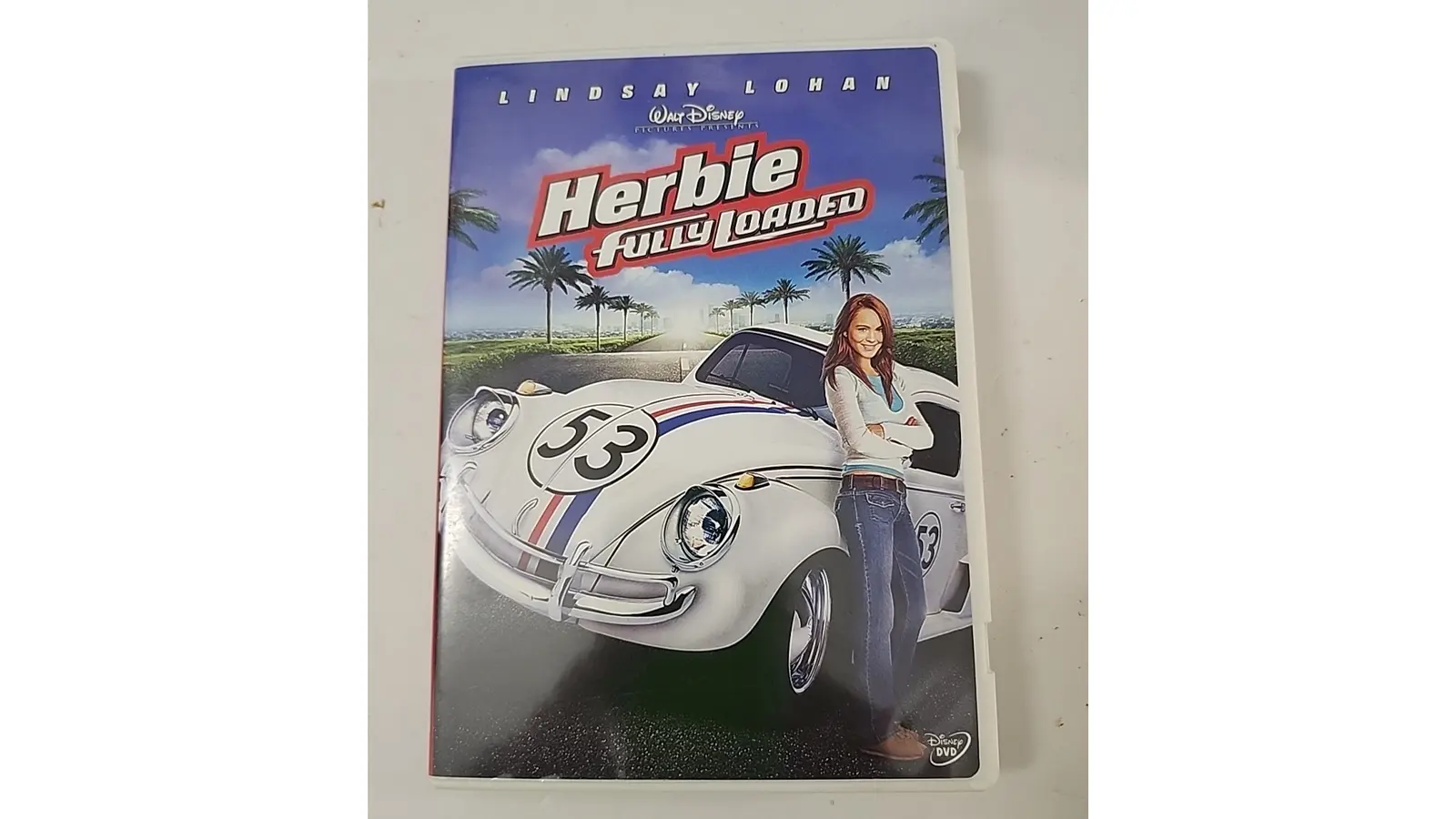
*As an eBay partner, we earn commission from this link, which allows us to keep expanding our library.*
Featured Photo: Disney
RELATED: [THE FILES] 079 | The Technical Profile of ‘The Fast and the Furious’ (2001)
Author Bio
Jael Rucker is the founder of Decked Out Magazine. She has previously worked as the Associate Commerce Editor at PureWow, focusing on analytics and trends to pitch stories and optimize articles that build and engage their audience. Her work has also been seen in Footwear News and WWD. Prior to 2024, she was the style and pop culture editor at ONE37pm for over three years, contributing numerous product reviews, brand profiles and fashion trend reports, which included interviewing Steph Curry, Snoop Dogg and more.
![[THE FILES] 236 : Exit Wounds (2001)](https://deckedoutmagazine.com/wp-content/uploads/2026/06/exit_wounds_movie_history_hero.webp)

![[THE FILES] 235 : Antitrust (2001)](https://deckedoutmagazine.com/wp-content/uploads/2026/06/anti_trust_movie_hero_image.webp)
![[THE FILES] 234 : The Replacement Killers (1998)](https://deckedoutmagazine.com/wp-content/uploads/2026/06/the_replacement_killers_hero_image.webp)