- File Status: Open
- Date: June 17, 1998
- Subject: Szechuan Sauce, Secret Heroes, and the 1998 Motorola Pager
While Mulan was a technical milestone for Disney’s Florida studio, the marketing campaign was a high-stakes masterclass in cross-brand promotional efforts. In 1998, Disney didn’t just sell a movie; it sold a lifestyle across fast-food, toy aisles, and even the burgeoning pager market. It was an era of synergy that created artifacts still hunted by collectors in 2026.
Let’s round out our Mulan file series with a look at the film’s promotional efforts.
RELATED: [THE FILES] 070 | Mulan (1998): The Technical Blueprint of a Dynasty
Table of Contents
The ‘Szechuan Sauce’ Anomaly
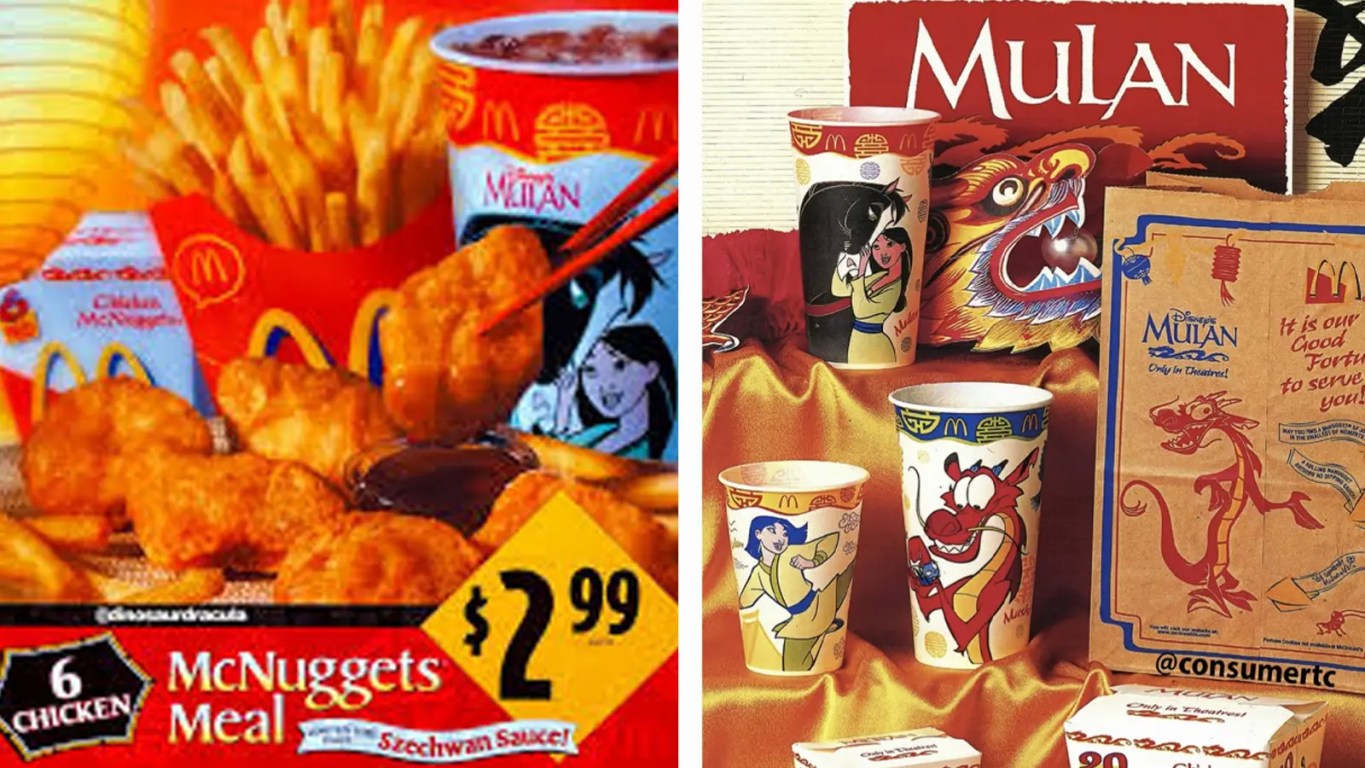
On June 17, 1998, McDonald’s released what was meant to be a transient promotional dip.
- The Promotion: Part of a “Chicken McNuggets Happy Meal,” the sauce was paired with eight unique toys, including a wind-up Mushu and a “Great Wall” dragon.
- The Long Tail: Decades before it became a Rick and Morty plot point, the sauce represented McDonald’s first major pivot toward “Asian-inspired” promotional hardware. Today, the original 1998 packets are treated as museum-grade artifacts by pop-culture collectors.
The ‘Secret Hero’ Mattel Tech

Photo: eBay
Mattel’s toy line focused on Mulan’s “Dual Identity” through literal mechanical features, moving away from static dolls to interactive Hardware:
- The Hair-Cut Doll: A technical feat for 1998, the Secret Hero Mulan featured hair that could be physically “cut” (removed) and then retracted/regrown to mirror her transformation in the film.
- Matchmaker Magic: Utilizing heat-activated tech, cold water revealed Mulan’s matchmaker makeup, while warm water washed it away—a tactile recreation of the “Reflection” sequence.
Note: You can shop the doll here.
Interactive Hardware: Disney’s Animated StoryBook
Released in 1998 for PC and Mac, Disney’s Animated StoryBook: Mulan was the final title in Disney’s iconic interactive story series.
- The Tech: The game utilized a point-and-click engine that allowed kids to navigate through “Story Scrolls” lost by Mushu. For many, this was their first encounter with “Digital Paper”—an interactive environment where users could click on background elements (like the Fa family shrine) to trigger high-quality animations.
- The Imperial Storymaker: The “Print Studio” allowed users to design their own scrolls and fans, essentially serving as a 1998 desktop publishing kit for the younger demographic. It bridged the gap between passive viewing and active content creation.
The Cereal ‘Hardware’: Quaker & Cap’n Crunch
In one of the most memorable cereal partnerships of the late 90s, Disney tapped Quaker (specifically the Cap’n Crunch line) to handle the breakfast-table hardware.
- 3D Bookmarks: Every specially marked box of Cap’n Crunch contained a character bookmark featuring 3D lenticular technology—a “High-Tech” paper solution for 1998.
- The Mushu Alarm Clock: Perhaps the holy grail of the campaign, fans could mail in proofs-of-purchase to receive a Mushu Travel Alarm Clock. It was a functional piece of hardware that brought Eddie Murphy’s character into the bedroom as a literal wake-up call, cementing the film’s presence in the daily lives of millions of kids.
Conclusion: The Commercial Legacy
The marketing for Mulan wasn’t just about selling tickets; it was about embedding the character into the daily lives of a global audience. From the taste of a nugget sauce to the “Print Studio” on a family PC, Disney created a web of hardware that ensured Mulan remained relevant long after its theatrical run ended.
Featured Photo: McDonald’s
RELATED: [THE FILES] 065 |Finding Nemo (2003): The Ultimate Rendering of an Ocean
Author Bio
Jael Rucker is the founder of Decked Out Magazine. She has previously worked as the Associate Commerce Editor at PureWow, focusing on analytics and trends to pitch stories and optimize articles that build and engage their audience. Her work has also been seen in Footwear News and WWD. Prior to 2024, she was the style and pop culture editor at ONE37pm for over three years, contributing numerous product reviews, brand profiles and fashion trend reports, which included interviewing Steph Curry, Snoop Dogg and more.


![[THE FILES] 193: Lupe Fiasco — Kick, Push (2006)](https://deckedoutmagazine.com/wp-content/uploads/2026/05/Lupe_fiasco_kick_pushy_hero_image-2000x1116.webp)