- File Status: Open
- Date: June 19, 1998
- Subject: The Attila Engine and the ‘Faux Plane’ Architecture
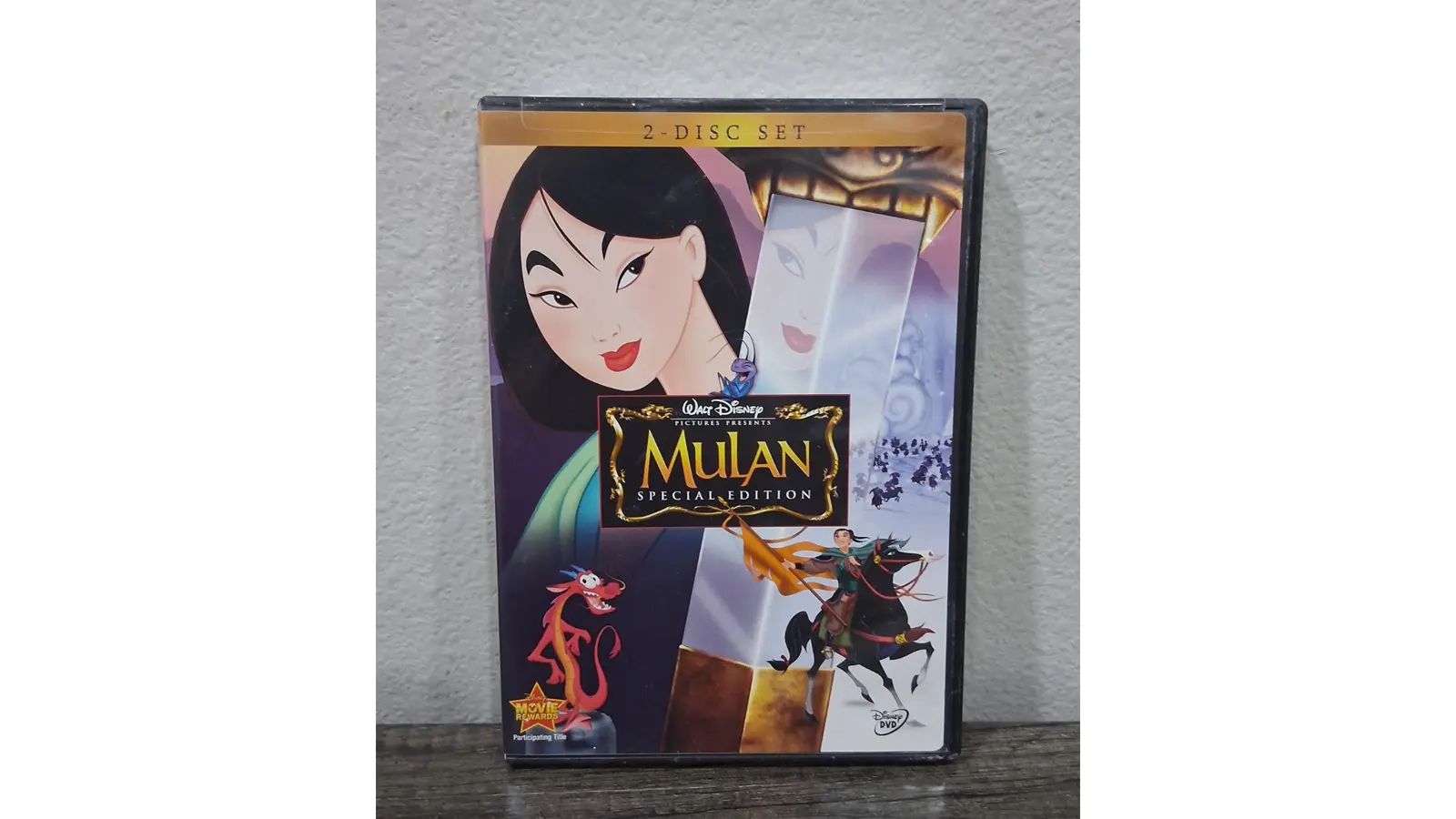
While the Disney Renaissance is celebrated for its musical peaks, Mulan (1998) stands as a masterclass in visual hardware. Led by artistic supervisor Hans Bacher, the film intentionally abandoned the lush, rounded aesthetic of The Lion King for a style inspired by Ming and Qing Dynasty paintings—prioritizing negative space, poetic simplicity and a “flat” graphic power.
You know what this means, right? Mulan is the next file entry in our library.
RELATED: [THE FILES] 065 |Finding Nemo (2003): The Ultimate Rendering of an Ocean
Table of Contents
The ‘Attila’ Engine: Managing the Hun Charge
The most technically daunting sequence in the film—the Hun charge down the mountain—required equipment that didn’t exist. To solve that problem, Disney’s Florida team developed Attila.
- Proprietary Crowds: Building on the flocking tech from The Lion King, Attila allowed animators to populate the screen with thousands of unique Huns. Unlike previous systems, Attila featured a “Mix and Match” system, allowing artists to randomize horse types, riders, armor, and weapons so the army never looked like a repeating loop.
- Granular Control: The software allowed for “editability down to the minute detail.” An animator could pluck a single Hun out of a crowd of 2,000 and change his path without breaking the simulation.
Faux Plane: The 2.5D Revolution
To create the vast landscapes of the Great Wall and the Imperial City, Disney developed Faux Plane.
- The Tech: It allowed 2D hand-painted “cards” to be projected onto 3D planes. This created a “multi-plane” effect on steroids, allowing the camera to pull back or sweep through ancient cities while maintaining the flat, painterly texture of Chinese art.
- 2D in 3D Space: Even the smoke trails from the fire-lance rockets were technical hybrids—2D artwork mapped onto 3D tubes to ensure they felt “graphic” but moved with physical weight.
The Mannerisms
Mulan herself was built through observation, as the animators noticed that Ming-Na Wen would frequently touch her hair during recording sessions. They then integrated this specific physical tick into Mulan’s animation, providing the character with a grounded, human vulnerability that contrasted with her warrior ping persona.
The Soundtrack: Jerry Goldsmith and the Pop Pivot
The music of Mulan was a technical bridge between classic orchestral scores and the burgeoning “Pop-Disney” era.
- The Score: Composed by Jerry Goldsmith, the score utilized authentic Chinese instrumentation—including the erhu and dizi—blended with a traditional 90-piece orchestra. It was nominated for an Academy Award for Best Original Musical or Comedy Score.
- The Breakthrough: While Matthew Wilder and David Zippel handled the songs (including the iconic “I’ll Make a Man Out of You”), the film served as the launchpad for Christina Aguilera, as her version of “Reflection” peaked at #19 on the Adult Contemporary chart, proving that the film could move units in the music industry as well as the box office.
Box Office: The ‘Standard Issue’ Success
Mulan faced stiff competition (opening second to The X-Files movie), but it demonstrated incredible “legs” at the box office.
- The Numbers: Against a production budget of $90 million, the film grossed $120.6 million domestically and over $303.5 million worldwide.
- The Comparison: While it didn’t hit the billion-dollar heights of The Lion King, it significantly outperformed its immediate predecessors, The Hunchback of Notre Dame and Hercules, solidifying it as a cornerstone of the late-Renaissance era.
The Conclusion: The Legacy of the Florida Studio
Mulan (1998) stands as the definitive proof of concept for Disney’s Orlando wing. By the time the credits roll to 98 Degrees’ “True to Your Heart,” the film has successfully navigated a minefield of technical firsts. While the studio would eventually pivot to full 3D, the “Hardware” developed for Mulan—the Attila engine, the Faux Plane tech and the focus on historical accuracy—laid the groundwork for the modern, diverse era of Disney storytelling.

*As an eBay partner, we earn commission from this link, which allows us to keep expanding our library.*
Featured Photo: Disney
RELATED: [THE FILES] 052 | Archive: Lilo & Stitch (2002) – The ‘B-Movie’ That Saved Disney Animation

Author Bio
Jael Rucker is the founder of Decked Out Magazine. She has previously worked as the Associate Commerce Editor at PureWow, focusing on analytics and trends to pitch stories and optimize articles that build and engage their audience. Her work has also been seen in Footwear News and WWD. Prior to 2024, she was the style and pop culture editor at ONE37pm for over three years, contributing numerous product reviews, brand profiles and fashion trend reports, which included interviewing Steph Curry, Snoop Dogg and more.