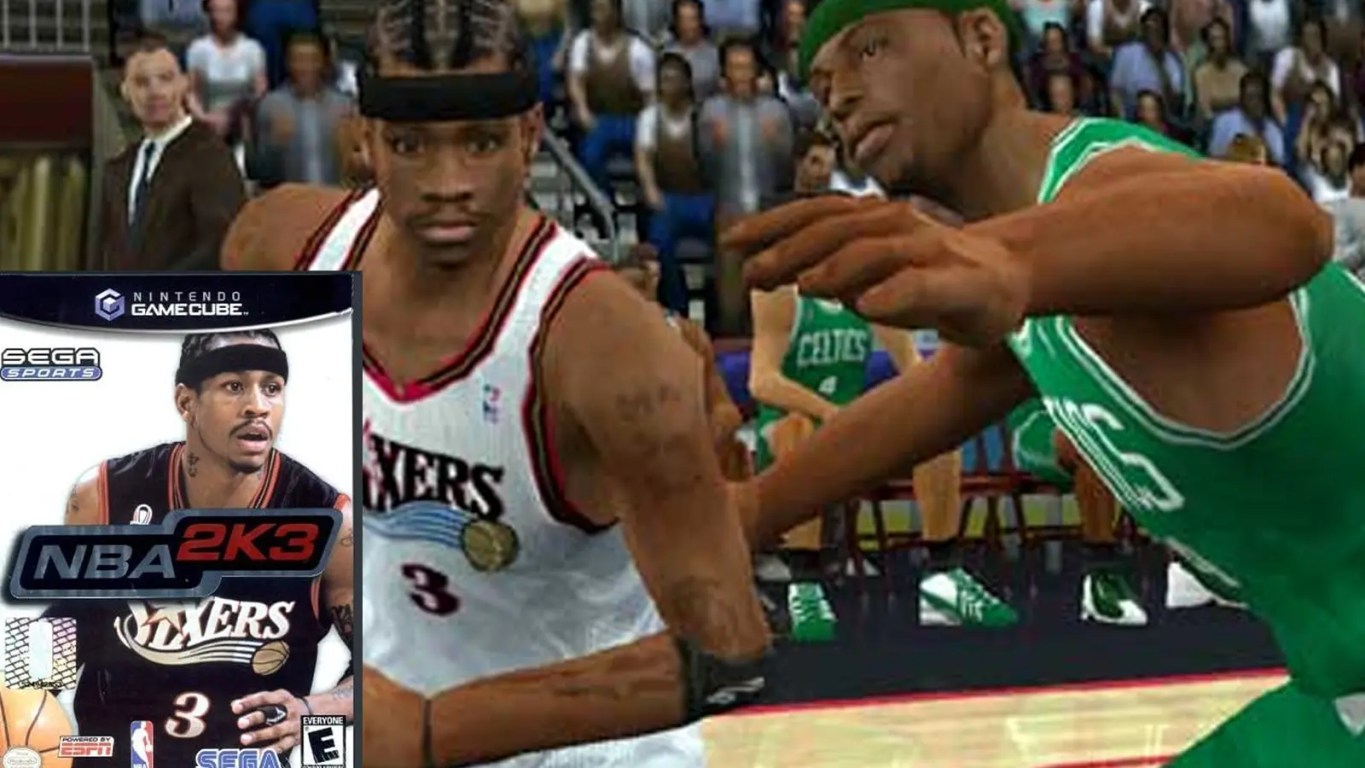
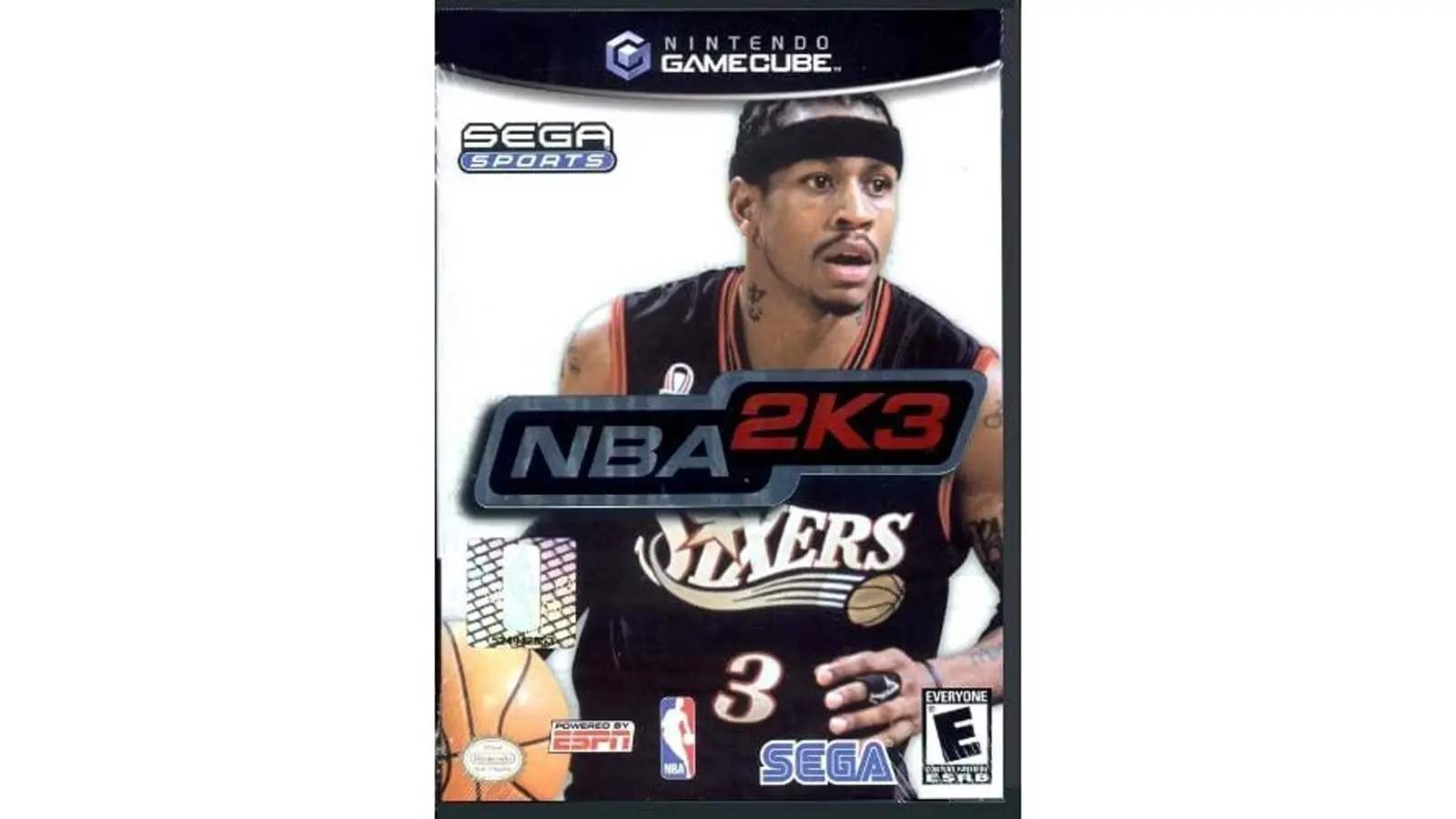
Released in October 2002 for the PS2, Xbox, and GameCube, NBA 2K3 was the moment the 2K franchise stopped chasing NBA Live and started chasing the actual NBA broadcast. For those who don’t know, NBA 2K3 was the first title in series to leverage the then-newly acquired ESPN license, introducing a massive overhaul to how sports games were presented to the end-user. Today, we break down the 128-bit architecture that defined the peak of the Allen Iverson era.
NBA 2K3 is the next file to be entered into our library.
RELATED: [THE FILES] 024 | NBA 2K2 (2001): The Technical Blueprint of the AI Dynasty
Table of Contents
The ESPN Integration
This wasn’t just a logo swap; it was a fundamental shift in the game’s User Interface.
- The “SportsCenter” Interface: The game opens with a full SportsCenter intro, complete with the iconic theme music. The menus were designed to mirror ESPN’s “Page 2” and broadcast overlays, featuring a ticker that provided player stats and league news.
- Camera Logic: Visual Concepts introduced “Broadcast Cam,” which utilized the specific camera angles seen on ESPN’s Wednesday night doubleheaders. This required a higher processing load to manage the depth of field for 3D crowds while keeping the player models in sharp focus.
- The Sweat Engine: NBA 2K3 was famous for its “Real-Time Perspiration.” As the game clock ticked down, player skins would transition from a matte finish to a reflective, shiny surface—a technical flex that pushed the Xbox and PS2 hardware to its limits.
The Mechanics: Defensive Precision & The Post Game
- The Passing Stick: 2K3 introduced the ability to use the right analog stick for icon-free passing. Flicking the stick in the direction of a teammate allowed for a more “Fluid Engine” feel, bypassing the button lag of previous generations.
- Collision Detection: The post-game was re-engineered for better physics. Players would place a forearm against the defender to create space, utilizing a sophisticated collision detection system that prevented the “clipping” (players passing through each other) seen in NBA Live 2003.
- The Iverson Effect: As the cover athlete, A.I. had custom “Crossover Logic.” His animations were motion-captured to be faster and more unpredictable, forcing defensive players to utilize the new “Lockdown” defensive mechanics to stay in front.
The Simulation Standard
While NBA Live 2003 went the arcade route with its “Freestyle” system, NBA 2K3 chose the path of technical realism. By focusing on the ESPN-style “Information Overlay” and realistic collision physics, it laid the foundation for the simulation-heavy NBA 2K we play in 2026.
The Archival Staple
*As an Amazon partner, we earn commission from this link, which allows us to keep expanding our library.*
Photo: NBA 2K; Amazon
RELATED: [THE FILES] 022: NBA 2K1 (2000) – The Architecture of Online Competition
RELATED: [THE FILES] 019: NBA 2K (1999) – The Visual Disruption
Author Bio
Jael Rucker is the founder of Decked Out Magazine. She has previously worked as the Associate Commerce Editor at PureWow, focusing on analytics and trends to pitch stories and optimize articles that build and engage their audience. Her work has also been seen in Footwear News and WWD. Prior to 2024, she was the style and pop culture editor at ONE37pm for over three years, contributing numerous product reviews, brand profiles and fashion trend reports, which included interviewing Steph Curry, Snoop Dogg and more.
![[THE FILES] : Wu-Tang: Shaolin Style (1999 Video Game)](https://deckedoutmagazine.com/wp-content/uploads/2026/06/Wu-Tang-Shaolin-Style.webp)