
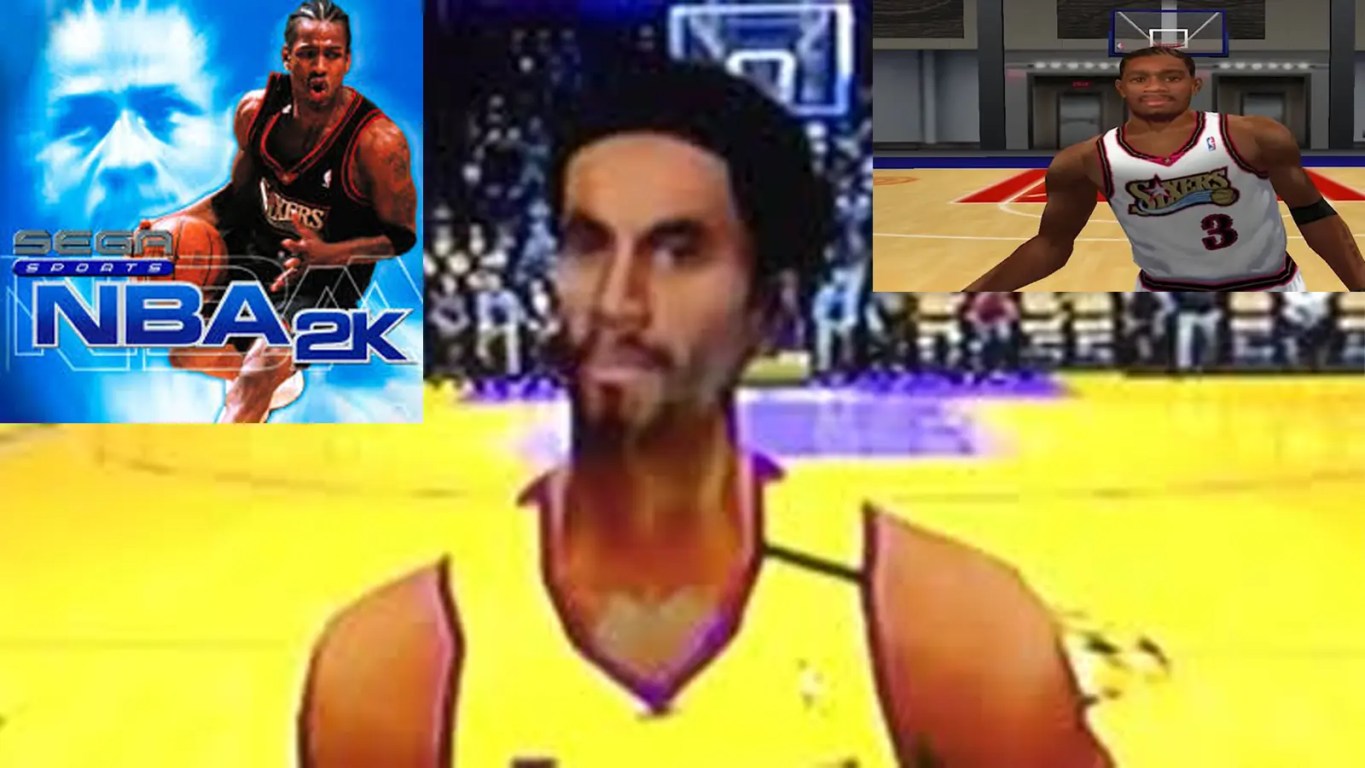
- Release Date November 10, 1999
- Platform Sega Dreamcast
- Engine Custom Visual Concepts Engine
- Lead Athlete Allen Iverson
- Status: ARCHIVED
On November 10, 1999, the hierarchy of sports gaming was dismantled. While Electronic Arts’ NBA Live had enjoyed a decade of uncontested dominance, Visual Concepts and Sega released NBA 2K for the Dreamcast, a title that essentially turned the 32-bit era into ancient history overnight. Endorsed by Allen Iverson at the peak of his cultural influence, NBA 2K didn’t just look better; it functioned on a different architectural plane. It was the first title to cross the “uncanny valley,” where parent-consumers famously mistook the gameplay for a live TNT broadcast.
This file audits the technical leap that forced the entire industry to rebuild from the ground up.
RELATED: [THE FILES] 015: Freestyle Revolution: The “Superstar” Era of NBA Live 06
The Technical Audit: Hardware Dominance
- The Dreamcast Architecture: Built specifically for the Hitachi SH-4 200 MHz CPU, the game utilized the PowerVR2 rendering engine’s unique Tile-Based Deferred Shading (TBDS). This allowed for hidden-surface removal at the start of the pipeline, freeing up VRAM to render individual player details that were previously impossible.
- Polygon Density: NBA 2K pushed approximately 1,300 polygons per player model, a 400% increase over contemporary PS1 titles. This density enabled Visual Concepts to render recognizable facial features, including Brian Grant’s dreadlocks and Allen Iverson’s tattoos, with “Broadcast” accuracy.
- The Animation Engine: Utilizing Alias/Wavefront Maya v1.5, tools engineers built a custom pipeline to smooth out motion-capture data. This resulted in a branching animation system that allowed for the “Iverson Crossover” to be interrupted by user input—a technical feat that eliminated the “locked animation” feel of the 90s.
- Contextual Audio Architecture: The game featured a dynamic audio trigger system. Instead of generic loops, the “Rod West & Bob Steele” commentary was mapped to real-time physics events, creating the industry’s first reactive broadcast atmosphere.
Conclusion: The Legacy of the SH-4 Era
NBA 2K (1999) remains the “Big Bang” event for modern sports gaming. It established the technical and visual standard that we still see in the NBA 2K franchise nearly three decades later. By prioritizing high-polygon density and contextual audio over simple arcade mechanics, Visual Concepts proved that consumers were hungry for simulation-grade hardware. In the history of the interactive hardware archive, NBA 2K stands as the moment the “toy” became a “broadcast.” It wasn’t just a game; it was a technical disruption that forced a multi-billion dollar industry to evolve or die.
RELATED: [THE FILES] 014 Juwanna Mann: Revisiting the WNBA’s Early Visual System
The Archival Staple

*As an eBay partner, we earn a commission on qualifying purchases, which allows us to expand our digital library.*
Featured Photo: Sega Sports, eBay
Check out the 2K series!
[THE FILES] 022: NBA 2K1 (2000) – The Architecture of Online Competition
[THE FILES] 024 | NBA 2K2 (2001): The Technical Blueprint of the AI Dynasty
[THE FILES] 031 | The ESPN Broadcast Engine: A Technical Review of NBA 2K3
Author Bio
Jael Rucker is the founder of Decked Out Magazine. She has previously worked as the Associate Commerce Editor at PureWow, focusing on analytics and trends to pitch stories and optimize articles that build and engage their audience. Her work has also been seen in Footwear News and WWD. Prior to 2024, she was the style and pop culture editor at ONE37pm for over three years, contributing numerous product reviews, brand profiles and fashion trend reports, which included interviewing Steph Curry, Snoop Dogg and more.
[THE FILES] 019: NBA 2K (1999) – Technical Audit
![[THE FILES] 019: NBA 2K (1999) – The Visual Disruption -](https://deckedoutmagazine.com/wp-content/uploads/2026/03/NBA_2K_1999_Dreamcast_Architecture_Technical_Audit-300x169.webp)
Auditing the technical architecture of NBA 2K (1999) on Sega Dreamcast. Deep dive into the SH-4 CPU, PowerVR2 graphics, and the "Iverson Effect."
Product Brand: Decked Out Magazine
Product Price: $9
Product In-Stock: InStock
4.5