
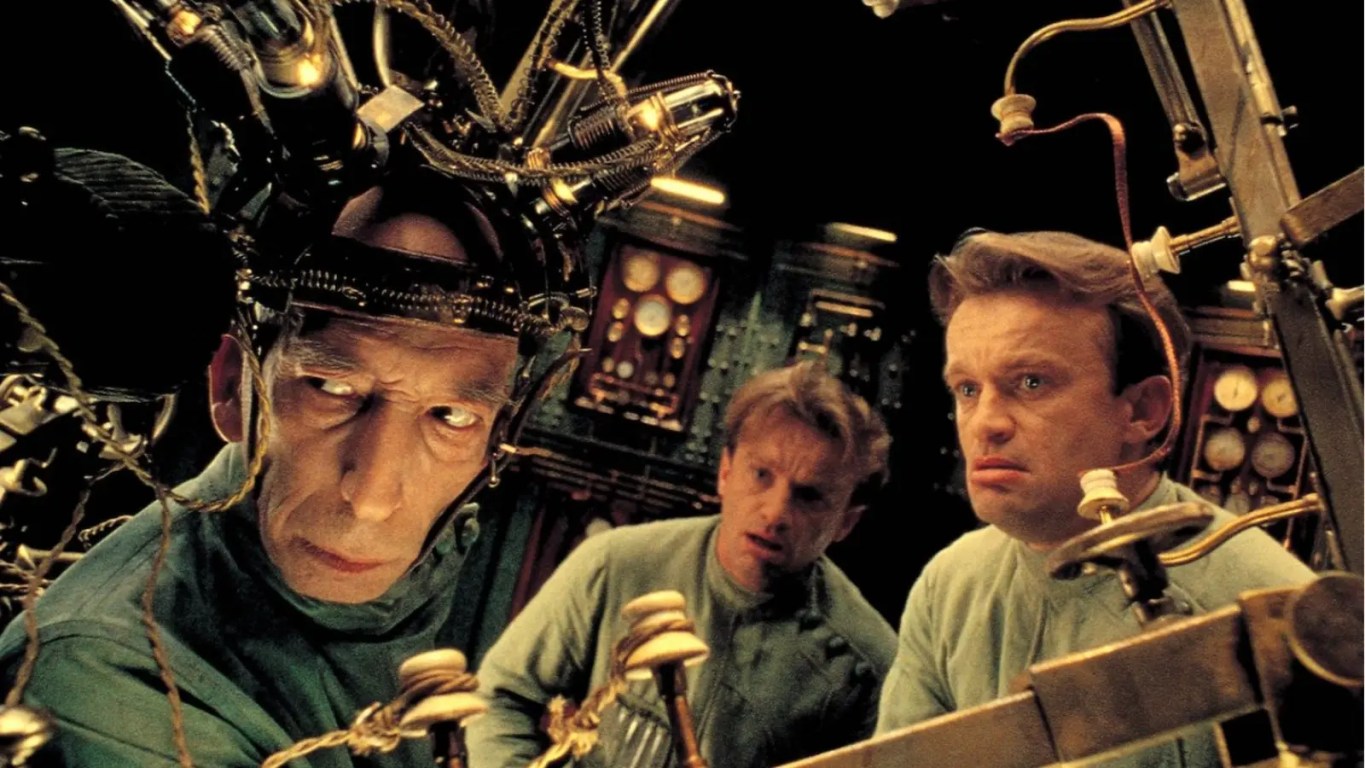
The City of Lost Children (1995)
Type: Avant-Garde Steampunk Dark Fantasy Blockbuster
Timeline: Released May 17, 1995 (Cannes Film Festival)
Entity / Studio: Marc Caro / Jean-Pierre Jeunet / Constellation Productions / Sony Pictures Classics
Category: Movie File
Overview
Released to international screens on May 17, 1995, as the opening night feature of the Cannes Film Festival, La Cité des Enfants Perdus (released domestically as The City of Lost Children) stands as a monumental, baroque monument of mid-1990s dark fantasy cinema. Co-conceived and directed by the singular creative partnership of Marc Caro and Jean-Pierre Jeunet, the surrealist narrative maps out a dystopian harbor fog-world where a mad, artificial scientist named Krank (Daniel Émilfork) aging prematurely due to an inability to dream, actively kidnaps local harbor children to harvest their innocence. When a gentle carnival strongman named One (Ron Perlman) has his adopted infant brother snatched, he teams up with a fierce, street-smart orphan girl named Miette (Judith Vittet) to breach Krank’s mechanized offshore laboratory fortress.
Why It Mattered
The project represents a defining visual baseline for high-budget European practical filmmaking mixed with early, groundbreaking digital effects processing pipelines. Rather than utilizing standard Hollywood studio sets, Caro and Jeunet meticulously constructed a massive, claustrophobic harbor landscape dominated by dripping rust, heavy ironwork, and emerald green ocean water. Cinematographer Darius Khondji weaponized revolutionary over-exposure and custom film-bleaching techniques to create a hyper-contrasted, comic-book texture that felt oily, vivid, and deeply layered. Furthermore, the film serves as a historic milestone for digital innovation, tasking primitive rendering setups to generate hyper-complex CGI clone dynamics, sentient fleas, and liquid reflection loops. It forever defined the dark steampunk sub-genre aesthetic while showcasing Ron Perlman’s uncanny ability to anchor abstract, dialogue-sparse foreign avant-garde productions.
Production Balance & Box Office Tracking
The financial ledger and technical scope of this independent dark fantasy project demonstrate the highly ambitious scaling of European co-productions in the mid-90s:
| Production Milestone | Financial & Data Output | Historical Project Details |
|---|---|---|
| Production Budget | $18 Million USD | A massive French-German-Spanish co-investment capital footprint, dedicating substantial funds to practical model work. |
| Domestic Gross (France) | $9.1 Million USD | Garnered massive critical acclaim, though its dark, mature tones polarized standard family theater crowds. |
| North American Arthouse Gross | $1.7 Million USD | Distributed via Sony Pictures Classics, establishing a permanent, long-tail cult following via premium VHS and DVD channels. |
| Cannes Tracking Logic | Palme d’Or Nominee | Selected as the main official competitive opener, cementing the directors’ international auteur status. |
Key Facts
- The Jean Paul Gaultier Wardrobe: Haute couture fashion legend Jean Paul Gaultier was recruited to completely design the film’s wardrobe telemetry, constructing over 150 custom, stylized costume layers ranging from Krank’s velvet robes to the Cyclops’ leather tracking gears.
- The Badalamenti Soundscape: The haunting, melancholy operatic score was completely composed by legendary orchestral master Angelo Badalamenti, infusing the dark industrial visual sequences with deep, tragic musical resonance.
- Evergreen Nostalgia Value: Decades after its 1995 debut, the film enjoys an undisputed status as a masterclass in production design, continuously generating organic traffic loops from steampunk, horror-fantasy, and arthouse enthusiasts globally.
Related Files
- Amélie (2001)
The Trailer
A Still from the Movie
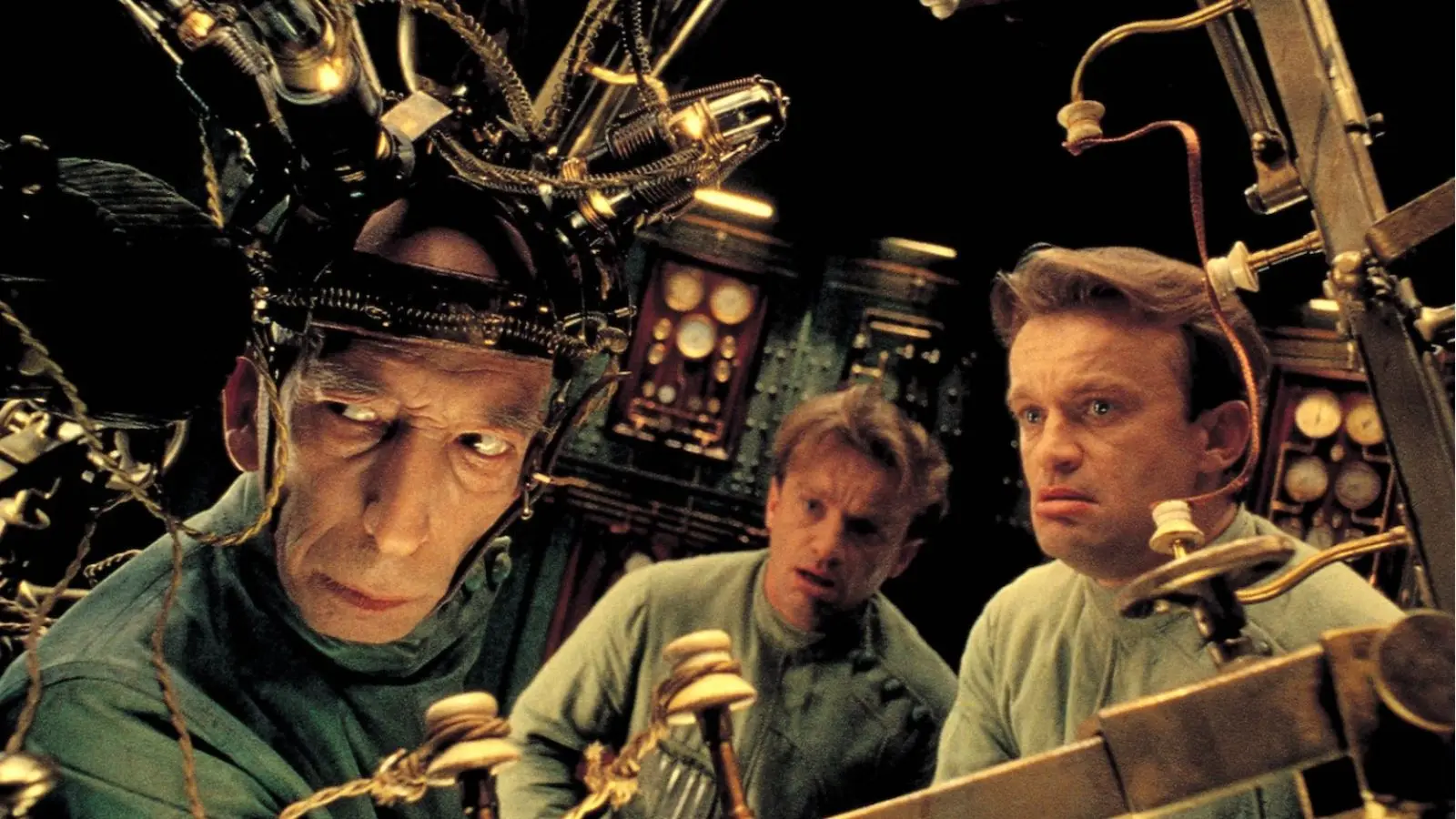
Featured Photo: Sony Pictures Classics
RELATED: [THE FILES] : Amélie (2001)
![[THE FILES] : Rugrats in Paris: The Movie (2000 Video Game)](https://deckedoutmagazine.com/wp-content/uploads/2026/07/rugrats_in_paris_history_hero.webp)


![[THE FILES] : Nelly Furtado — Say It Right (2006)](https://deckedoutmagazine.com/wp-content/uploads/2026/07/nelly_furtado_say_it_right_history.webp)