
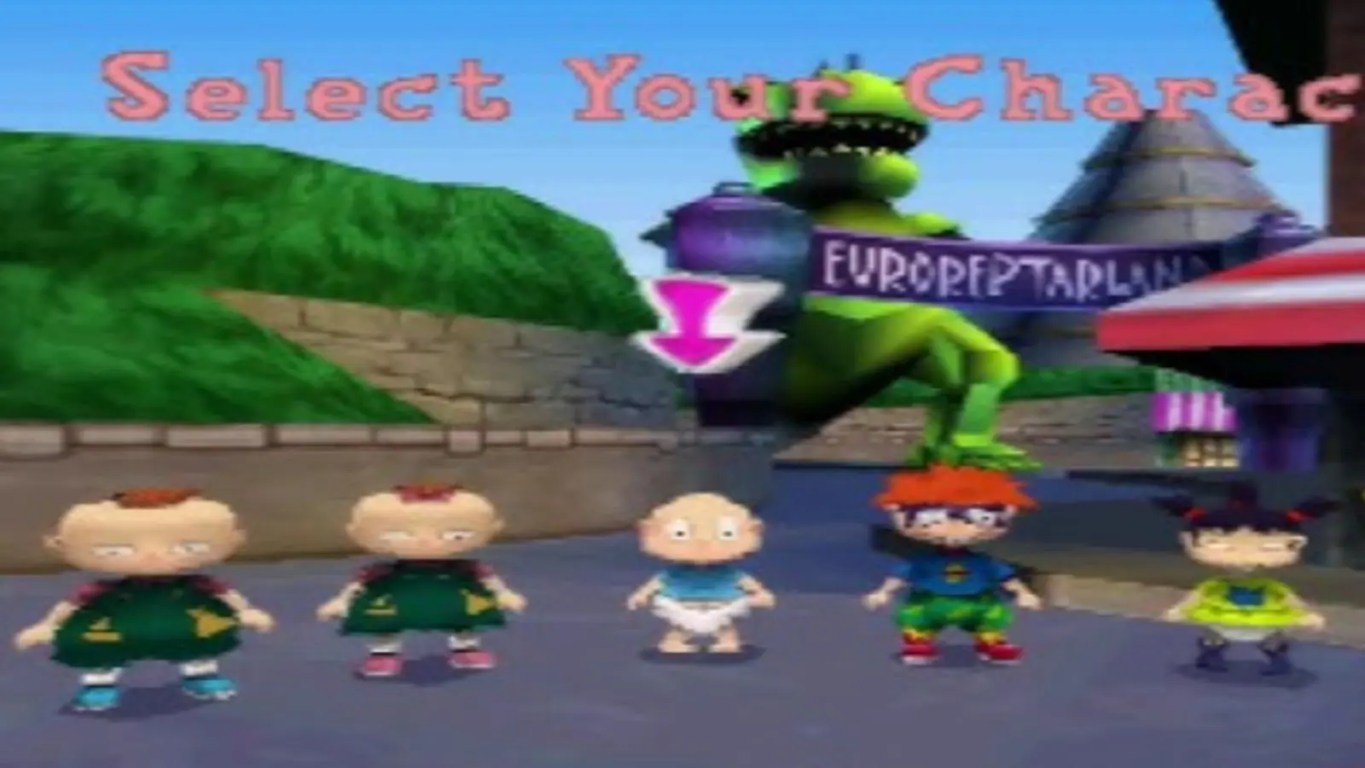
Rugrats in Paris: The Movie (2000)
Type: Licensed Family Action-Adventure / Mini-Game Collection
Timeline: Released November 8, 2000
Entity / Studio: Avalanche Software / THQ / Nickelodeon Interactive
Category: Video Game File
Overview
Released to retail shelves on November 8, 2000, to coincide with the major theatrical push of the accompanying animated feature film, Rugrats in Paris: The Movie stands as a highly profitable, nostalgic landmark in the golden era of licensed children’s interactive media. Developed by Avalanche Software (packaged for handheld registries by Digital Eclipse) and deployed globally via THQ, the adventure tracks Tommy Pickles, Chuckie Finster, and the rest of the Nickelodeon toddler group across a digital recreation of the Euro Reptarland theme park. Tasked with collecting prize tickets to buy back Chuckie’s lost teddy bear, players explore a 3-D hub world linked to a vast ecosystem of theme-park styled mini-games.
Why It Mattered
The project represents an elite case study in maximum multi-platform asset monetization during the transition from fifth to sixth-generation console chips. Utilizing an engine framework optimized for immediate accessibility, Avalanche Software bypassed dense platformer mechanics in favor of a virtual board game and theme park structure. This distinct game loop required players to master diverse telemetry mechanics across different mini-games, ranging from a bumper-car battle arena to an early rhythm-action dancing platform and a first-person target-shooting arcade cabin. It proved that a children’s license could secure immediate multi-million unit physical retail space by cleanly replicating the comedic beats, vocal track arrays, and aesthetic of its big-screen counterpart without getting bogged down by hyper-complex puzzle elements.
Production and Sales
The corporate asset distribution and hardware scope of this retro title demonstrate the massive retail power of early-2000s licensing ecosystems:
| Production Milestone | Hardware & Data Output | Historical Project Details |
|---|---|---|
| Primary Target Systems | PlayStation, N64, GBC | Tailored specifically to leverage the hardware limitations of mid-tier fifth-generation home hardware setups. |
| Retail Sales Output | Multi-Platinum Status | Successfully cracked the lucrative Greatest Hits (Sony) and Player’s Choice (Nintendo) bargain catalog ledgers. |
| Mini-Game Allocation | 16+ Unique Attractions | Ranged from strategic chess-style puzzle logic to high-velocity mechanical Reptar bumper racing tiers. |
| Audio Assets Telemetry | Authentic Voice Chips | Integrated compressed direct audio grabs from the official animated television cast to maximize user immersion. |
Key Facts
- Handheld Variation: The Game Boy Color variation of the node entirely ditched the 3-D engine tracking of the home console releases, functioning instead as an optimized, side-scrolling 8-bit platforming matrix crafted by Digital Eclipse.
- The Ticket Economy: To boost long-tail player retention metrics, developers integrated a complex ticket redemption counter, forcing kids to grind mini-games to unlock cosmetic masks and secret multiplayer maps.
- Evergreen Retro Value: Decades after its late-2000 holiday launch window, the game commands a permanent place across retro speedrunning communities and Y2K gaming retrospective networks, pulling in highly targeted nostalgic organic search traffic loops.
Related Files
- Rugrats: Search for Reptar (1998)
- Rugrats in Paris: The Movie (2000 Original Theatrical Film History Archive)
The Trailer
A Still from the Game
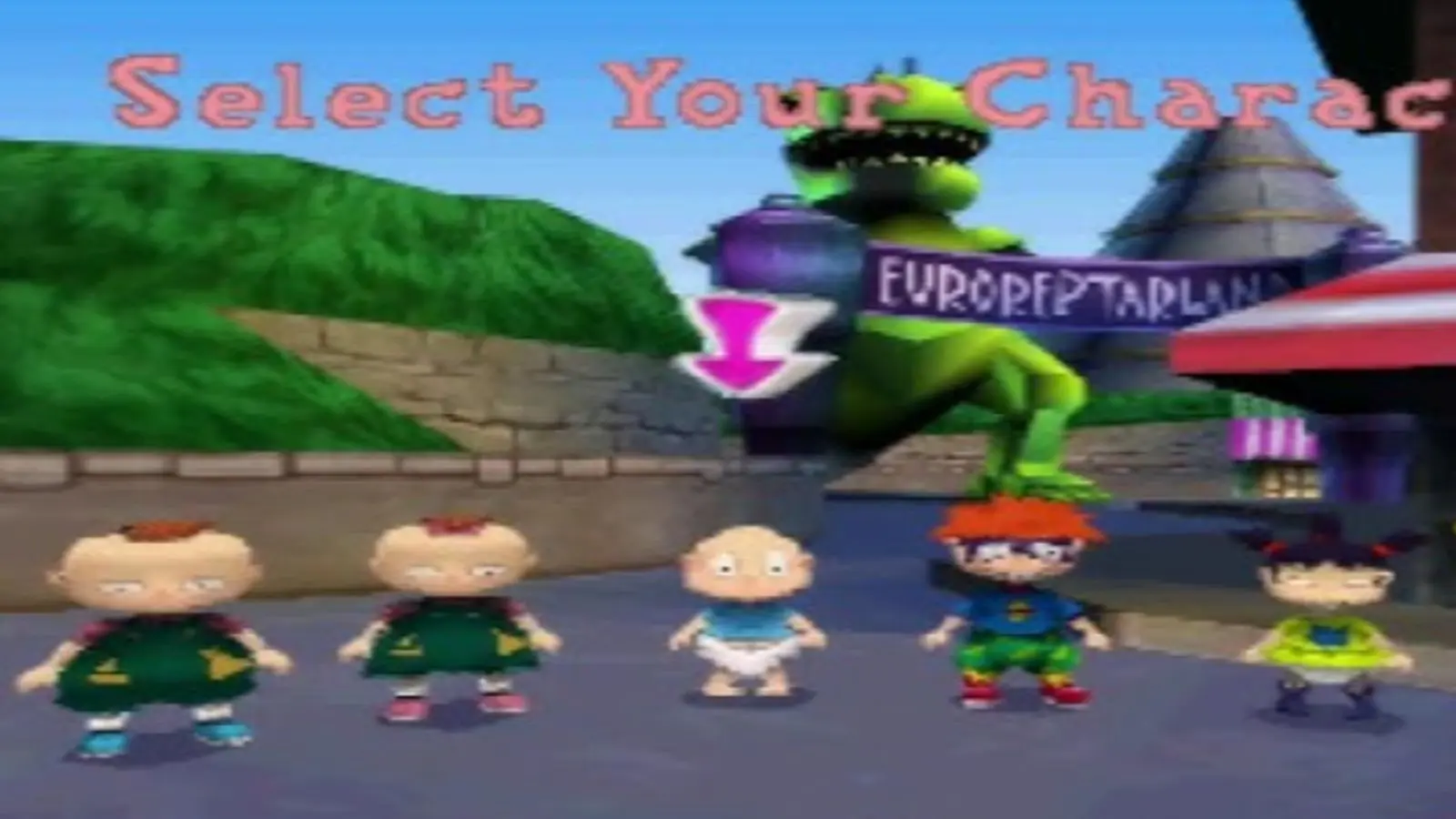
Featured Photo: THQ
RELATED: [THE FILES] : Rugrats Search for Reptar (1998)
RELATED: [THE FILES] : Rugrats: Studio Tour (1999 Video Game)
![[THE FILES] : The City of Lost Children (1995)](https://deckedoutmagazine.com/wp-content/uploads/2026/07/the_city_of_lost_children_history_hero.webp)


![[THE FILES] : Nelly Furtado — Say It Right (2006)](https://deckedoutmagazine.com/wp-content/uploads/2026/07/nelly_furtado_say_it_right_history.webp)