
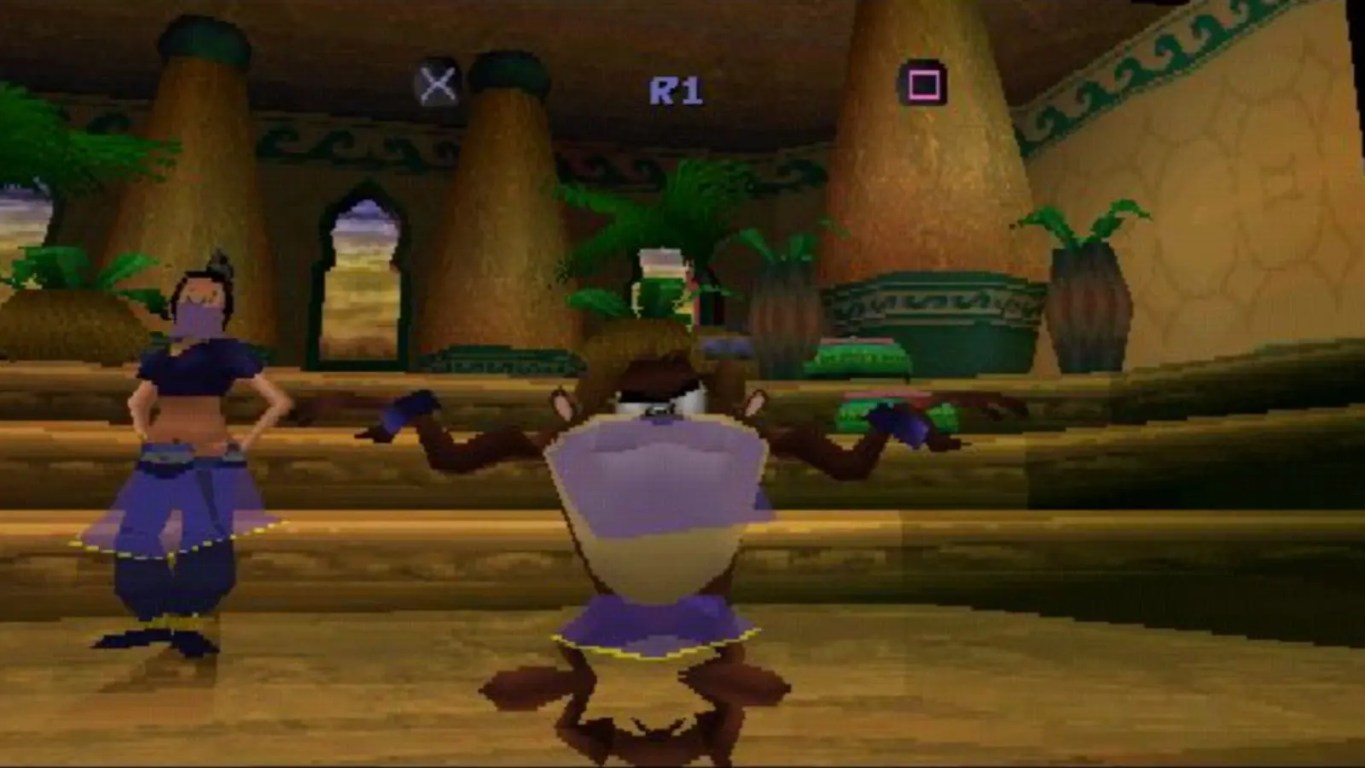
Bugs Bunny & Taz: Time Busters
Type: 3D Action-Platformer Video Game
Year: 2000
Creator / Artist / Company: Artificial Mind and Movement / Infogrames / Warner Bros.
Category: Game File
Overview
Released on November 24, 2000, Bugs Bunny & Taz: Time Busters stands as a brilliant, mechanical high-water mark for licensed intellectual property during the twilight of the original 32-bit PlayStation era. Developed by the Canadian studio Artificial Mind and Movement (later known as Behaviour Interactive) and deployed under the global publishing banner of Infogrames, the software acts as the highly creative, thematic sequel to 1999’s cult classic Bugs Bunny: Lost in Time. The title famously drops players into a sweeping, time-traveling narrative loop triggered when Daffy Duck accidentally breaks Granny’s Time Regulator device, scattering high-value timeline components across the fabric of history.
Why It Mattered
The title completely broke down the stale, frustrating barriers that traditionally plagued licensed children’s media by introducing an incredibly sophisticated, seamless cooperative multiplayer framework. Rather than forcing a second player into a basic, uninspired assist role, the software was engineered around mandatory dual-character puzzle mechanics. Players were required to continuously swap between Bugs Bunny’s agile jumping and digging capabilities and the Tasmanian Devil’s brute strength, spinning momentum, and object-carrying physics. By pairing this distinct mechanical duality with authentic Looney Tunes voice acting, vibrant level layout geometry, and distinct historical hubs, the production delivered a deep, challenging 3D platformer that captured retro search equity decades down the line.
Gameplay Mechanics & Era Progression
The core gameplay engine utilized a highly dynamic hub-world architecture that split the time-travel narrative across four distinct, stylized historical settings:
| Historical Hub | Core Antagonist | Mechanical Focus & Environmental Hazards |
|---|---|---|
| The Aztec Era | Elmer Fudd | Emphasized vertical jungle platforming, water currents, and temple puzzle triggers. |
| The Viking Era | Daffy Duck | Introduced ice sliding physics, heavy block throwing, and naval sea navigation. |
| The Arabian Nights | Yosemite Sam | Featured complex, high-altitude city architecture, magic carpet sequences, and stealth loops. |
| Transylvania | Count Bloodcount | The final, high-difficulty sector utilizing haunted castle verticality and labyrinth maze paths. |
Key Facts
- The Co-Op Blueprint: The game allowed two players to tackle the entire campaign simultaneously in a split-screen format, setting a structural standard for 3D family platformers of the Y2K generation.
- The Character Vault: Beyond the main duo, the game packed in beloved Looney Tunes figures including Foghorn Leghorn, Marvin the Martian, and Wile E. Coyote to act as custom token triggers and mini-game hosts.
- Evergreen Retro Value: Decades after its physical disc release in 2000, this title continues to hold an undisputed place in nostalgic speedrunning registries and retro emulation discussion boards.
Related Files
- Bugs Bunny: Lost in Time (1999 Prequel Landmark File)
- Looney Tunes: Sheep, Dog ‘n’ Wolf (2001 Stealth-Puzzle Masterpiece)
- PlayStation 1 – Late-Era 3D Engine
The Trailer
A Still from the Game
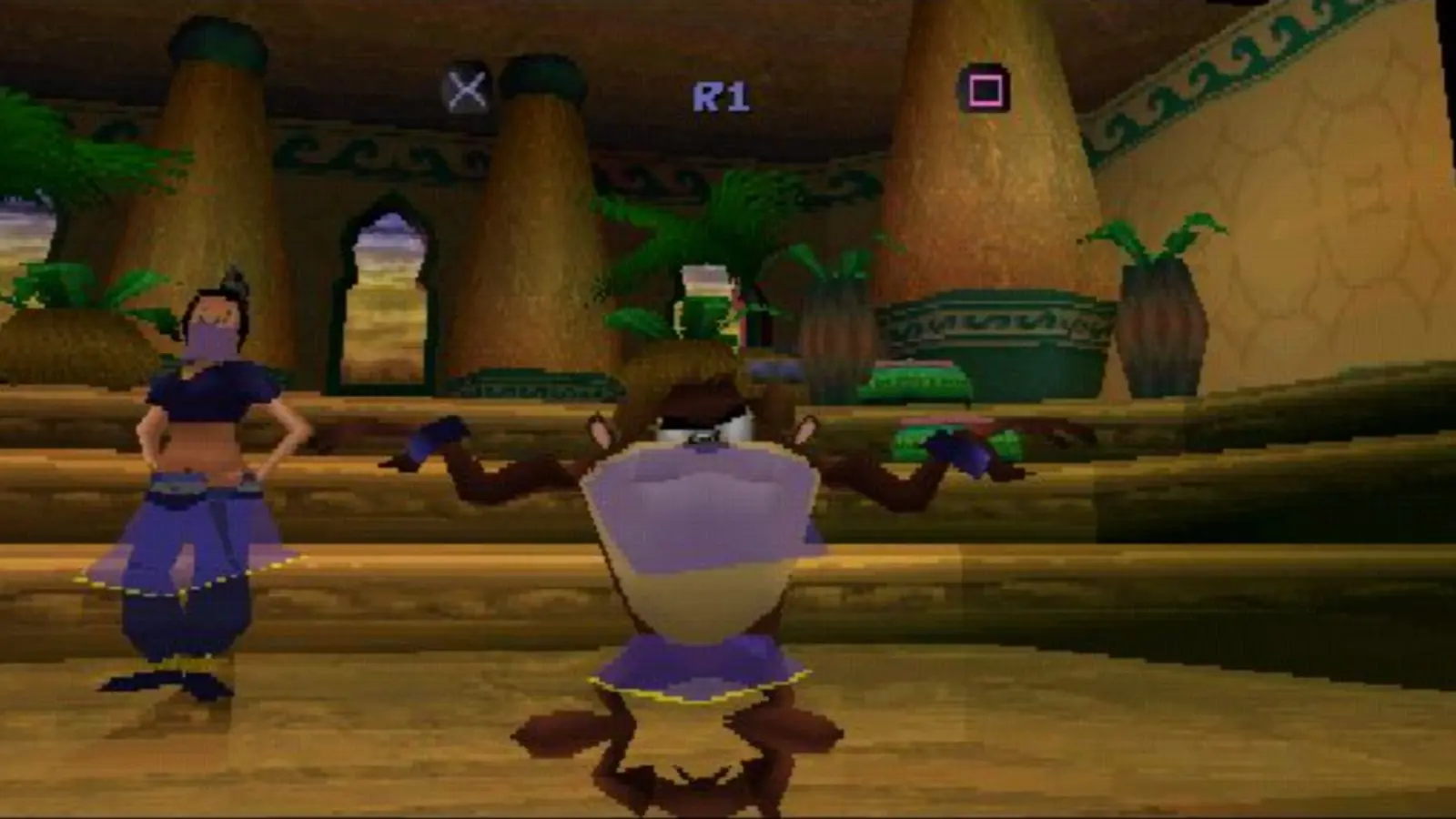
Featured Photo: Warner Bros./Artificial Minds
RELATED: [THE FILES] : Shark Tale (2004 Video Game)
![[THE FILES] : The City of Lost Children (1995)](https://deckedoutmagazine.com/wp-content/uploads/2026/07/the_city_of_lost_children_history_hero.webp)


![[THE FILES] : Nelly Furtado — Say It Right (2006)](https://deckedoutmagazine.com/wp-content/uploads/2026/07/nelly_furtado_say_it_right_history.webp)