
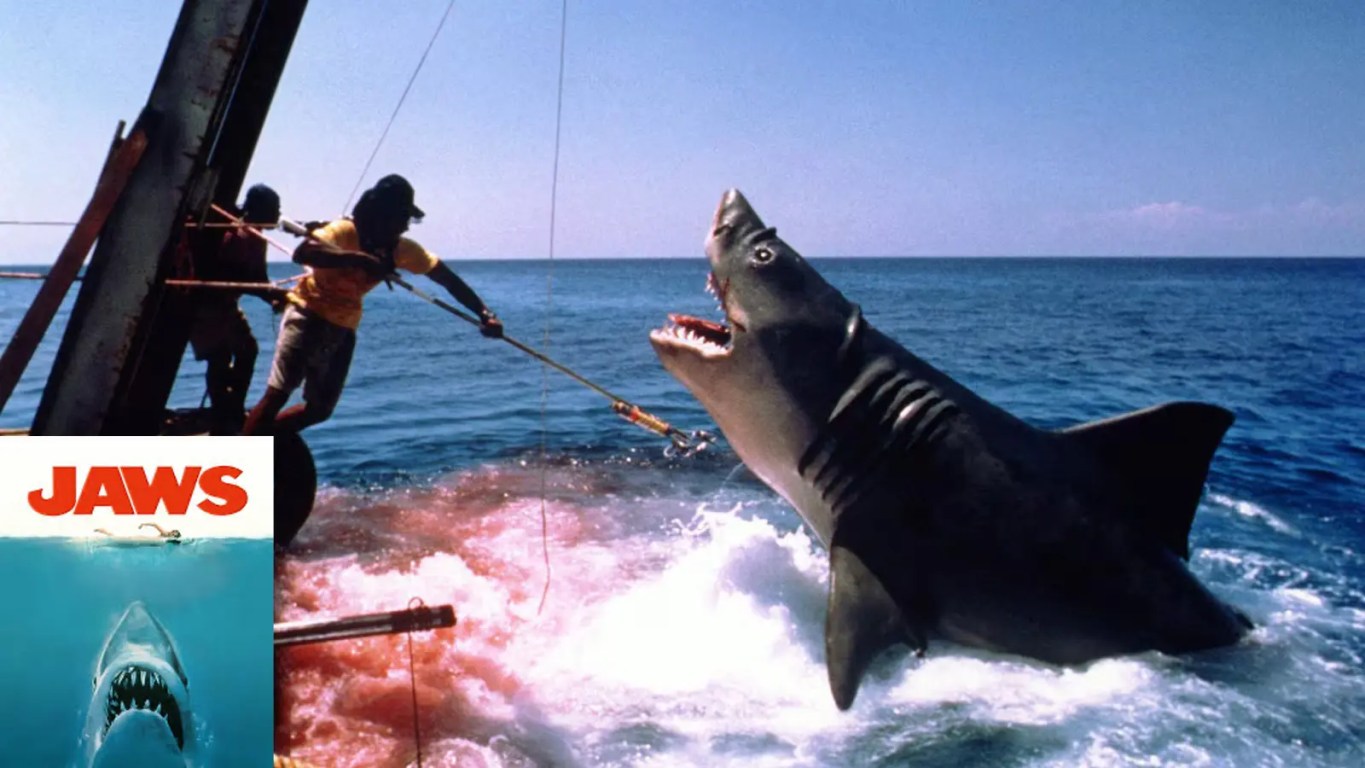
June 20, 1975 — Pop Culture History Milestones
On this day in 1975, Universal Pictures officially released Jaws across North American theaters, permanently reshaping the economic, marketing, and distribution foundations of global theatrical media. Directed by a 26-year-old Steven Spielberg and adapted from Peter Benchley’s bestselling novel, the monumental thriller tracking a rogue, man-eating great white shark terrorizing the summer resort town of Amity Island completely blew minds. By turning a chaotic, stress-fueled shoot into a masterpiece of cinematic tension, the feature matrix shattered box office norms and single-handedly birthed the concept of the modern summer blockbuster.
Historical Significance & Facts
- The Mechanical Shark Disasters: The film’s legacy was fundamentally shaped by an ongoing mechanical nightmare. The production’s full-scale animatronic sharks (famously nicknamed “Bruce”) constantly malfunctioned, corroded in the saltwater, and sank to the ocean floor. This operational crisis forced Spielberg to radically adjust his creative strategy—relying on Alfred Hitchcock-style suspense, suggestion, perspective cinematography, and floating yellow barrels to represent the predator’s presence without actually showing it on screen.
- The Invention of Saturation Booking: Before 1975, major Hollywood studio releases followed a slow-rolling platform distribution plan. Universal Pictures completely shattered that blueprint with Jaws, executing an unprecedented, high-saturation “saturation booking” strategy that launched the film across 464 domestic screens simultaneously on opening night. Backed by a massive, aggressive $1.8 million television advertising blitz, the project captured an immediate $7 million opening weekend and scaled to a historic $476 million global theatrical payload.
- The Pulse-Pounding Score: Long before digital audio precision, John Williams engineered the definitive blueprint for cinematic dread. Tasked with anchoring the film’s hidden monster, Williams built a simple, pulse-pounding, two-note minimalist musical score. Spielberg initially thought the theme was a joke when first played on a piano, but the final orchestral arrangement went on to secure an Academy Award and became an iconic, multi-generational pop culture soundscape that instantly signals danger.
- The Birth of Summer Movie Season: Prior to the summer of 1975, major studios considered the hot summer months a dumping ground for weaker films, assuming audiences preferred to stay outdoors. Jaws completely inverted this consumer behavior pattern. By transforming air-conditioned movie theaters into the ultimate escape from the heat, the asset created a massive, repeatable blueprint that permanently turned the summer window into the most lucrative, high-stakes corridor in the entertainment industry.
RELATED: On This Day in 1981: How ‘Superman II’ Changed Superhero Sequels Forever


![[THE FILES] : Lil’ Mo — Superwoman (Ft. Fabolous)](https://deckedoutmagazine.com/wp-content/uploads/2026/06/lil_mo_superwoman_history_hero_image.webp)
![[THE FILES] : The Need for Speed (1994)](https://deckedoutmagazine.com/wp-content/uploads/2026/06/the_need_for_speed_history_hero_image.webp)