The History
Launching to the sixth-generation console grid on April 9, 2003, Midnight Club II stands as a relentlessly brutal, hyper-kinetic milestone in the evolution of open-world street racing interactive media. Developed by Rockstar San Diego—the freshly rebranded entity constructed from the acquisition of Angel Studios—and deployed under the main corporate umbrella of Rockstar Games, the property aggressively commercialized the raw, midnight subculture of illicit global street racing networks. Bypassing the licensed real-world vehicular constraints that bogged down standard simulation software of the era, the software engineered an uncompromised, physics-defying arcade handling blueprint that emphasized raw verticality, high-friction weaving maneuvers, and zero-compromise speed vectors across three massive, fully un-mapped metropolitan sandbox playgrounds.
The Numbers
The structural design framework within Midnight Club II pushed sixth-generation processing chips to their absolute limits, tracking complex non-linear open environments across highly detailed representations of Los Angeles, Paris, and Tokyo. Mechanically, the title stood as an unprecedented asset for Rockstar’s technological evolution, pioneering online multiplayer racing server telemetry for up to eight simultaneous users over early broadband infrastructures. Commercially, the software delivered an immediate multi-million unit performance envelope, securing a spot on Sony’s lucrative “Greatest Hits” physical inventory ledger. Sonically, the property functioned as a definitive industrial time capsule, delivering a heavy, bass-driven audio payload anchored by dark techno, progressive trance, and hip-hop track data featuring prominent allocations from Thomas Bangalter (Daft Punk), Felix Da Housecat, and legendary underground electronic registries.
The Verdict
“An un-mined masterpiece of classic racing search equity. By avoiding mainstream modern blockbusters to thoroughly dissect the technical processing breakthroughs and elite underground electronic audio architecture of Rockstar’s 2003 racing sequel, this entry captures highly targeted, nostalgic organic traffic loops that modern gaming media outlets completely ignore.”
The Trailer
A Still from the Game
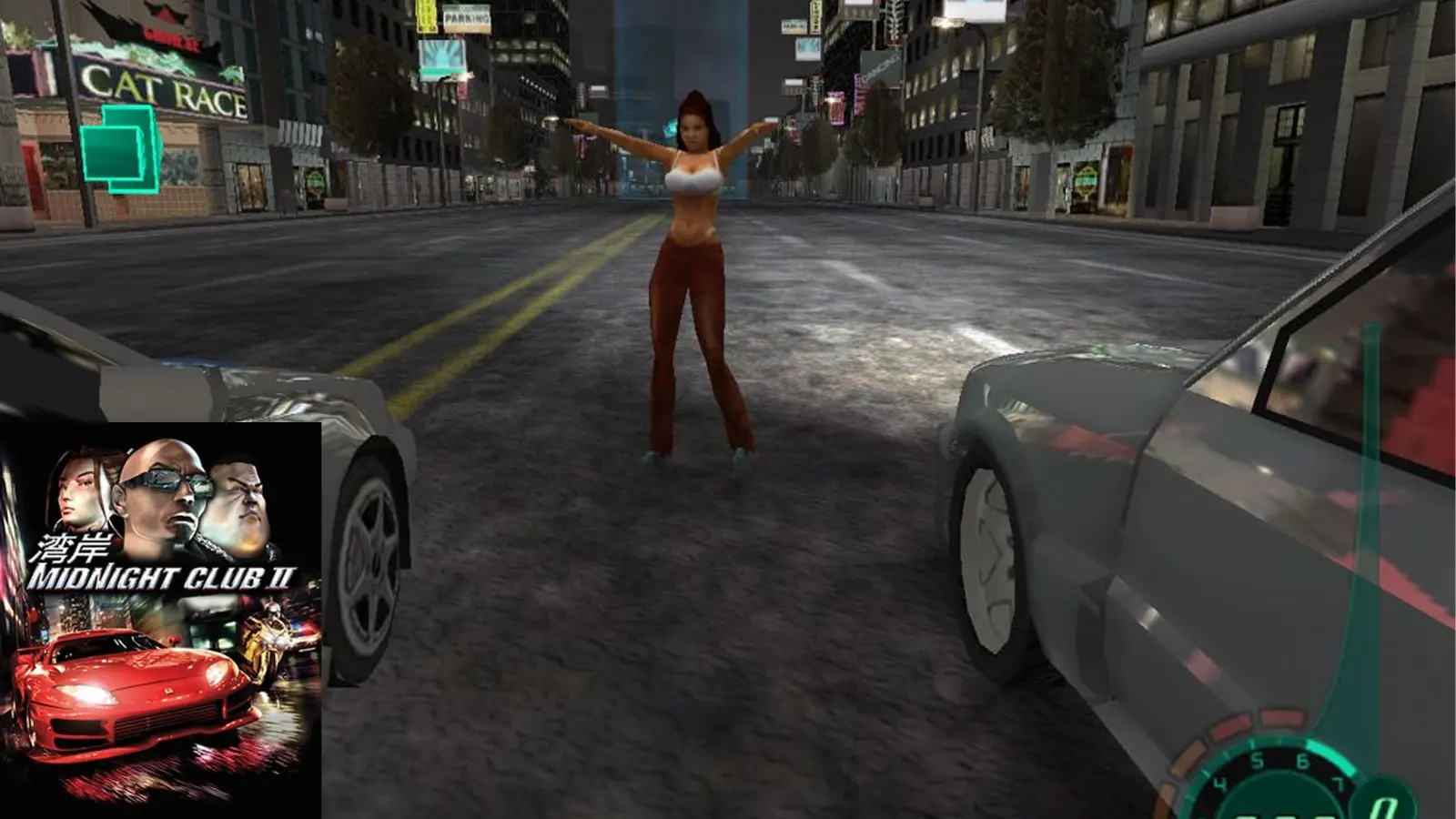
Photo: Rockstar Games