
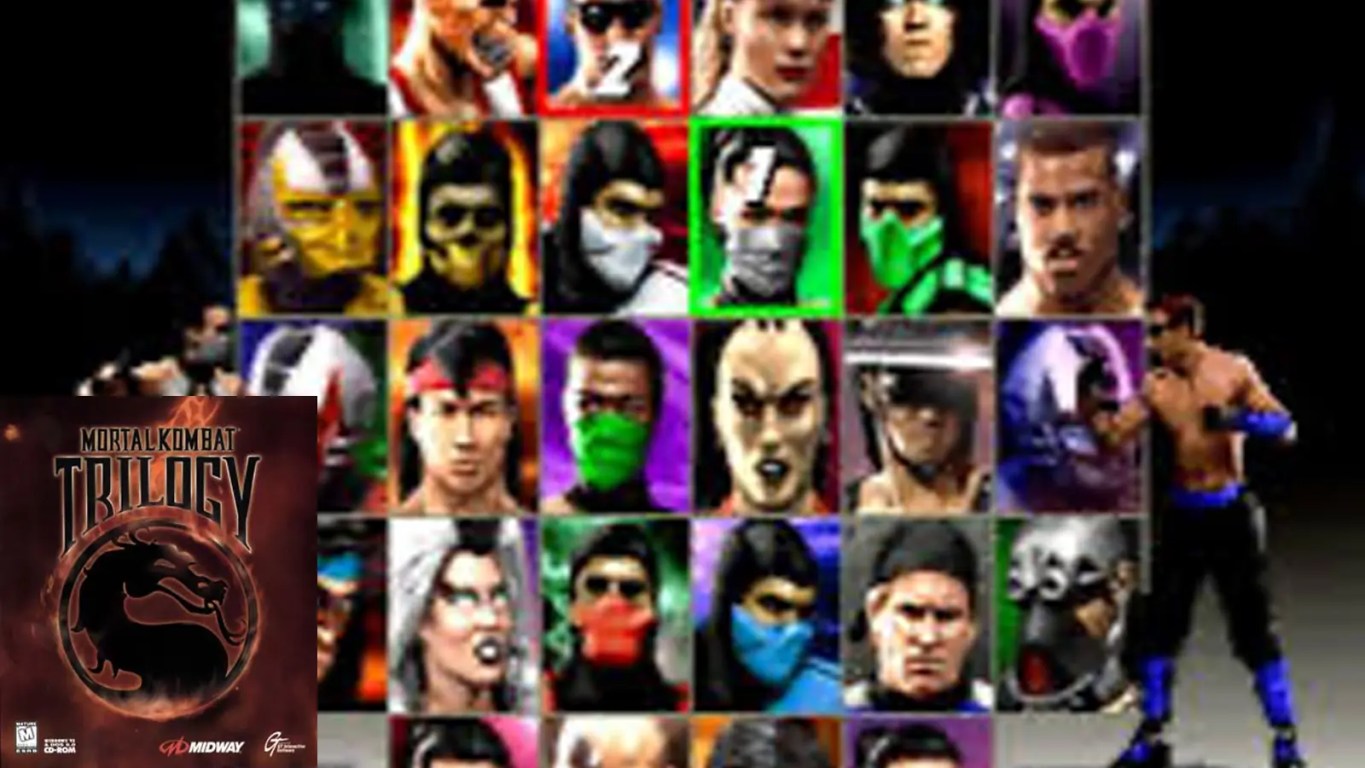
The History
By late 1996, the mid-90s fighting game subculture was undergoing a massive generational crisis. The industry was aggressively sprinting toward full 3D polygons, leaving traditional digitized 2D sprites facing a rapid tech obsolescence. Instead of quietly retiring their foundational fighting tech, Ed Boon and John Tobias orchestrated the ultimate, maximalist farewell to the sprite era. Released in October 1996 as a flagship 32-bit showcase for the Sony PlayStation, Nintendo 64, and Sega Saturn, Mortal Kombat Trilogy was engineered as an uncompromised, non-canonical dream match. Midway effectively scraped together the raw, digitized asset code from MK1, MK2, MK3, and Ultimate MK3, packing them into a single, explosive software engine. For the first time in fighting game history, players could pit classic, pixel-perfect iterations of characters against their modern counterparts. The design framework was unapologetically broken, wildly chaotic, and blindingly fast—introducing the infamous “Aggressor” meter and an array of absurd “Brutality” finishing moves that pushed 32-bit hardware data bandwidth to its absolute mechanical limit.
The Numbers
The sheer processing data density and raw commercial scale of Mortal Kombat Trilogy transformed it into an immediate, multi-million dollar holiday blockbuster. The game launched with an unprecedented baseline roster of **over 30 playable fighters**, including immediately unlocked boss entities like Goro, Kintaro, Motaro, and Shao Kahn. On the original PlayStation CD-ROM edition, this massive collection of uncompressed, high-resolution sprite frames resulted in severe structural friction, forcing the console to hit noticeable mid-match loading stutters whenever Shang Tsung morphed into a different character. Despite these glaring 32-bit technical bottlenecks, the game became a runaway commercial juggernaut, clearing over **2 million copies globally** on the PlayStation alone and securing a spot in Sony’s prestigious “Greatest Hits” catalog. The release marked the permanent, high-water mark of digitized live-action acting in video games before the entire fighting genre permanently migrated to real-time 3D rendering.
The Verdict
“The absolute, beautiful madness of 90s fighting culture distilled into a single disc. Mortal Kombat Trilogy wasn’t a balanced competitive fighter; it was an unruly, gloriously broken victory lap that assembled the greatest digitized sprite assets in software history for one final, blood-soaked celebration.”
Trailer
RELATED: [THE FILES] 156 : Mortal Kombat 3 (1995)
RELATED: [THE FILES] 143: Mortal Kombat II (1993)
RELATED: [THE FILES] 143: Mortal Kombat II (1993)
Author Bio
Jael Rucker is the founder of Decked Out Magazine. She has previously worked as the Associate Commerce Editor at PureWow, focusing on analytics and trends to pitch stories and optimize articles that build and engage their audience. Her work has also been seen in Footwear News and WWD. Prior to 2024, she was the style and pop culture editor at ONE37pm for over three years, contributing numerous product reviews, brand profiles and fashion trend reports, which included interviewing Steph Curry, Snoop Dogg and more.

![[THE FILES] : Agent Cody Banks (2003)](https://deckedoutmagazine.com/wp-content/uploads/2026/04/agent_cody_banks_hero_image.webp)
![[THE FILES] : Uncle Drew (2018) Film Profile: History, Box Office, Pepsi Origins & Legacy](https://deckedoutmagazine.com/wp-content/uploads/2026/07/uncle_drew_movie_still_hero.png)