
04/18/2026
Clocking It: The Political Rundown — The Verdict
Earlier this week, Halfway Clocked documented a remarkable global trend: the anti‑authoritarian surge. Hungarian voters delivered a democratic earthquake, ending Viktor Orbán’s sixteen‑year strongman rule and handing Péter Magyar a constitutional supermajority. Canadian Prime Minister Mark Carney secured a majority government, stabilizing a minority parliament and reaffirming democratic legitimacy.
The message from Budapest and Ottawa was clear: democracies can still push back against authoritarianism, rebuild institutions, and choose cooperation over isolation.
But the same week that Hungarians celebrated their return to the democratic fold, the United States under Donald Trump took several more steps in the opposite direction. The United States is more isolated than ever before in modern history. Tariffs on allies. Threats to abandon NATO. Withdrawal from international organizations. A foreign policy that treats friends as adversaries and adversaries as friends. The cumulative effect is an America more isolated than at any point since the end of World War II.
The verdict is not complicated: Trump’s decisions, his rhetoric, and his worldview have made the United States a pariah on the world stage. While the rest of the democratic world is reaffirming its commitment to alliances, rules, and mutual defense, the United States is walking away. And the damage will outlast his presidency.
The Isolation by Design
Trump has never hidden his disdain for the post‑war liberal order. He has called NATO “obsolete,” the European Union “a foe,” and the United Nations “a club for people to have a good time.” But in the past year, his rhetoric has translated into policy that has actively alienated America’s closest partners and has made the United States is more isolated than ever before in modern history.
The Tariff War Against Allies
In January 2026, Trump announced 10% tariffs on eight European countries, including Germany, France, the UK, and the Netherlands, because they opposed his push to annex Greenland. A NATO ally’s sovereign territory was treated as a real estate negotiation, and economic punishment was wielded to force compliance.
The result, as economist Warwick McKibbin told ABC News, is that “the US used to be a reliable trading partner, and now it’s a completely unreliable trading partner.” The European Union has responded by accelerating trade deals with Mercosur, Indonesia, Mexico, and Japan, concluded without Washington. The world is learning to trade around the United States.
NATO: The Alliance That Trump Broke
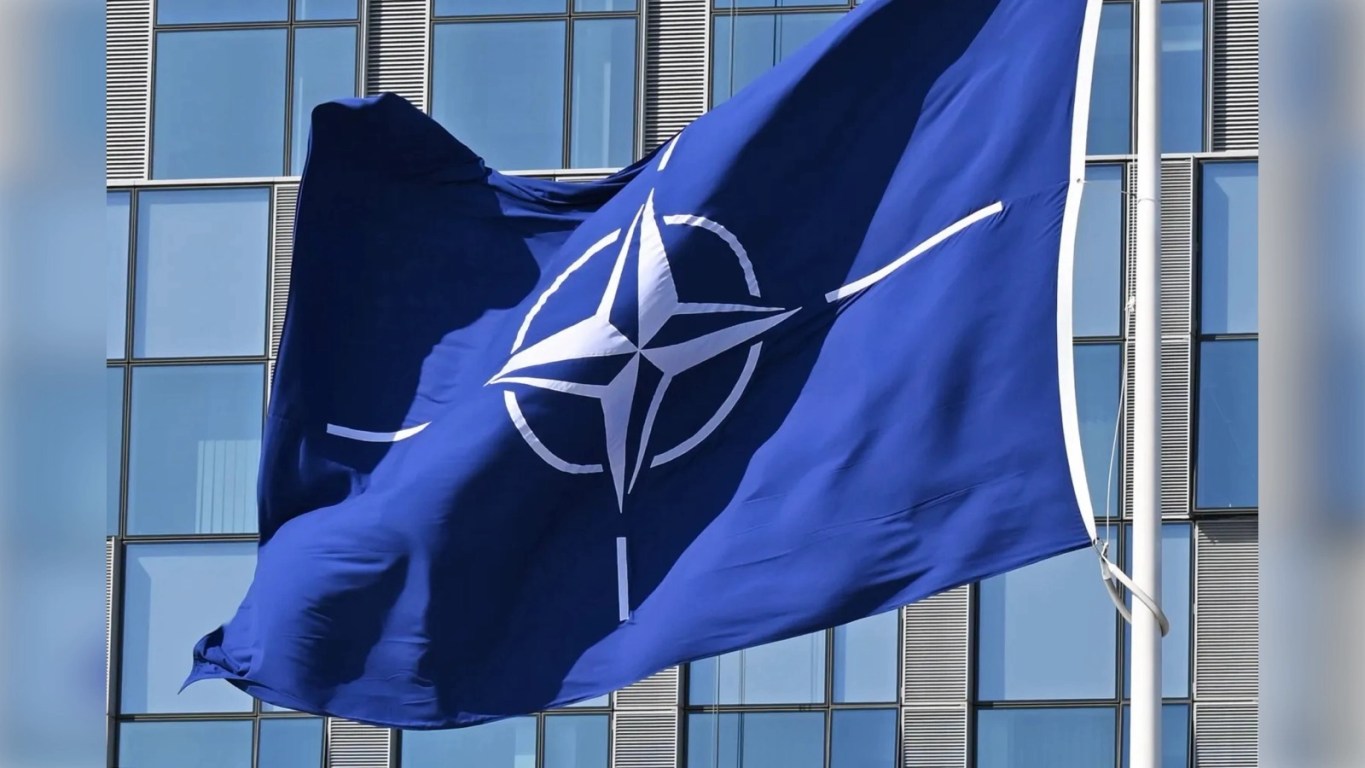
Perhaps no institution has suffered more damage. Earlier this month, Trump threatened to leave NATO over allies’ refusal to support his Iran campaign, saying the move was already “beyond reconsideration.” He called European allies “cowards” and NATO a “paper tiger.”
The response from Europe has been decisive, and devastating for US influence. Officials are now working on a contingency plan called “European NATO” to ensure the continent can defend itself using the alliance’s existing military structures if the United States withdraws. Germany, long the reluctant European partner, is now leading the charge under Chancellor Friedrich Merz because of concerns about US dependability.
As Finland’s President Alexander Stubb told the Wall Street Journal: “A burden shifting from the US toward Europe is ongoing… Europeans are taking action on their own initiative because of Trump’s hostility, not as a result of US instigation.”
Withdrawal from the World
In January 2026, Trump signed a memorandum withdrawing the United States from 31 UN subsidiary bodies and 35 non‑UN organizations, including the World Health Organization, UNESCO, the UN Human Rights Council, and UN Women. The cumulative list of Trump’s withdrawals since 2016 includes the Paris Agreement, the Iran nuclear deal, and dozens of other multilateral agreements.
The message is unmistakable: the United States no longer believes in the rules‑based international order it helped create. And the world is taking note, by building new institutions without us.
The Collapse of American Credibility
The data on America’s standing under Trump is devastating.
A Gallup poll released earlier this month found that China’s global approval rating has surpassed the United States for the first time in nearly two decades. US leadership approval dropped to 31%, down 8 points from 2024, while disapproval climbed to a record 48%. Approval fell by 10 points or more in 44 countries, most of them traditional allies.
Germany recorded the largest drop: 39 points. Portugal: 38 points. Canada, the United Kingdom, and Italy all saw significant declines. A separate Politika poll found that majorities in Canada, the UK, France, and Germany described Trump as an unreliable ally.
At home, Americans have noticed. A February 2026 Economist/YouGov poll found that 52% of respondents believe America’s standing in the world has deteriorated under Trump. Only 29% said it has improved. Trump’s approval rating sits at 41.2%, with disapproval at 56.4%.
The Contrast with the Anti‑Authoritarian Surge
This is where the two stories of the week collide.
As Halfway Clocked documented, Hungary’s voters just proved that even the most entrenched strongman can be removed at the ballot box. Orbán, Trump’s close ally and the model for global authoritarianism, was defeated by a united democratic opposition. Poland’s populists lost power in 2023. Slovakia’s pro‑Moscow government is facing sustained opposition. The world is pushing back against the very authoritarianism that Trump has embraced.
Canada, meanwhile, reaffirmed its commitment to stable, centrist democratic governance. Carney’s majority government will legislate until 2029, focusing on trade diversification, climate policy, and international cooperation, all areas where the United States under Trump is retreating.
The contrast could not be starker. While the world moves toward democratic resilience, international cooperation, and multilateralism, the United States moves toward isolation, unilateralism, and hostility toward allies. While Hungarians celebrate rejoining the European mainstream, Americans watch their president threaten to leave NATO. While Canada builds new trade relationships, Trump imposes tariffs on its closest neighbors.
The Verdict — Trump’s Isolation Is a Choice, Not an Accident
Here is the cultural and political reality that matters most.
The United States is more isolated today than at any point in modern history not because of forces beyond anyone’s control, not because the world has turned against America, but because Donald Trump has chosen isolation.
He chose to tariff allies. He chose to threaten NATO withdrawal. He chose to abandon international institutions. He chose to side with Putin over Ukraine. He chose to insult European leaders and cozy up to authoritarian strongmen. Every step toward isolation was a conscious decision, made by a president who believes that American power is best exercised alone.
The world has noticed. And the world is adapting. Europe is building a defense structure that assumes the US will not show up. China has surpassed the US in global approval. Trade deals are being signed without Washington. Allies are openly discussing how to contain American unreliability.
Halfway Clocked showed us that democracy is fighting back globally, in Hungary, in Canada, in Poland. That is the good news. The bad news is that the United States, under Trump, is no longer leading that fight. It is on the sidelines, alienating its friends and empowering its adversaries.
The verdict is not that America cannot recover. Countries have bounced back from isolation before. But the recovery will take years, perhaps decades. And it will require a president who understands that alliances are not burdens but force multipliers, that international institutions are not traps but tools, and that American greatness has never been achieved alone.
Trump has devoured his own ecosystem of supporters, as we saw last week. But more consequentially, he has devoured America’s credibility. The question now is whether the next administration can rebuild what he has burned, and whether the world will be willing to trust the United States again.
Clocked. That’s the tea.
Sources
· “Trump tariffs could ‘isolate’ the US and create new trading blocs,” ABC News, Jan 29, 2026
· “Majority of Americans say US standing on world stage has deteriorated under Trump: Poll,” The Hill, Feb 24, 2026
· “China more trusted as disapproval of US leadership rises,” The Economic Times, April 3, 2026
· “WSJ: Europe is accelerating a NATO fallback plan in case Trump pulls out,” International Affairs, April 16, 2026
· “A year of failure: Trump’s attempt to end the Russia-Ukraine war,” The Hill, Feb 19, 2026
· “America the adversary: Trump can still do much more to alienate Europe,” The Hill, April 10, 2026
· “Trump grows his multilateral exit list,” Firstpost, July 23, 2025
· “As faith in the US fades a year into Trump 2.0, Europe breaks with reliance on American security,” Newsday, Jan 19, 2026
· Hungary election results (April 12, 2026): CNN, BBC, DW, Euractiv
· Canada by‑election results (April 13, 2026): CTV News, BBC
About the Author
Andrew Greene is a quality-obsessed, results-driven powerhouse with nearly two decades of experience transforming complexity into clear, actionable solutions. His secret weapon? A mix of analytical sharpness, problem-solving precision and a communication and leadership style that’s equal parts clarity and charisma. From Quality Assurance to political data analysis, you can think of him as the Swiss Army knife of operational excellence, minus the corkscrew (unless it’s a team celebration).