
04/15/2026
Clocking It: The Political Rundown — Halfway Clocked
Two headlines landed in the span of twenty-four hours. They belong to different continents, different political systems, different historical trajectories. But together, they tell the same story.
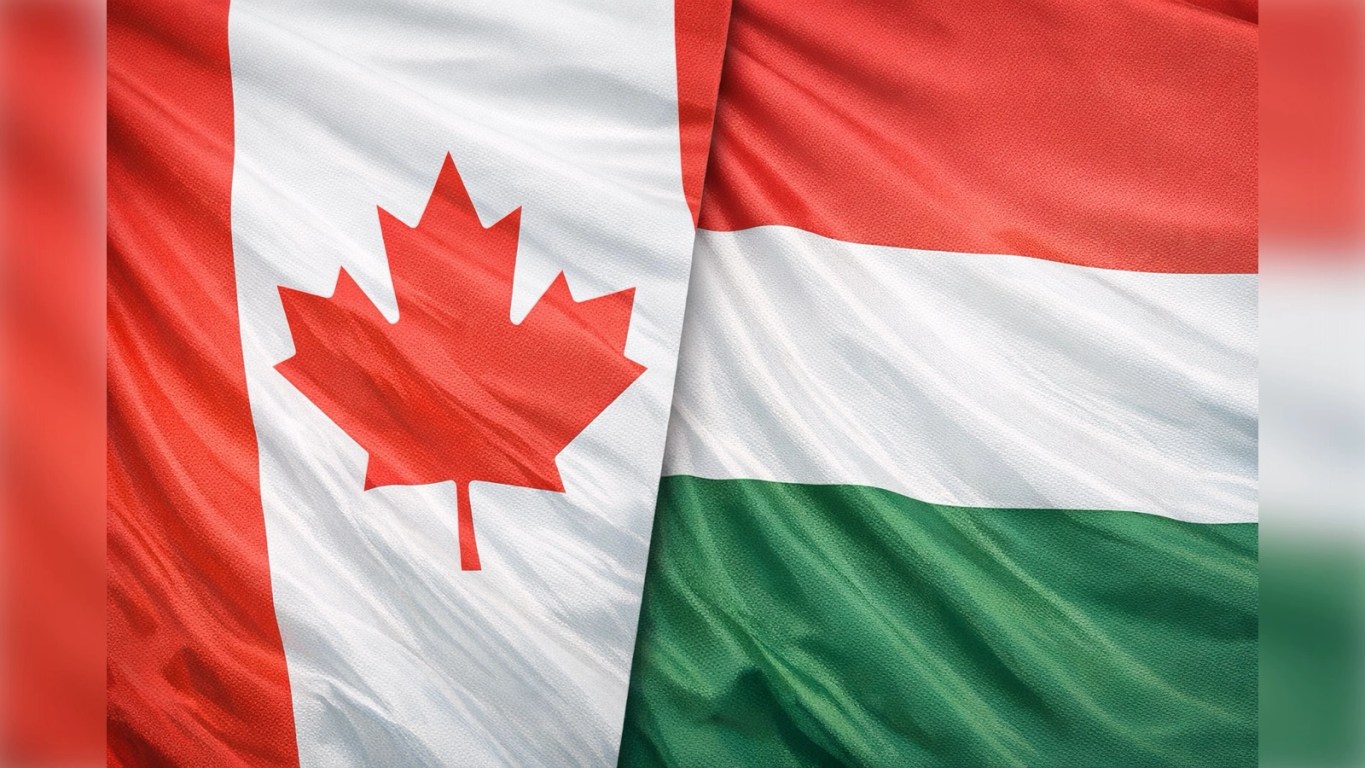
Hungary. Canada.
One is the end of an era, sixteen years of democratic backsliding, of “illiberal democracy,” of a man who proudly declared himself the template for a global authoritarian movement. Viktor Orbán, the Hungarian strongman who remade his country in his own image, has been voted out of power in a democratic earthquake, conceding defeat to centre‑right challenger Péter Magyar. The Tisza Party has secured a constitutional supermajority, 138 of 199 seats, with a mandate to rewrite the very constitution Orbán weaponized to entrench his rule.
The other is a consolidation of democratic legitimacy. Mark Carney‘s Liberal Party has secured a majority government in Canada’s special elections, clinching the 172nd seat needed to govern without opposition support. A razor‑thin minority has become a stable majority, giving Carney the political runway to legislate until 2029.
Two elections. Two democracies. Two results that fly in the face of a global narrative that has grown increasingly bleak. This is the anti‑authoritarian surge in action, voters pushing back against strongmen, rejecting consolidation of power, and reclaiming their institutions.
For years, the data has been grim. The 2026 Varieties of Democracy (V‑Dem) Institute report found that there are now more autocracies (92) than democracies (87) worldwide, with freedom of expression deteriorating in 44 nations. Nearly a quarter of the world’s nations are experiencing democratic backsliding, and six of the ten new autocratizing countries identified in the 2026 Democracy Report are in Europe and North America. A record 3.4 billion people now live in countries where democracy is deteriorating.
But this week, the pendulum swung the other way. This democratic earthquake sent shockwaves through Central Europe and North America. This is Halfway Clocked. Here is why it matters.
Hungary: The Authoritarian Blueprint Cracks
For sixteen years, Viktor Orbán was not just Hungary’s prime minister. He was the prototype. The model. The man who showed the global far‑right how to capture a democracy from within, hollow out its institutions, and rebrand authoritarianism as “illiberal democracy.”
He centralised power. He reshaped the constitution. He captured the judiciary, the media, and the public prosecutor’s office. European Union lawmakers and Western watchdogs no longer considered Hungary a full democracy. And Orbán wore that designation as a badge of honour.
He was also a close ally of Donald Trump, who endorsed him during the campaign, and of Vladimir Putin, whose war in Ukraine Orbán consistently obstructed within the EU. Vice President JD Vance flew to Budapest ahead of the election in an attempt to reverse his ailing ally’s poor poll ratings. It did not work.
What happened on Sunday was not a narrow defeat. It was a democratic earthquake—the kind that reshapes political landscapes for a generation.
With voter turnout at a record 78%, Hungarians delivered a verdict that Orbán himself called “painful” but “clear”. Péter Magyar’s Tisza Party secured 53.62% of the vote and 138 of 199 parliamentary seats, a two‑thirds supermajority. Orbán’s Fidesz Party was reduced to 55 seats, making it the largest opposition party.
The far‑right Our Homeland Movement won just 6 seats. Everyone else—the centre‑left, the satirists, the independents—failed to clear the 5% threshold. This was not a fragmented protest vote. This was a unified rejection of an entire system. This anti‑authoritarian surge was not spontaneous; it was the product of years of organizing, frustration, and finally, a unified opposition.
Magyar, a 45‑year‑old former insider within Orbán’s own party, had broken with Fidesz just two years ago following a scandal that forced the resignation of his ex‑wife, who had been tipped as Orbán’s successor. He campaigned relentlessly, sometimes visiting six towns a day, on corruption, healthcare, crumbling public services, and Hungary’s stagnating economy. His message was not complicated: Orbán had been in power too long, and Hungarians were tired of being governed by a man who treated the state as his personal fiefdom.
The results bear that out. Tisza won 53.62% of the vote. Orbán’s Fidesz won 37.79%. A sixteen‑point margin, in a country where Orbán had not faced a serious electoral challenge in more than a decade.
What the Supermajority Means
A two‑thirds majority in Hungary’s parliament is not symbolic. It is the key to the constitution.
Orbán used his own supermajority years ago to rewrite Hungary’s fundamental laws, entrenching changes that Magyar has pledged to reverse. Now the same power belongs to him. “With the two‑thirds majority allowing us to amend the constitution, we will restore the system of checks and balances,” Magyar told jubilant supporters. “We will join the European Public Prosecutor’s Office and guarantee the democratic functioning of our country. We will never again allow anyone to hold free Hungary captive or to abandon it”.
The implications extend far beyond Hungary’s borders. Orbán had been the EU’s most intransigent leader, blocking a €90 billion loan to Ukraine and vetoing countless European initiatives. Magyar has pledged to reset ties with Brussels, unlock frozen EU funding, and curb Russian influence. European Commission President Ursula von der Leyen, French President Emmanuel Macron, and German Chancellor Friedrich Merz have already congratulated Tisza on its victory. Polish Prime Minister Donald Tusk hailed the result as a victory for Poland and Europe, writing on social media: “Hungary, Poland, Europe. Back together!”.
The contrast with Orbán’s allies is equally stark. Trump had endorsed Orbán. Putin had voiced support for him. Vance had flown to Budapest. All of it was for nothing. The anti‑authoritarian surge that began in Poland in 2023 has now swept through Hungary, proving that even the most entrenched strongmen can be removed at the ballot box.
Canada: The Majority That Changes the Math
While Budapest partied, Ottawa was quietly consolidating.
Prime Minister Mark Carney’s Liberals entered Monday’s special elections holding 171 of 343 seats in the House of Commons, one seat shy of a majority. Three by‑elections were being held: two in Toronto‑area Liberal strongholds and one in a toss‑up riding near Montreal.
The Liberals only needed to win one. They won all three.
Danielle Martin’s victory in University‑Rosedale delivered the 172nd seat, giving Carney a majority government. Wins in Scarborough Southwest and Terrebonne further stabilised the party’s control. The majority gives Carney the ability to pass legislation without opposition support, staving off a federal election until as late as 2029.
The path to this majority had been unconventional. Carney had attracted five opposition MPs to cross the floor, four Conservatives and one New Democrat, in a rare wave of defections that one political scientist called “extraordinary”. The Liberals have shifted toward the political centre under Carney, ending signature Trudeau policies like the consumer carbon tax and pushing to make Canada an “energy superpower”.
But the broader context matters. Canada’s majority comes at a moment of deep uncertainty in North America, with trade tensions and diplomatic strains defining US‑Canada relations under the Trump administration. Carney, a former central banker, has positioned himself as a steady hand in a turbulent region. His Liberals now have the mandate to govern accordingly.
While less dramatic than Hungary’s democratic earthquake, Canada’s result is part of the same anti‑authoritarian surge, a reaffirmation that stable, centrist democratic governance can still command majority support, even in an era of populist disruption.
The Cultural Meaning — Halfway Clocked
Here is what matters beneath the headlines.
For years, the dominant political story has been one of democratic retreat. Authoritarianism has been on the march. Strongmen have been celebrated. Institutions have been hollowed out. And the people, the voters, the citizens, the ones who actually live under these systems, have been treated as spectators to their own dispossession.
But Hungary’s voters just demonstrated that authoritarianism can be voted out. Not overthrown. Not revolutionised. Voted out. Peacefully, legally, decisively. That is the essence of this democratic earthquake, the peaceful transfer of power away from a strongman who thought he was untouchable.
Orbán had spent sixteen years rigging the system in his favour. He controlled the media. He controlled the courts. He controlled the public prosecutor’s office. He had every institutional advantage a sitting autocrat could want. And none of it saved him. Because in the end, the people still had the ballot. And they used it. The anti‑authoritarian surge does not require armies or revolutions. It requires voters.
Canada’s result is different in scale but similar in spirit. A minority government was transformed into a majority not through backroom conspiracy, but through a combination of floor‑crossings and by‑election victories. The democratic process worked. The voters decided. The government was stabilised.
Together, these two events form a pattern that has been visible elsewhere. Poland’s populist Law and Justice Party lost power in 2023 after eight years. Slovakia’s pro‑Moscow government under Robert Fico is facing sustained opposition. The democratic backsliding that has defined the past decade is not irreversible. It is, in fact, reversible. And it is being reversed.
None of this means the global democratic crisis is over. The V‑Dem report’s findings remain alarming. The United States itself is cited as a leader in the global turn away from democracy. But the narrative that authoritarianism is inevitable, that strongmen cannot be beaten, that voters have surrendered their power—that narrative took a hit this week. This democratic earthquake in Hungary and the broader anti‑authoritarian surge across Central Europe and beyond are rewriting the story.
Budapest’s Chain Bridge was illuminated in Hungary’s national colours. Tens of thousands partied along the Danube, waving Hungarian and European Union flags, toasting with champagne in paper cups. Young people hugged and shouted, “We are so happy that Orbán is finally gone”.
That is what democratic renewal looks like. Not abstract theory. Not policy papers. Not pundit commentary. Euphoria. Relief. The sense that a long nightmare might finally be ending.
In Ottawa, the mood was quieter but no less significant. A stable majority in a minority parliament. The ability to govern without constant brinkmanship. A country that still believes in the legitimacy of its institutions.
Two elections. Two continents. One message.
Democracy is not dead. It is fighting back. And the anti‑authoritarian surge that produced this week’s democratic earthquake is only accelerating.
Halfway Clocked. That’s the tea.
Sources
· “Hungary’s Orbán era ends in a landslide election win for opposition,” ABC News, April 13, 2026
· “Hungary election 2026 results: Petér Magyar wins, Trump ally Viktor Orbán concedes landmark defeat,” CNN, April 12, 2026
· “Viktor Orbán concedes defeat as Hungary’s Tisza Party heads for election win,” NBC News, April 12, 2026
· “Hungary election: Viktor Orbán concedes with opposition on course for landslide election win,” BBC, April 12, 2026
· “HUNGARY: Orbán concedes defeat in democratic earthquake,” Euractiv, April 12, 2026
· “Hungary’s Tisza party wins parliamentary elections as 98.13 pct votes counted: NEO,” Xinhua, April 13, 2026
· “Hungary election: Nearly 99% of votes counted, Tisza party in lead,” Ukrinform, April 13, 2026
· “Hungary election: Orban concedes ‘painful’ defeat to Magyar,” DW, April 13, 2026
· “Hungary election 2026: Péter Magyar ousts Orbán in historic landslide, ending 16 years in power,” Georgia Today, April 13, 2026
· “PM Mark Carney’s Liberals win majority government after byelection victory,” CTV News, April 14, 2026
· “Carney on verge of Liberal majority government as votes cast in three by-elections,” BBC, April 13, 2026
· “A year after the election, PM Carney is on the precipice of a majority,” CTV News, April 12, 2026
· “Democratic backsliding reaches Western democracies, with US decline ‘unprecedented,'” EurekAlert, March 17, 2026
· “The new frontlines of democracy,” Alliance Magazine, March 27, 2026
About the Author
Andrew Greene is a quality-obsessed, results-driven powerhouse with nearly two decades of experience transforming complexity into clear, actionable solutions. His secret weapon? A mix of analytical sharpness, problem-solving precision and a communication and leadership style that’s equal parts clarity and charisma. From Quality Assurance to political data analysis, you can think of him as the Swiss Army knife of operational excellence, minus the corkscrew (unless it’s a team celebration).