
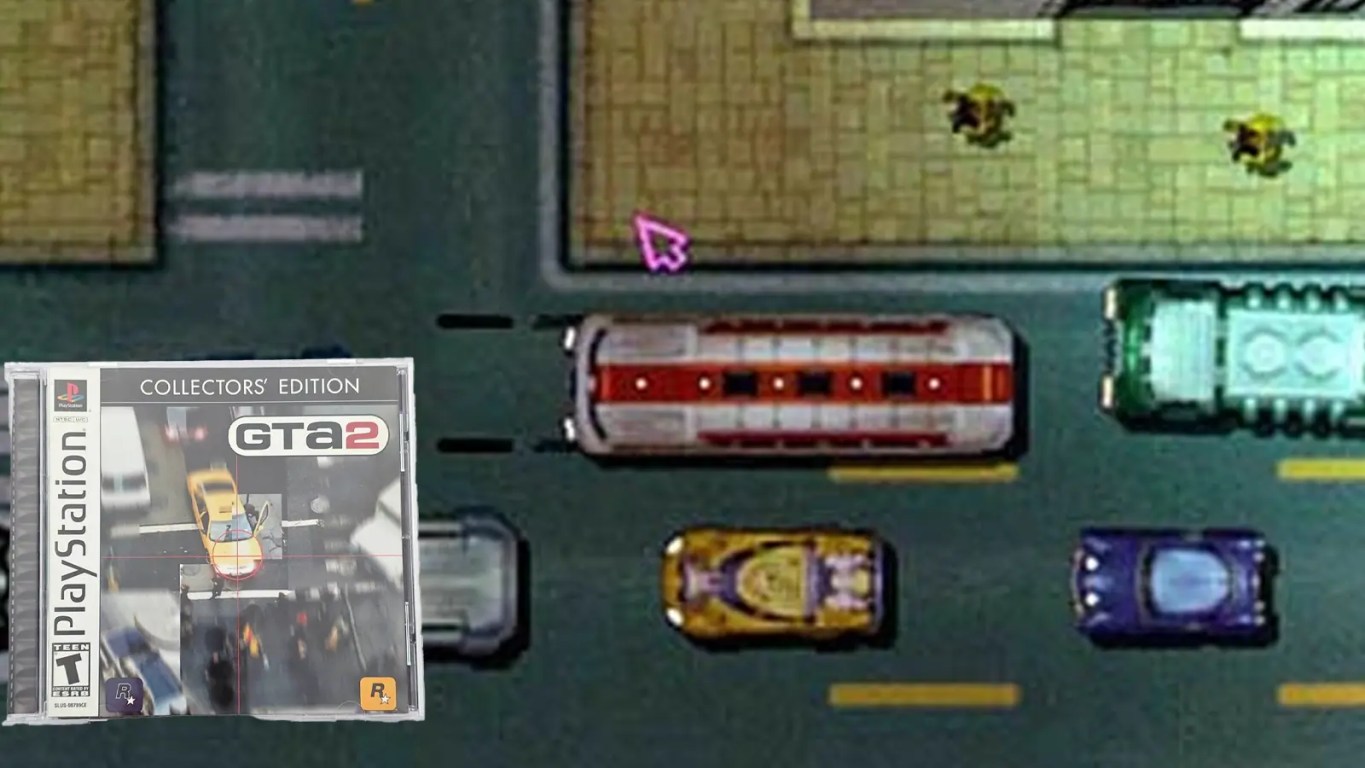
Released at the tail end of the millennium, Grand Theft Auto 2 was the bridge between the experimental 2D roots of the series and the cinematic juggernaut it would become. While its predecessor established the “Steal, Drive, Kill” loop, GTA2 introduced the Respect System, forcing players to treat the open world not just as a playground, but as a political ecosystem of rival gangs and industrial hardware.
Grand Theft Auto 2 is the next file entry in our library.
RELATED: [THE FILES 066] | Grand Theft Auto (1997): The Glitch That Built an Empire
Table of Contents
The Game Engine: Top-Down High Fidelity
While the industry was pivoting toward 3D (with Driver and Tony Hawk’s Pro Skater dropping the same year), DMA Design doubled down on a refined version of their top-down engine.
- The Lighting Spec: GTA2 introduced a dynamic “Noon” and “Dusk” mode. The PC version, in particular, utilized advanced colored lighting for the time—police sirens, streetlamps, and explosions cast prismatic light across the 2D sprites, creating a gritty, retro-futuristic atmosphere.
- The AI Overhaul: The “Anywhere City” NPCs were significantly more active than in the original. Muggers would rob the player, carjackers would steal your vehicle if you left it idling, and rival gang members would engage in firefights with the police independently of player action.
- The Respect Meter: This was the game’s core technical innovation. By completing missions for one syndicate (like the Zaibatsu or the Yakuza), you gained respect with them but lost it with their rivals. High respect unlocked “Green” (Hard) missions, while low respect turned that gang’s territory into a “Kill Zone” for the player.
The World Hardware: Anywhere, USA
The game is set in a retro-futuristic metropolis divided into three distinct districts, each acting as a “Hardware Tier” for the player’s progression:
- Downtown District: The commercial hub, featuring the iconic “Z-Type” cars (a futuristic take on 1930s luxury cruisers).
- Residential District: The mid-tier zone where the Scientists and Rednecks operate.
- Industrial District: The final, most hostile tier, featuring the Russian Mob and heavy-duty hardware like the GT-A1 Tank.
The Cinematic “Live-Action” Intro
To market the game’s shift toward a “grittier” tone, Rockstar produced an 8-minute live-action short film shot in New York City.
- The Protagonist: The film features Claude Speed (played by Scott Maslen), who would later serve as the silent protagonist of GTA III.
- The Tech: The film utilized fast-paced, music-video style editing and handheld camera rigs to mirror the frantic energy of the gameplay, marking Rockstar’s first major foray into “Cinematic Marketing.”
The ‘Decked Out’ Verdict: The Top-Down Pinnacle
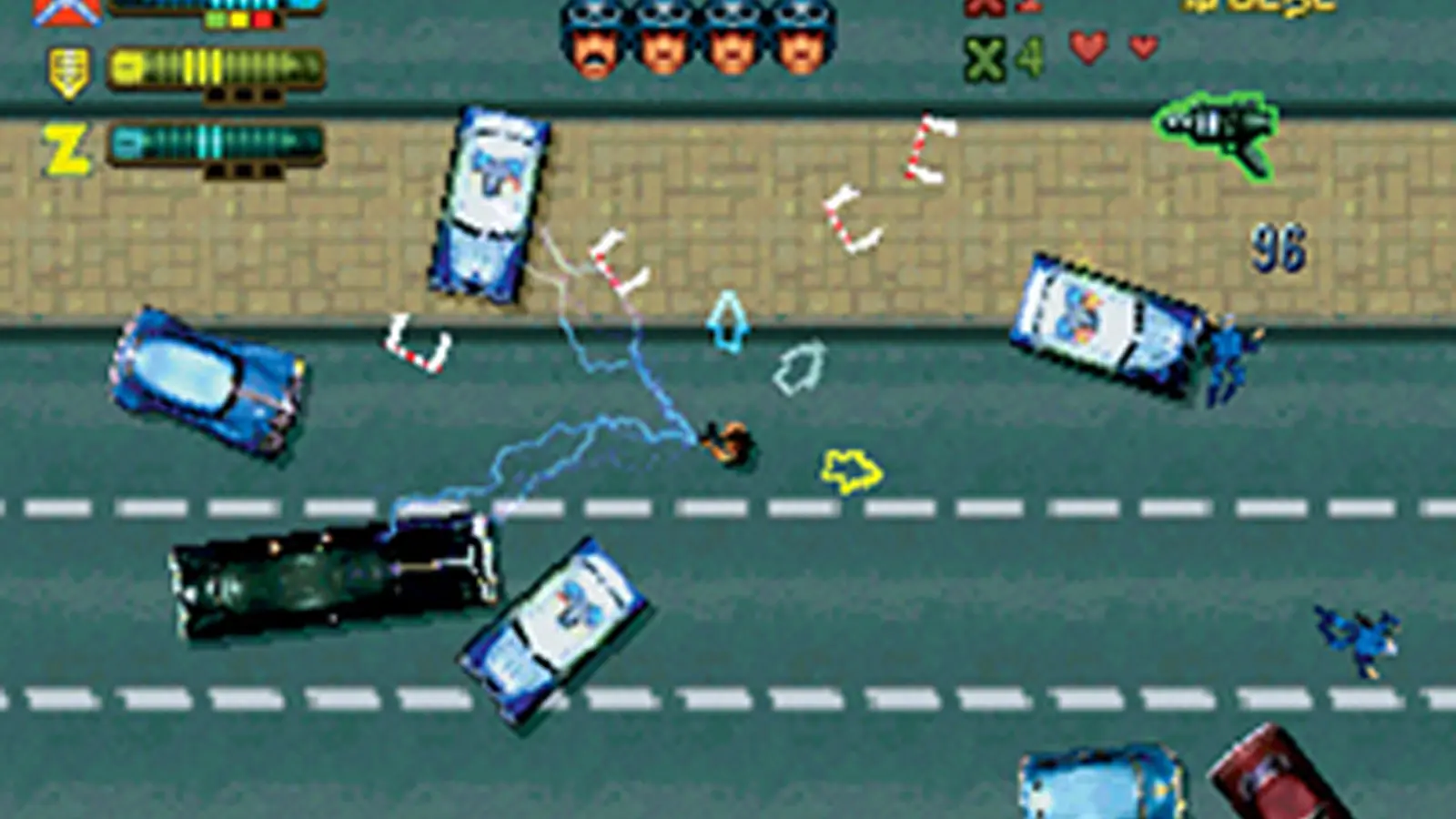
Photo: Rockstar North
Grand Theft Auto 2 remains a fascinating “Hardware” transition in the Rockstar Games timeline. It was the final evolution of the top-down perspective before the franchise moved into 3D and changed the medium forever with GTA III. While history often overlooks the 2D era, the Respect System and the gritty, Anywhere City industrial aesthetic provided the mechanical DNA that still exists in the series today.
By focusing on the interaction between rival syndicates rather than just mindless chaos, GTA2 proved that an open world was most effective when it felt like a living, breathing ecosystem of competing interests. Whether you were drifting a Z-Type through the Downtown District or surviving a Russian Mob hit in the industrial zone, the game’s technical depth proved that “Top-Down” didn’t have to mean “Simple.”
The Archival Staple
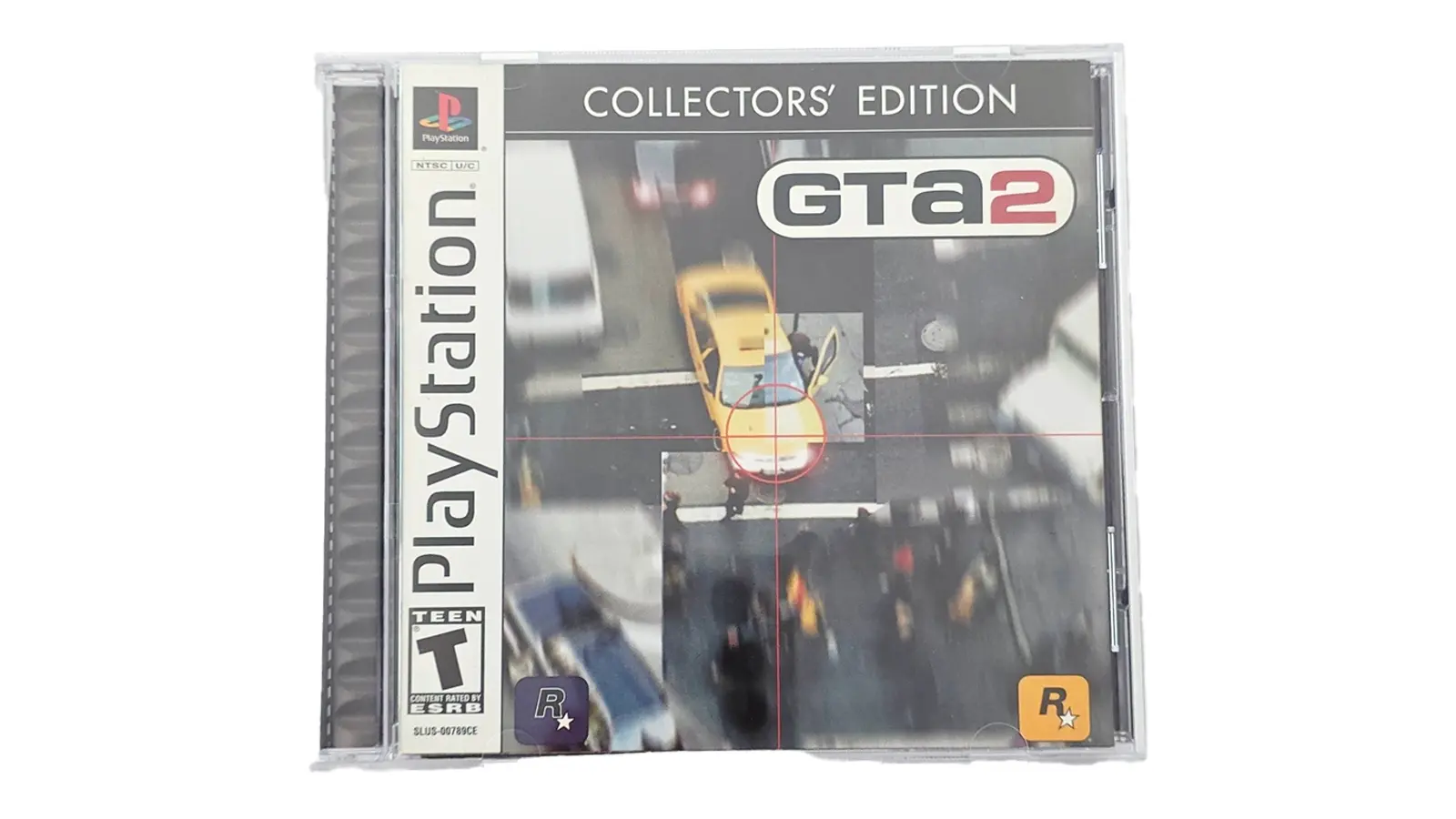
*As an eBay partner, we earn commission from this link, which allows us to keep expanding our library*
Photo: eBay; Rockstar North
Author Bio
Jael Rucker is the founder of Decked Out Magazine. She has previously worked as the Associate Commerce Editor at PureWow, focusing on analytics and trends to pitch stories and optimize articles that build and engage their audience. Her work has also been seen in Footwear News and WWD. Prior to 2024, she was the style and pop culture editor at ONE37pm for over three years, contributing numerous product reviews, brand profiles and fashion trend reports, which included interviewing Steph Curry, Snoop Dogg and more.