
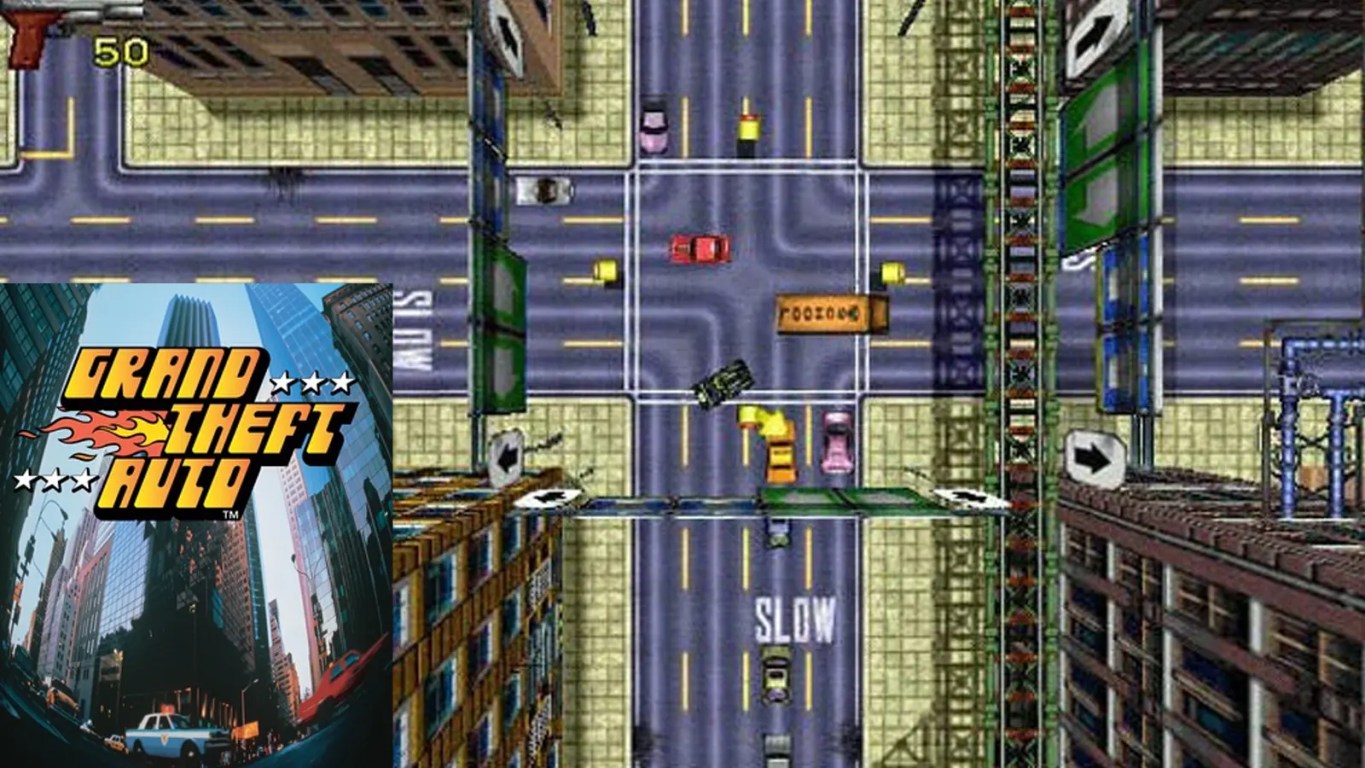
Before it was a billion-dollar cultural phenomenon, Grand Theft Auto was a failing project in a cramped office above a former fish-and-chip shop in Dundee. Developed by DMA Design (now Rockstar North), the game was a chaotic mess of ambitious tech and broken deadlines. It wasn’t meant to be the game we know today; it was meant to be a polite racing sim called Race’n’Chase.
The reason the franchise exists isn’t because of a master plan, but because of a programming error that made the police AI go “psychotic.” By embracing a bug that turned standard law enforcement into homicidal battering rams, the developers stumbled upon a new genre: the open-world crime sandbox. This is the hardware of a digital revolution—a game that was nearly canceled multiple times, only to be saved by a publicist who used the UK House of Lords as a marketing tool.
RELATED: [THE FILES] 033 | The Neversoft Engine: A Technical Review of Tony Hawk’s Pro Skater (1999)
Grand Theft Auto is the next file entry in our library.
The “Psycho Cop” Error
In the original Race’n’Chase build, you played as a police officer chasing criminals. The game was, in the words of creative director Gary Penn, “bland and directionless.” Everything changed when a bug was introduced into the pathfinding algorithm. Instead of pulling the player over, the police AI began treating the player’s car as its final destination—driving through the player rather than stopping behind them.
- The Result: The police became hyper-aggressive, ramming testers off the road and causing massive chain-reaction explosions.
- The Pivot: The team realized that running from these psychotic cops was more fun than being one. They flipped the script, turned the player into a criminal, and Grand Theft Auto was born.
The Manufactured Controversy
To ensure the game stood out in a crowded 1997 market, BMG Interactive hired publicist Max Clifford. His mission was to manufacture a scandal.
- Clifford leaked details of the game’s “amoral violence” to conservative tabloids and politicians, intentionally stoking the fires of a ban.
- The plan worked perfectly: Lord Campbell of Croy condemned the game in the House of Lords, providing GTA with millions of dollars in free publicity. By the time it launched, it was the “forbidden” game every teenager in the world had to own.
Technical Baseline: 1997 Specs
- The Engine: A top-down 2D engine that utilized a “scaling” camera. As the player’s car gained speed, the camera would zoom out to provide a larger Field of View (FOV)—a technical necessity for a game that allowed for 100+ mph chases on a 1990s CPU.
- The PC Hardware: The game was built using Visual C++ and required a Pentium 75 MHz with 16MB of RAM.
- The Cities: Even in 1997, the foundational “Hardware” of the franchise was set: Liberty City, San Andreas, and Vice City were all accessible in the original release
The Soundtrack: Because the game was released on CD-ROM, it utilized Red Book Audio, allowing the music to play directly from the disc. This enabled the “Radio Station” mechanic, where players could cycle through genres (Hip-Hop, Industrial, Funk) produced in-house by DMA’s audio team. It wasn’t just music; it was world-building hardware that set the tone for the entire industry.
The Legacy: 30 Years of Chaos
Grand Theft Auto (1997) sold 3 million copies by 2000, proving that “The Hardware of Controversy” was the most effective marketing tool in existence. While the top-down sprites have evolved into the photorealistic 4K world of GTA VI, the core DNA remains unchanged. The police are still aggressive, the radio is still loud, and the world is still yours to break.
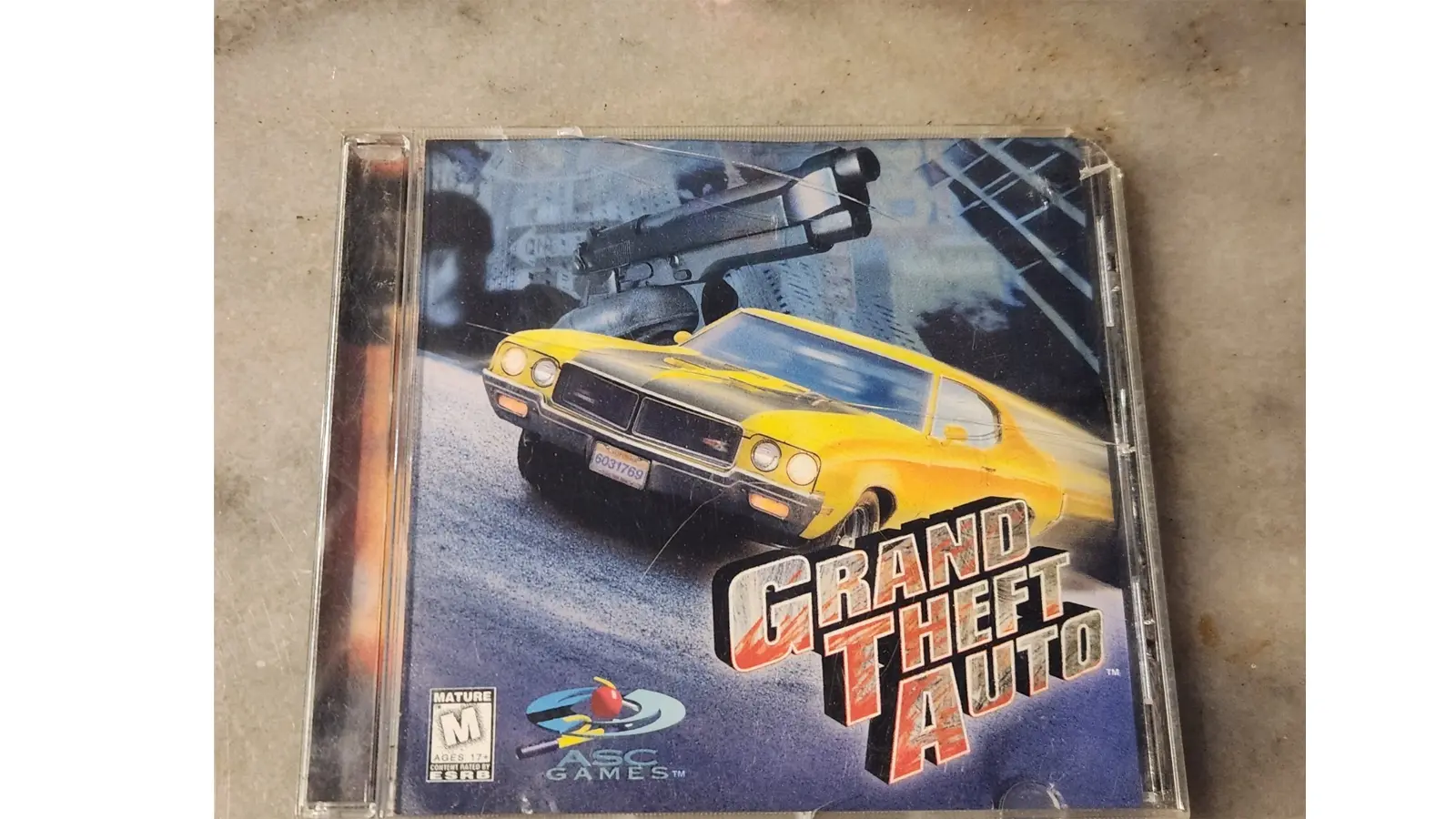
Games Grand Theft Auto PC Game 1997
Just something for your collection.
*As an eBay partner, we earn commission from this link, which allows us to keep expanding our library*
RELATED: [THE FILES] 027 | Rocket Power: Team Rocket Rescue (2001): The 32-Bit Extreme Sports Blueprint
Photo: eBay; DMA Design
Author Bio
Jael Rucker is the founder of Decked Out Magazine. She has previously worked as the Associate Commerce Editor at PureWow, focusing on analytics and trends to pitch stories and optimize articles that build and engage their audience. Her work has also been seen in Footwear News and WWD. Prior to 2024, she was the style and pop culture editor at ONE37pm for over three years, contributing numerous product reviews, brand profiles and fashion trend reports, which included interviewing Steph Curry, Snoop Dogg and more.