

- File Status: Open
- Date: October 31, 1995
- Subject: The 3D Revolution and the ‘Virtual Stadium’ Engine
While 1994’s NBA Live 95 defined the layout of the modern basketball sim, NBA Live 96 was the hardware stress test that proved the 16-bit era was over and the 32-bit revolution had arrived. Released for the Sega Saturn and Sony PlayStation (and later the SNES/Genesis), NBA Live 96 was the first time “Standard Issue” gaming moved into a fully realized 3D space.
Continuing our NBA Live series, NBA Live 96 is the next file entry in our library.
RELATED: [THE FILES] 061 | NBA Live 95 (1994) — The Isometric Revolution
Table of Contents
The ‘Virtual Stadium’ Technology
The PlayStation and Saturn versions featured what EA Sports dubbed the “Virtual Stadium.”
- The Tech: For the first time, the court wasn’t a flat 2D plane. It was a 3D environment that allowed for multiple camera angles, including the “Floor Cam” and “Press Box” views that mirrored a live TNT broadcast.
- The Frame Rate: On the 32-bit consoles, the game ran at a (then) blistering pace, allowing for fluid player animations like the “spin move” and “alley-oop” that felt jagged on older hardware.
The Customization ‘Hardware’: Create-A-Player
NBA Live 96 introduced a feature that would become a staple of gaming culture: Create-A-Player.
- The Innovation: Players could finally insert themselves into the league. It wasn’t just about names; you could adjust height, weight, and skill attributes. In 1995, this was a massive leap in user agency—effectively turning the game into a personal “Standard Issue” sports fantasy.
- The Rookie Class: This was also the first year fans could play with the iconic ’95 rookie class, including Kevin Garnett, Jerry Stackhouse and Rasheed Wallace, right out of the box.
The Missing Icon: Michael Jordan
Despite the technical leaps, NBA Live 96 was still defined by a glaring absence. Due to separate licensing agreements, Michael Jordan was once again missing from the roster, replaced by a “Player” guard on the Chicago Bulls. This forced players to use the newly-minted Create-A-Player tech to manually build the GOAT, a ritual that became a rite of passage for every 90s gamer.
The ‘Decked Out’ Verdict
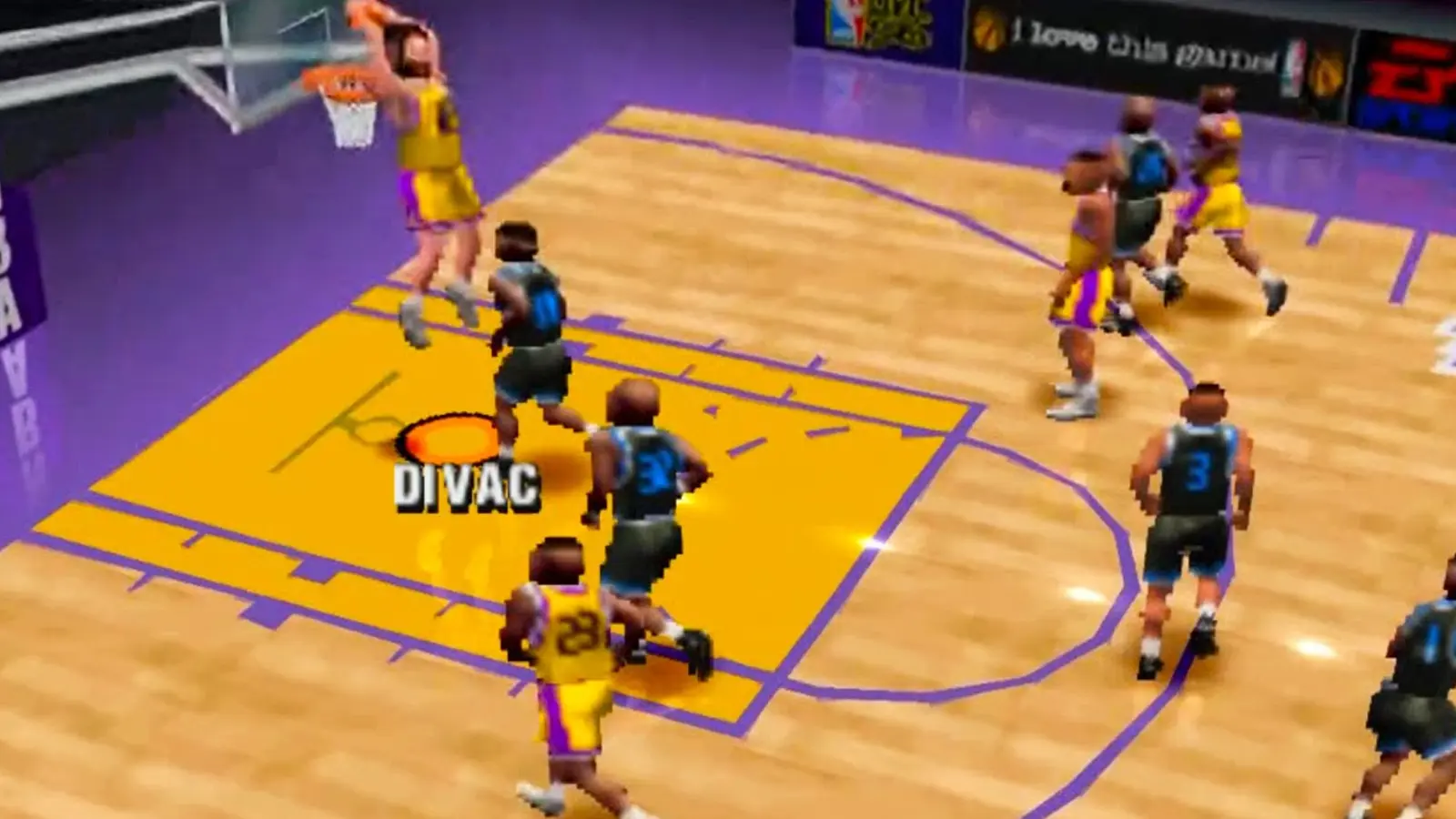
Photo: EA Sports
NBA Live 96 served as the bridge between the pixelated past and the polygonal future. It established the “broadcast-style” presentation that EA Sports would spend the next three decades perfecting. For the 1995 gamer, hearing the squeak of the shoes on a virtual 3D floor was the first sign that sports “Hardware” was changing forever.
The Archival Staple

*As an eBay partner, we earn a commission on qualifying purchases, which allows us to expand our digital library*
RELATED: [THE FILES] 015: Freestyle Revolution: The “Superstar” Era of NBA Live 06
Author Bio
Jael Rucker is the founder of Decked Out Magazine. She has previously worked as the Associate Commerce Editor at PureWow, focusing on analytics and trends to pitch stories and optimize articles that build and engage their audience. Her work has also been seen in Footwear News and WWD. Prior to 2024, she was the style and pop culture editor at ONE37pm for over three years, contributing numerous product reviews, brand profiles and fashion trend reports, which included interviewing Steph Curry, Snoop Dogg and more.
![[THE FILES] 081 | Destiny’s Child — No, No, No Part 2 (1997)](https://deckedoutmagazine.com/wp-content/uploads/2026/04/destinys_child_no_no_no_part_2_hero.webp)

![[THE FILES] 080 | Herbie: Fully Loaded (2005) — Mechanical Resurrection](https://deckedoutmagazine.com/wp-content/uploads/2026/04/lindsay_lohan_herbie_fully_loaded_dvd_movie_still.webp)
![[THE FILES] 006.5 | The Architecture of Agency: Janet Jackson’s ‘Let’s Wait Awhile’ (1987)](https://deckedoutmagazine.com/wp-content/uploads/2026/04/janet_jackson_lets_wait_a_while_hero_image.webp)