Artifact: Control (Studio Album)
Release Date: February 4, 1986
Recording Location: Flyte Tyme Studios (Minneapolis, MN)
Architects: Janet Jackson, Jimmy Jam, Terry Lewis
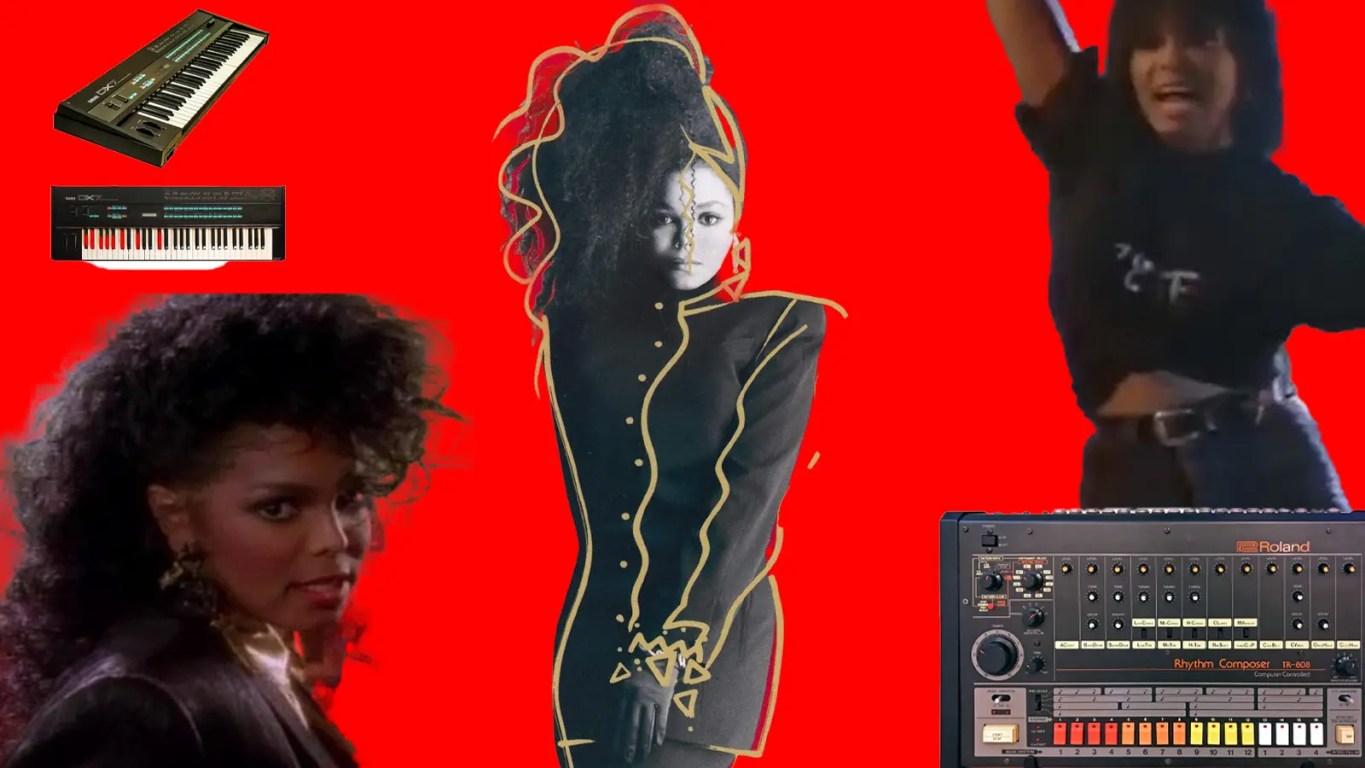
Primary Hardware: Linn LM-2 (LinnDrum), Yamaha DX7, Ensoniq Mirage, Roland TR-808
Recording Console: Harrison Series 10 (The world’s first fully automated console)
Worldwide Sales: 14,000,000+ Units
Chart Performance: #1 Billboard 200 (65 consecutive weeks on chart)
When Janet Jackson arrived in Minneapolis in the summer of 1985, simplicity was the key—Jimmy Jam in his personal car and her luggage spilling out of the trunk into the backseat. Holed up in Flyte Tyme Studios, Jackson spent the first week not singing, but just simply talking to Jam and Terry Lewis. The result? A sound that was cold, metallic and intentionally aggressive—control of what she was saying; control of what she was doing—it was all about control, and she had lots of it. Forty years later, Control isn’t just a pop record—it’s the motherboard for every female artist in the digital age. In a year where it celebrates a monumental anniversary, we’re taking a look back at a pivotal moment in music history.
This is the story of “Control.”
RELATED: [The File 005] The Click That Changed Everything: 30 Years of the Motorola StarTAC
Engineering The LinnDrum
The signature “thwack” of Control is the sound of a Linn LM-2 (LinnDrum) being pushed into the red. In 1986, Jimmy Jam and Terry Lewis were working without an engineer after their lead technician walked out. This technical “deficit” became the album’s greatest asset.
- The Glitch in the Machine: Because they were recording the drum machines too loud for the console’s headroom, the percussion on tracks like “Nasty” took on a frantic, overdriven quality.
- The Result: This distortion created a “hard” sonic palette that felt dangerous. It wasn’t just a beat; it was industrial armor for Janet’s lyrics about self-protection
The Yahama DX7 & TR-808
While the 70s were defined by the warmth of analog synths, Control leaned into the jagged, glassy textures of FM Synthesis.
- The DX7: The sharp, brassy stabs on the title track “Control” were crafted on the Yamaha DX7. It was a sound that felt like it was cut from glass—unforgiving and modern.
- The 808: Underneath the digital shimmer, they utilized the Roland TR-808 for its sub-bass “boom,” a precursor to the New Jack Swing and Hip-Hop Soul movements that would dominate the next decade.
The Mirage of Autonomy
“Control” utilized the Ensoniq Mirage, one of the first affordable digital samplers. This allowed Janet and her producers to map “found sounds”—glass breaks, industrial clangs, and vocal “stabs”—across a keyboard. On “The Pleasure Principle,” specifically, the machine and the human voice become indistinguishable, creating a sonic landscape that felt entirely synthetic yet deeply personal.
The 40-Year Legacy in 2026
Forty years after its February 1986 release, Control is no longer just a “breakout” album; it is the constitutional document for modern stardom.
- The Architecture of Independence: Before the “Surprise Drop” or the “Visual Album,” Janet established the idea that an era must be a total aesthetic takeover. From the military-grade choreography to the all-black power suits, the Control era proved that a female artist’s most powerful tool was her veto.
- The Sonic DNA: You can hear the LinnDrum distortion in the avant-pop of the 2020s and the “Minneapolis Swing” in every R&B track that prioritizes rhythm over melody.
- The Personal as Political: Control transformed Janet from a managed child star into a sovereign entity. It proved that you don’t find power by asking for it—you find it by mastering the machines that build your world.
The ‘Control’ Essential

Janet Jackson ‘Control’ LP
Photo: Amazon
Owning the physical version of Control is essential for any music lover and collector.
Up next in the ‘Control’ series:
[THE FILES] 006.1 40 Years of Janet Jackson’s “What Have You Done for Me Lately”
Featured Image: Wikipedia; A&M Records
Author Bio
Jael Rucker is the founder of Decked Out Magazine. She has previously worked as the Associate Commerce Editor at PureWow, focusing on analytics and trends to pitch stories and optimize articles that build and engage their audience. Her work has also been seen in Footwear News and WWD. Prior to 2024, she was the style and pop culture editor at ONE37pm for over three years, contributing numerous product reviews, brand profiles and fashion trend reports, which included interviewing Steph Curry, Snoop Dogg and more.
![[THE FILES] : Jay-Z — Can’t Knock the Hustle (1996)](https://deckedoutmagazine.com/wp-content/uploads/2026/06/jay_z_reasonable_doubt_history_hero.webp)