
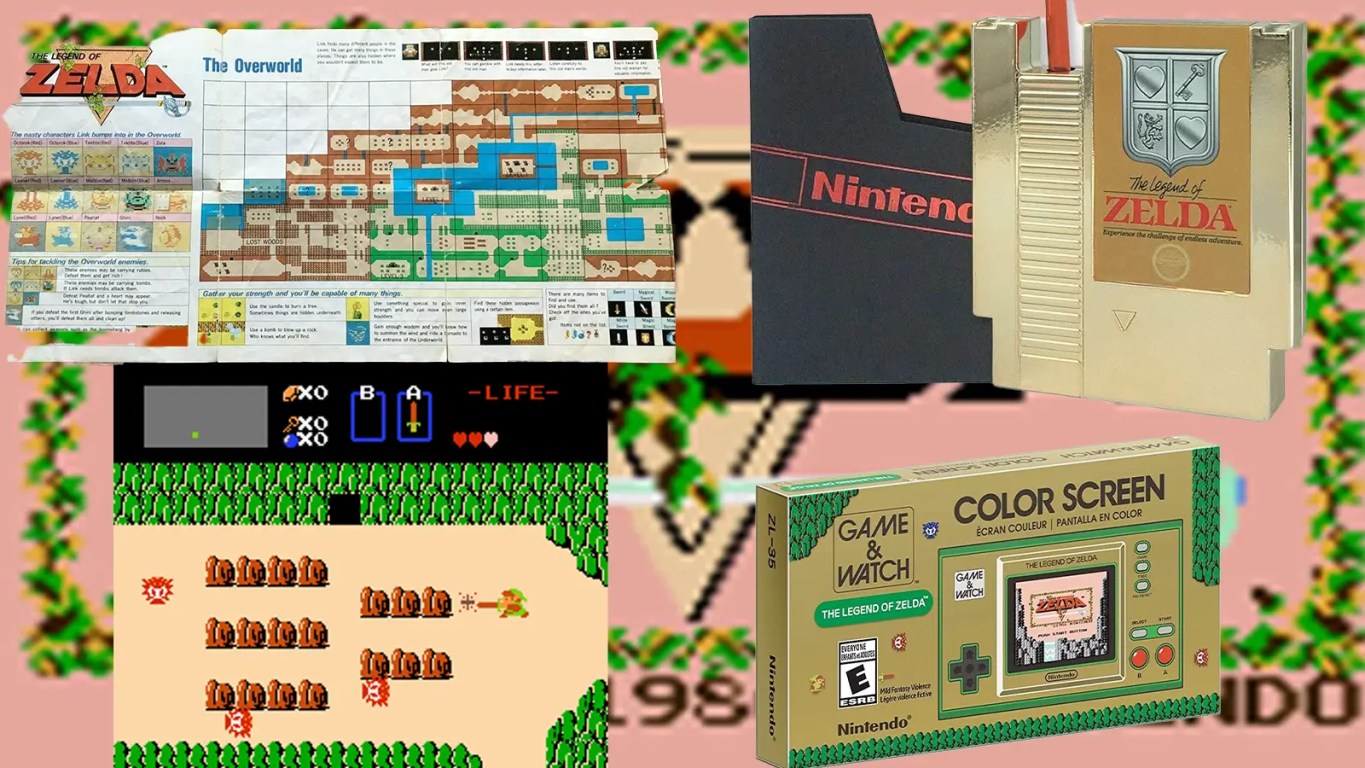
FILE STATUS – OPEN
FILE 004: THE GOLD STANDARD
SUBJECT: THE LEGEND OF ZELDA (NES / FAMICOM DISK SYSTEM)
AUDIT CATEGORY: HARDWARE ARCHITECTURE / NON-LINEAR DESIGN
FILE DATE: FEBRUARY 22, 2026 (POST-40TH ANNIVERSARY AUDIT)
LOCATION: NINTENDO R&D4 / KYOTO, JP
STATUS: VERIFIED ARTIFACT
In February 1986, Shigeru Miyamoto did something no game designer had done at scale: he built a world designed to resist you. While the dominant design philosophy of the era told players exactly where to go, The Legend of Zelda dropped you into an open overworld with nomap, no waymarkers, and a cryptic old man handing you a sword with zero explanation.
The instruction was to figure it out. To fail, retreat, and try again. The anxiety was intentional. The silence was intentional. The whole industry was holding players’ hands. Zelda let go. That blueprint — the silence, the resistance, the reward loop built on earned discovery — is what every action-RPG since has been quietly stealing from. Ocarina of Time. Dark Souls. Elden Ring.
Forty years of genre evolution, and it all traces back to one gold cartridge released forty years ago today. And the numbers make the case.
RELATED: [The File 003]: The Final Handshake: Jordan vs. Magic (1996)
Table of Contents
The Texture of Silence: Beyond the Tutorial
The more precise claim is this: Miyamoto was the first designer to weaponise the player’s disorientation as a creative tool at commercial scale. The game was developed simultaneously with Super Mario Bros. by the same core team, with an explicit directive from Miyamoto that the two titles would be structural opposites. Mario was linear, kinetic, joyful noise. Zelda would be open, contemplative, and quietly hostile. DeathMountain sat at the top of the overworld map like a threat you couldn’t yet answer. The dungeons were disguised as natural features — a tree stump, a lake island, a dead-end corridor that wasn’t. The world withheld its logic until you deserved it.
The Psychological Architecture: Miyamoto designed the overworld from his own childhood, exploring hillsides and caves near his home in Sonobe, Japan. The game’s geography isn’t abstract level design — it’s encoded memory. The weight of discovery the player feels is borrowed from the designer’s actual past. The Save Mechanic as Industrial Pivot: To fit the game onto an NES cartridge for Western markets. Nintendo had to engineer battery-backed save memory — making it the first NES cartridge in North America to include one. You didn’t just play Zelda; you maintained a persistent relationship with aworld that remembered you. Every game since that stores your progress owes its architecture to that decision.
The Second Quest: Hidden within the same cartridge was an entirely remixed version of the game —dungeons relocated, items repositioned, enemies harder. In 1986, before DLC was a concept, Zelda shipped with double the content at the standard price. The only way to unlock it was to type your name as “ZELDA” or complete the game outright.
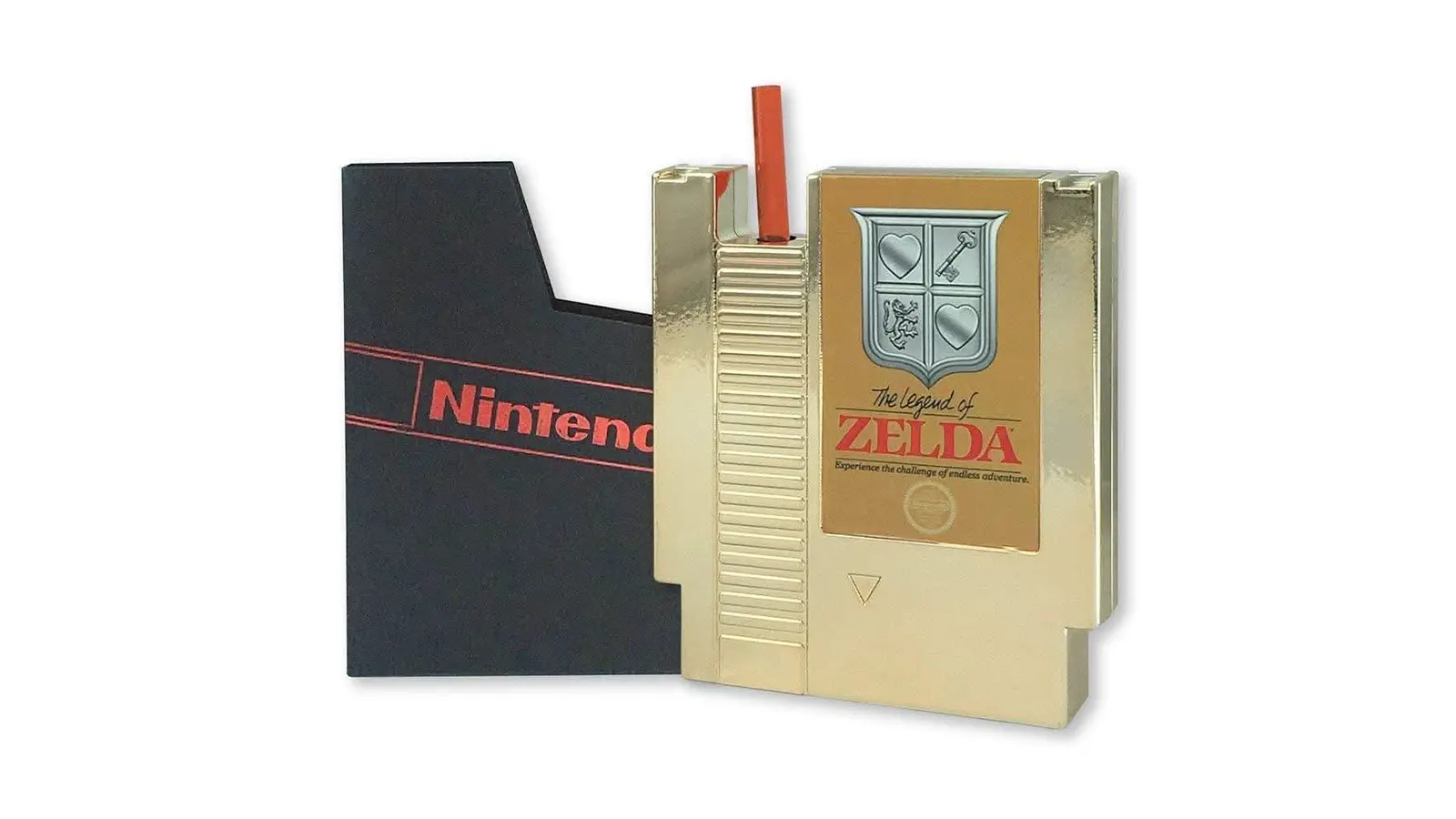
Photo: Nintendo
The Financial Audit: Project Hyrule (1986/2023)
The Dark Knight Returns sold itself as a prestige object at double the standard price. Zelda used a different tactic: it built a premium object at the standard price and let the hardware do the signalling. The gold cartridge wasn’t a decoration. It was an industrial statement.
- Production Cost & Retail: Originally retailed for $49.99 in 1987 (approx. $135.00 in 2026 currency), signaling its status as a “Premium” title compared to standard $29.99 releases.
- Sales Velocity: The first NES title to cross the 1,000,000 unit milestone. It eventually peaked at 6.5 million copies, creating the financial foundation for the entire Nintendo empire.
- The “Gold” Premium: The metallic gold coating was an industrial outlier. It cost Nintendo more per unit to produce, but the visual “shelf-presence” resulted in a nearly 100% sell-through rate in its first year.
Internal Hardware (The Save Engine):
- Logic Board: NES-SNROM.
- Mapper Chip: MMC1 (Custom Nintendo multi-memory controller).
- Battery: CR2032 Lithium 3V (The first “Real-Time” save infrastructure in console history).
- Memory: 8KB of CMOS internal RAM.
Secondary Market Performance (2026 Audit):
- Loose “Player” Copies: $45 – $65 (Steady appreciation).
- CIB (Complete In Box): $250 – $600, depending on “Round” vs. “Oval” Nintendo Seal of Quality.
- WATA Graded (9.0+): $3,000 – $20,000+ (A Tier-1 blue-chip asset for industrial collectors).
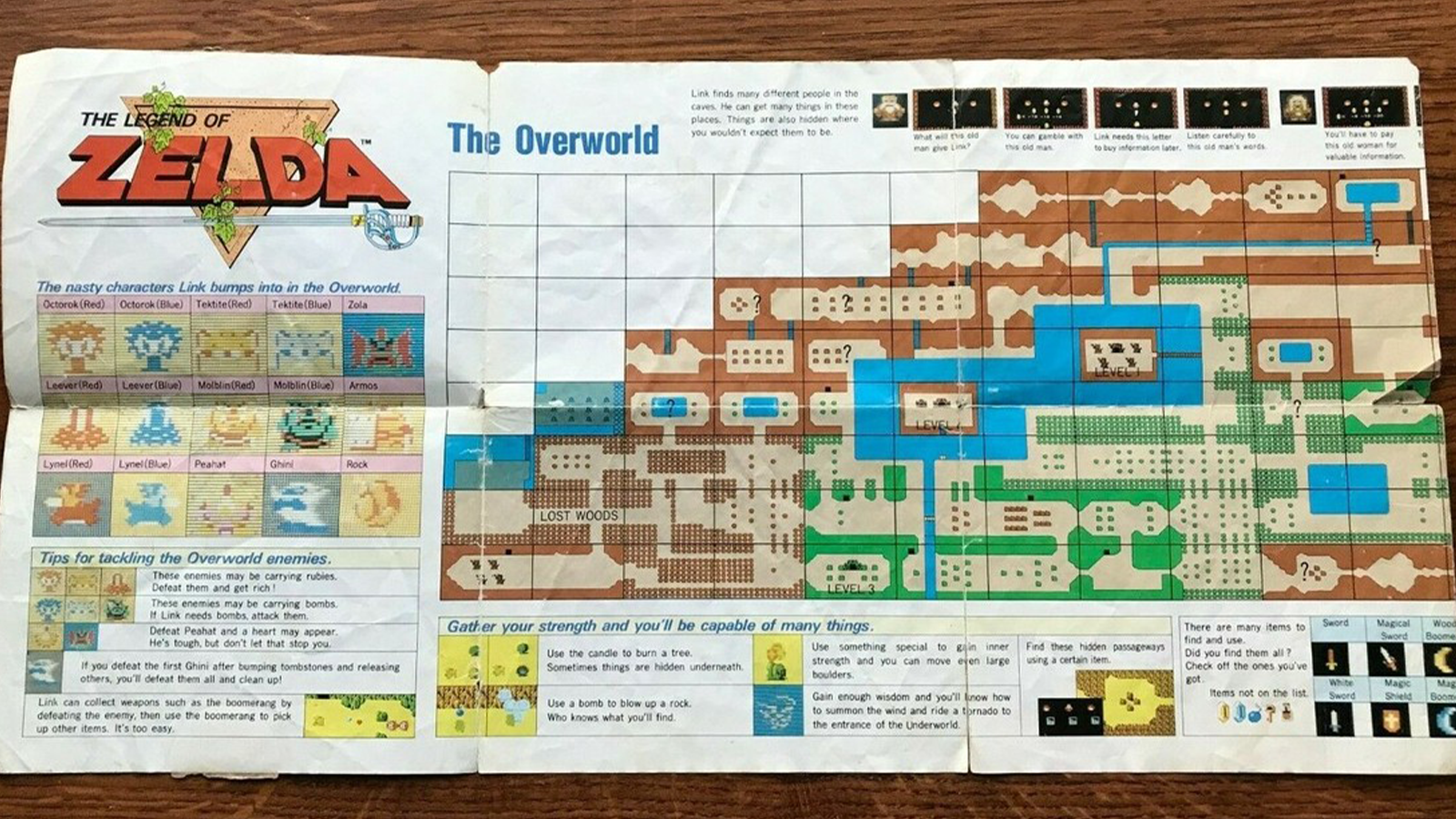
Photo: Nintendo; Unknown
The Gold Cartridge: A Moment of Industrial Craft
When Nintendo brought Zelda to Western markets in 1987, they faced a problem. The Famicom Disk System, which housed the original Japanese release, had sold the game partly on the novelty of the larger file format. Western audiences weren’t getting that peripheral. The game needed to communicate its own significance through its packaging alone. The solution was to make the cartridge itself the signal. While every other NES title shipped in grey plastic, Zelda arrived in gold — chosen to echo the Triforce at the heart of its mythology. Nintendo cut a window in the box so the cartridge was visible before purchase. The product announced itself as different before you’d handed over a pound.
- The Technical First: The gold cart wasn’t cosmetic alone. It was also the first NES cartridge in North America to include battery-backed save memory, allowing Western players to preserve progress without passwords for the first time. The gold was the promise; the battery was the delivery.
- The Collector’s Market: Standard loose copies sell for around £25-40 today. A sealed NES R-variant— produced for only a few months in late 1987 and distinguished by a five-screw design and circular Seal of Quality — sold at Heritage Auctions in 2021 for $870,000. The object has outlasted its medium.
- The Symbolic Weight: The gold cartridge meant something before you’d even plugged it in. It said: this one’s different. Subsequent Zelda titles have been chasing that first impression ever since.
The Architecture of Hyrule
Miyamoto didn’t just design levels. He designed a spatial philosophy. The overworld is a sixteen-by-eight grid of interconnected screens. On paper, that’s nothing. In practice, it’s one of the most disorienting and rewarding spaces ever built for a game. Every dead end is a lesson. Every hidden entrance is a payoff. Death Mountain sits in the top corner because Miyamoto understood that a world needs something to push against. You can’t be lost if there’s nothing to be lost from. Hidetaka Miyazaki has cited the Zelda series as a direct influence on his work, calling it “a sort of textbook for 3D action games.” The Soulsborne connection isn’t a theory. It’s on record.
- The Dungeon as Argument: Each of Zelda’s nine dungeons presents a single spatial thesis: a set of rules the player must understand and exploit to progress. The dungeon doesn’t explain its rules. It demonstrates them through consequence. This is the same structure that runs through FromSoftware’s boss design philosophy since Demon’s Souls in 2009.
- The Overworld as Memory: The game’s geography is designed to be remembered rather than when Breath of the Wild returned to the same territory in 2017 — with the same mountain in the same position on the horizon — thirty years of players felt the recognition physically. That’s not nostalgia. That’s structural architecture functioning across decades.
- The Silence as Design Tool: The original overworld theme is one of the most recognisable pieces of music in gaming history, but Miyamoto and Koji Kondo also made a radical choice: the dungeons are near-silent. Ambient sound, not score. That deliberate quiet is oppressive in exactly the way an underground labyrinth should be. The absence of music is itself a design decision — one that Souls, Hollow Knight, and countless others have explicitly replicated
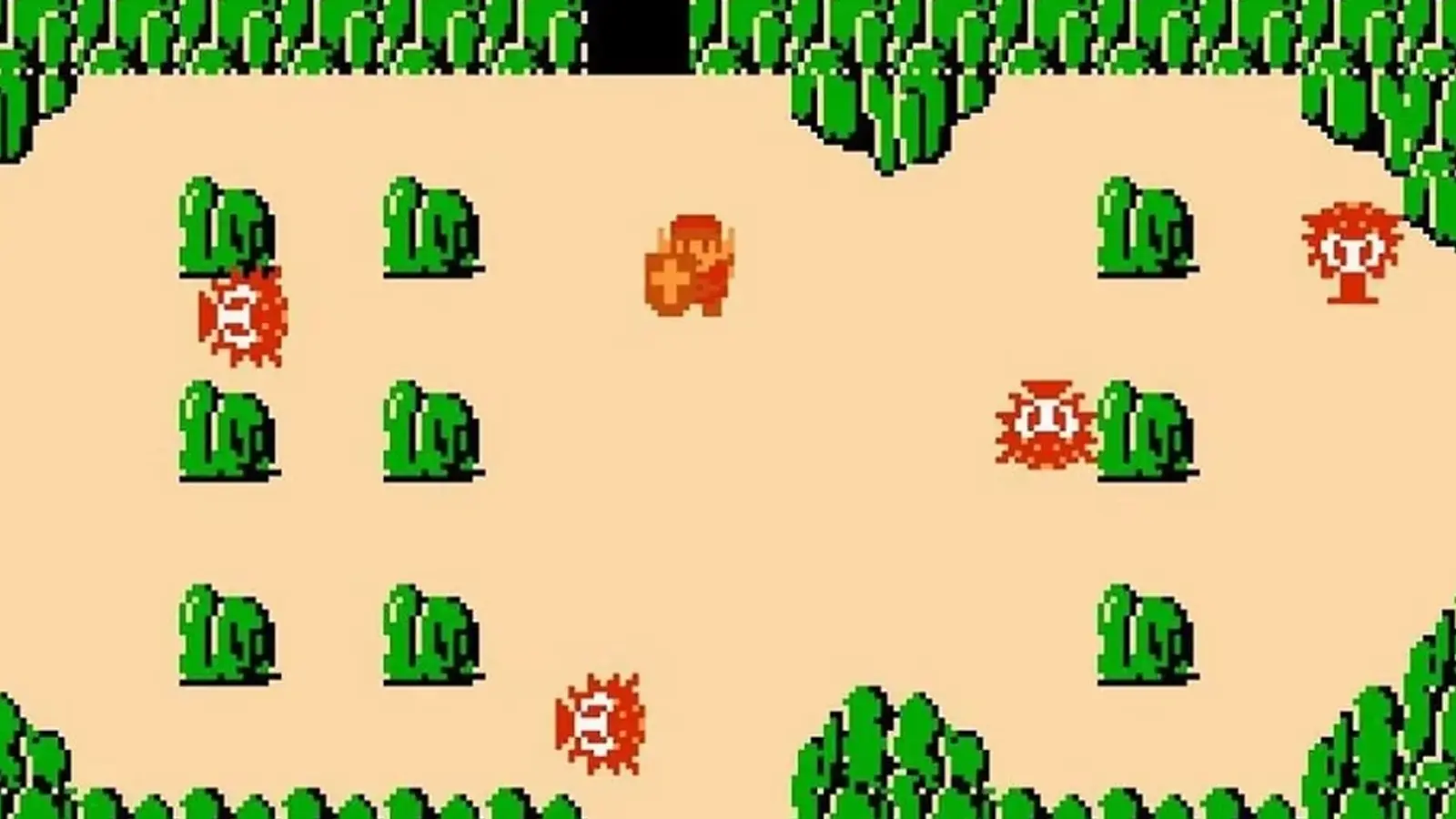
Photo: Nintendo
The Human Asset Audit: The Salary Man Economy
While the gold cartridge was communicating a premium value to Western consumers, the people who built the game were operating under a very different set of economics. In 1980s Nintendo, as with most Japanese corporations of the era, developers were salaried employees with no royalty entitlement. The IP they created belonged entirely to the company. The credits listed pseudonyms. Miyamoto as “Miyahon”, Tezuka as “Ten Ten”, Kondo as “Konchan”. The company owned the work. It didn’t need to advertise who made it.
The Historian’s Verdict
The open world. The earned discovery. The persistent save. The silence used as pressure. The dungeon as a problem to solve rather than a corridor to clear. Every action-RPG made since has been working from those same ideas. All of them trace back to 1986. Every player who’s stood in Elden Ring’s Limgrave with no map and no idea where to go has felt what Miyamoto built forty years ago. The industry that feeling created — hundreds of millions of units, an entire genre — traces back to 112 kilobytes of floppy disk. 1986 was the year a game stopped being a product you completed and became a world you inhabited. Forty years later, the blueprint has never been superseded. It’s only been refined.
The Archival Collection: The 004 Preservation
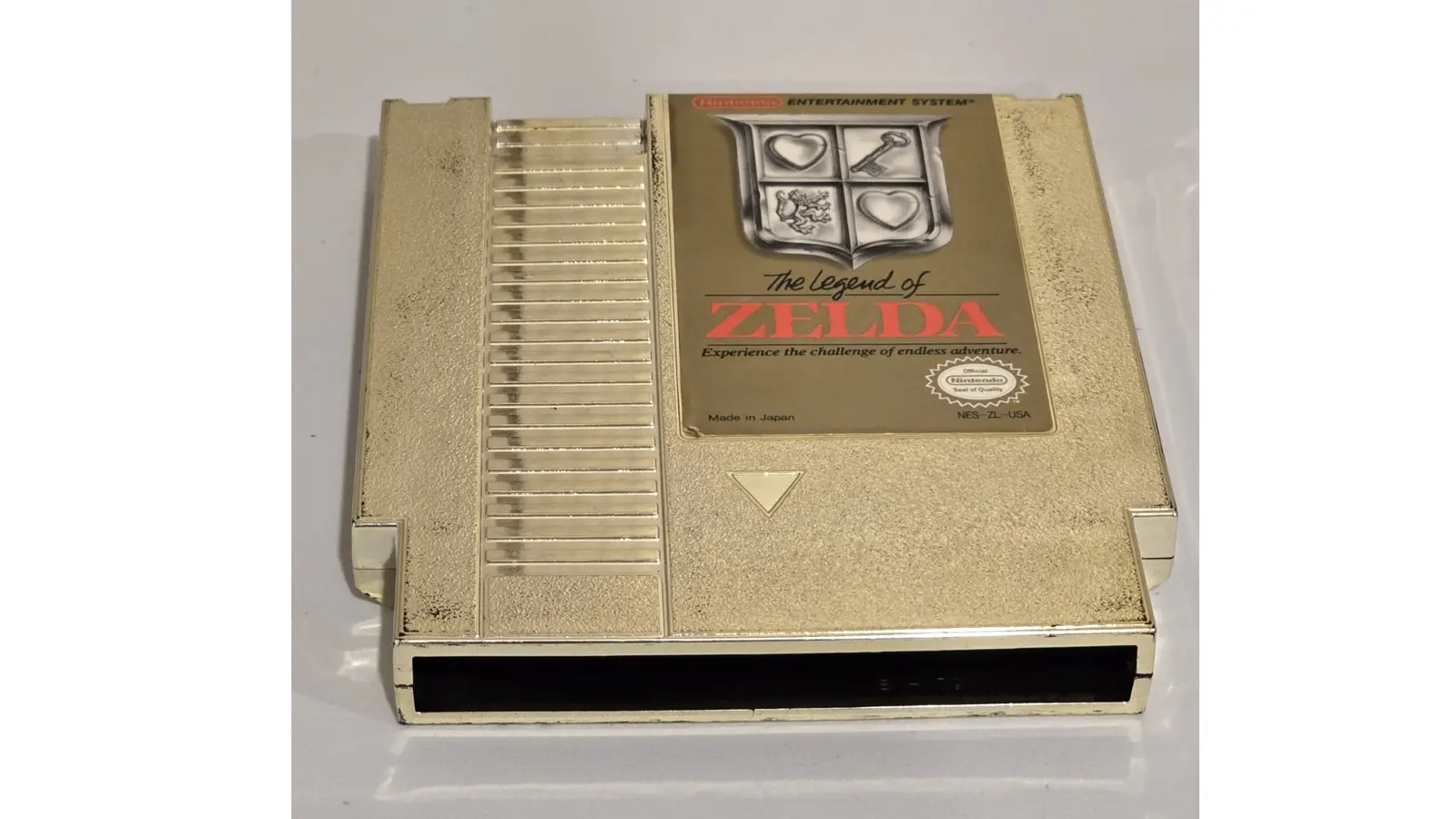
Nintendo The Legend of Zelda (NES) Gold Cartridge
Photo: eBay
The foundational object. Loose copies are attainable; complete-in-box is where the investment lies. Any serious collection begins here.

The Legend of Zelda: Tears of the Kingdom – Collector’s Edition Nintendo NIB
Photo: eBay
The 2023 proof of concept. The same blueprint, forty years of refinement, 10 million units in three days. The fastest-selling Nintendo title in the Americas.
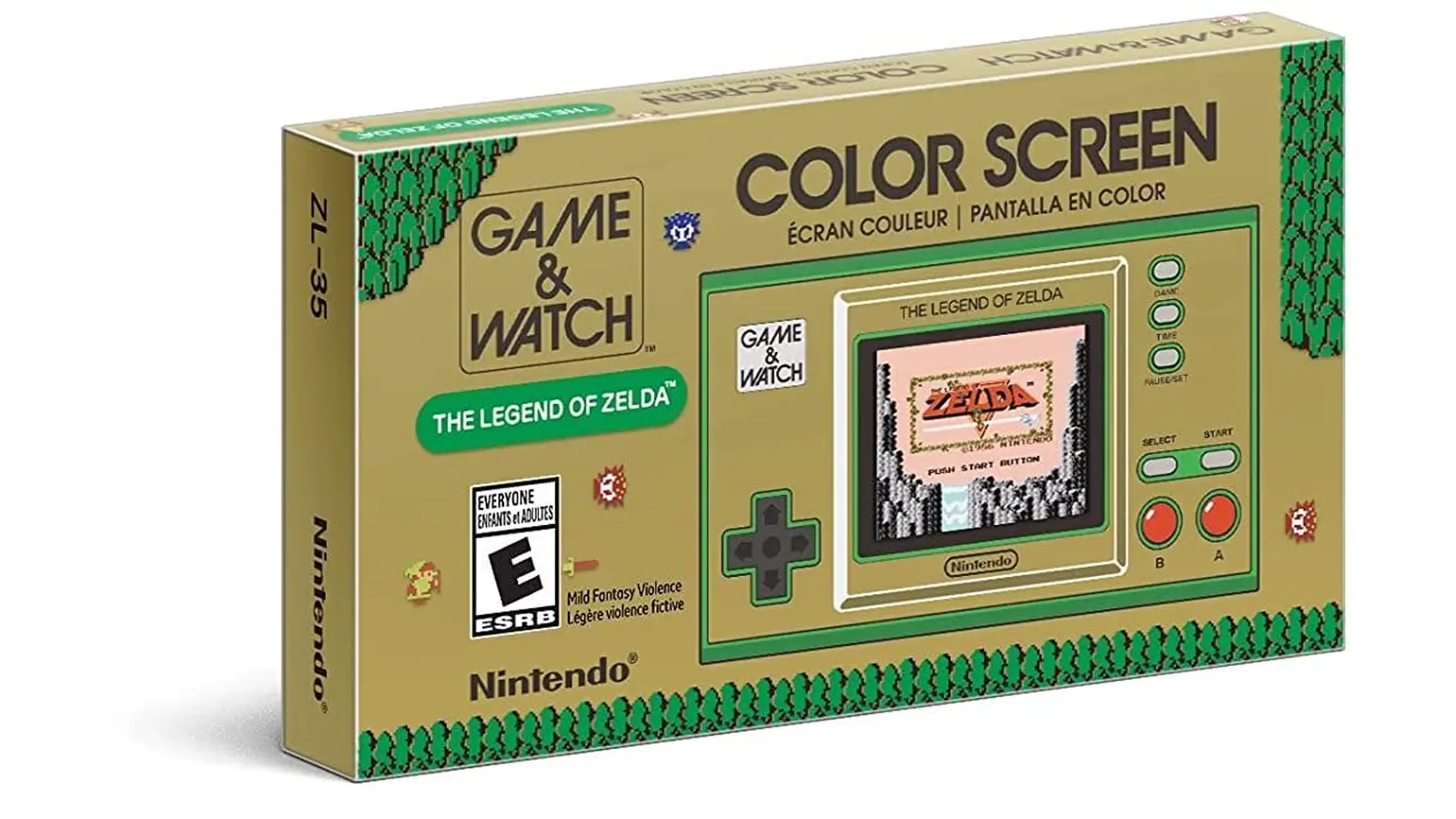
Nintendo Game & Watch: The Legend of Zelda
Photo: Amazon
A limited hardware release housing three full Zelda games — the original, Zelda II: The Adventure of Link and the Game Boy version of Link’s Awakening — plus a Zelda-skinned version of the classic Game & Watch title Vermin.
Disclosure: As an eBay Partner, I may be compensated if you make a purchase through these links.
RELATED: [The File 002] The Concrete Crusader: How 1986’s ‘The Dark Knight Returns’ Built the Modern Hero
Featured Image: Nintendo, Amazon, eBay
Author Bio
As a freelance journalist, Ryan Smith’s work is driven by a commitment to restoring what has long been absent from institutions meant to uphold truth and accountability: honesty and transparency. Alongside his analysis works on the life, career, trials and tribulations of Michael Jackson, whose unfair treatment over the years paved the way for the path he is on, Smith also dissects and examines popular culture, such as books, movies and video games, always aiming to shed light on what’s beneath the surface.
![[THE FILES] 132: Destiny’s Child ‘Survivor’](https://deckedoutmagazine.com/wp-content/uploads/2026/04/Screenshot-2026-04-27-at-6.08.53-PM.png)


![[THE FILES] 131: TMNT x Pizza Hut (The 1990 ‘Pizza Power’ Protocol)](https://deckedoutmagazine.com/wp-content/uploads/2026/04/pizza_hut_teenage_mutant_ninja_turtles_hero.webp)