*This piece is part of an ongoing cultural audit examining the media infrastructure surrounding Michael Jackson’s public narrative*
Since we’ve covered the topic of Michael Jackson’s many (and I do mean many) contributions to the Black community, we can now start to cover the 1980s media treatment of Michael Jackson, starting with the origin of the term “Wacko Jacko.” Now, I’m going to be very blunt when I say this (because it needs to be known) —the usage of this term not only disregards Jackson’s request to not be referred to as that during his lifetime, but frankly, it is also, quite literally, racist. That said, there’s no question that the treatment Jackson received from the media circa the mid-1980s onward was disgusting, and if this were the 2020s, the media would be getting called out for their bullying antics. I’d hesitate to say Jackson was ever a “media darling,” as even during the Thriller era, he still had certain journalists and publications making snarky remarks and false reports — but the treatment he received from the media without a doubt worsened towards the end of the 1980s.
Let’s take a look back.
Table of Contents
RELATED: The 1984 Turning Point: Why Michael Jackson is Still Owed an Apology for the Pepsi Burn
The Economics of Mockery
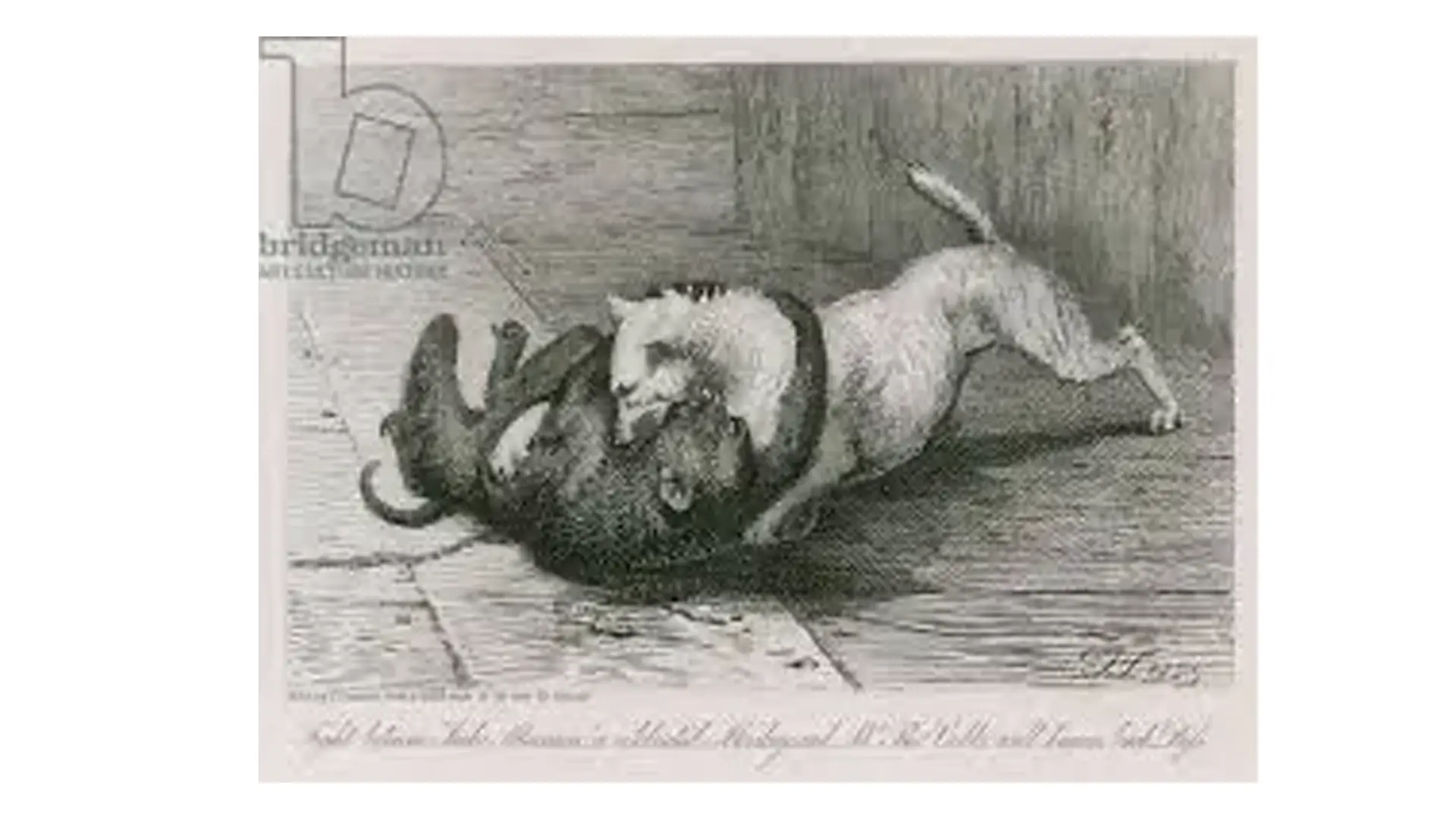
Photo: Google News Archive
To understand the racist origins of the term “Wacko Jacko,” we first have to understand the history behind it. Jacco Macacco, aka Jacko Macacco, was a fighting ape displayed in monkey-baiting matches in the early 1800s. The issue with this term is that Black people have frequently been compared to apes and monkeys in a racist manner since pretty much the beginning of time. A December 2019 report from the School Library Journal details quite a bit of these disgusting comparisons in full, but some standout examples from the report include:
- Roseanne Barr sending out a now-deleted tweet comparing Valerie Jarrett, a Black woman and former senior advisor to President Barack Obama, to an ape in May 2018.
- British radio show host being fired after tweeting an image of a chimpanzee appearing to depart a hospital with the caption, “Royal baby leaves hospital.”
- Various administrators in educational departments (you know, people who work in the very same schools children attend) receiving disciplinary action for referring to students as monkeys, apes, or gorillas.
Unfortunately, there are plenty more examples to pull from in that regard, but in short, referring to any Black person as a “Jacko” is incredibly racist. Now, some members of the media have tried to skirt their way out of the racist element by claiming “Jacko” is just Michael’s last name, Jackson, being shortened. That said, there was still the insult of “Wacko” being put in front of it, and Jackson stated on multiple occasions that he did not like being called “Wacko Jacko” or “Jacko” period.
Now, if you’ve been raised with any sort of decorum, then you already know it’s rude and disrespectful to refer to somebody outside of the name they prefer, especially if they’ve asked not to be called or referred to as something. Seeing as though Jackson continues to get called “Wacko Jacko” to this day, even in death, why hasn’t he ever been given this common courtesy? Here are a couple of examples of how this defamatory term has been used towards him over the decades:

Google News Archives
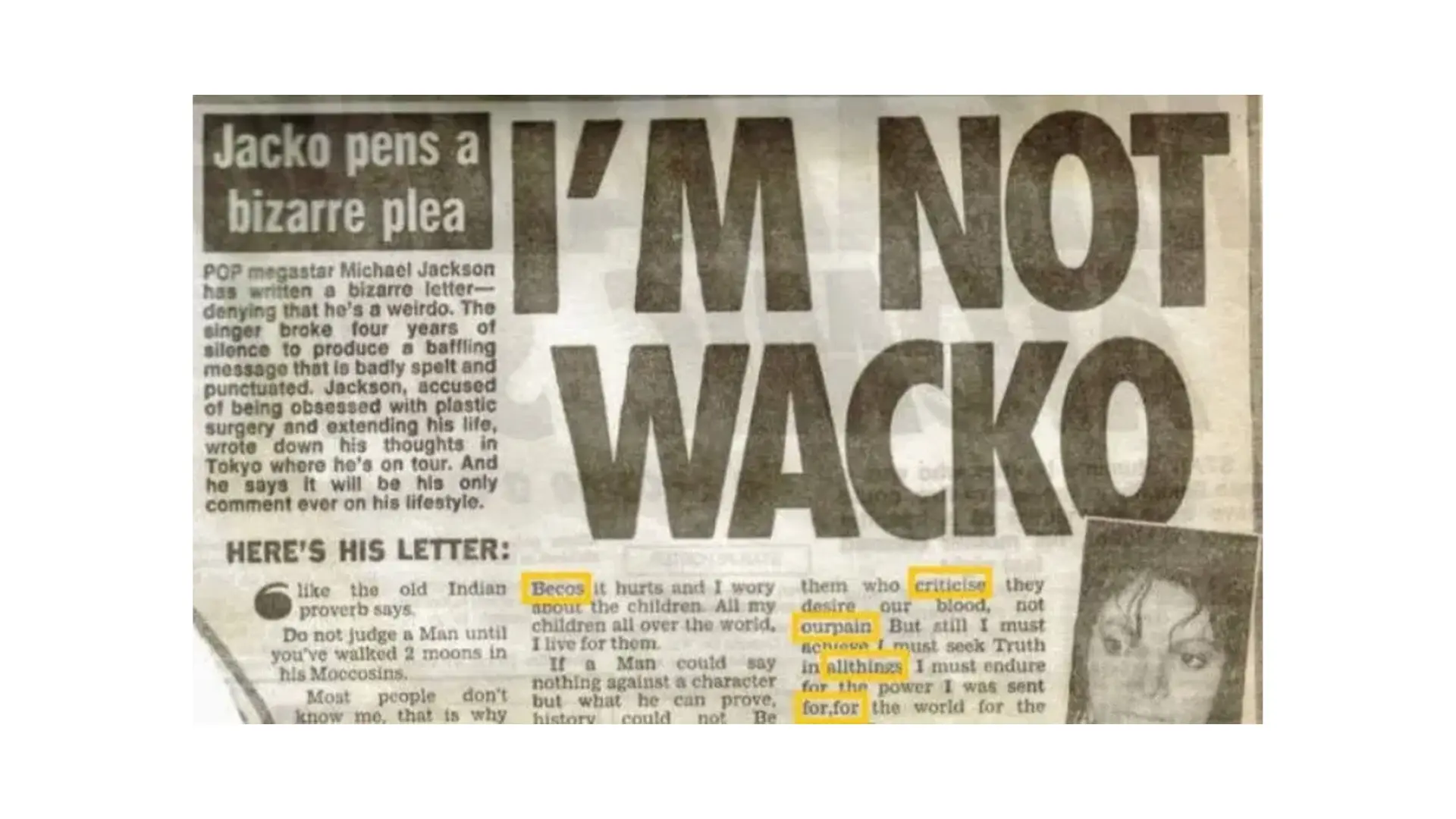
Photo: Google News Archive
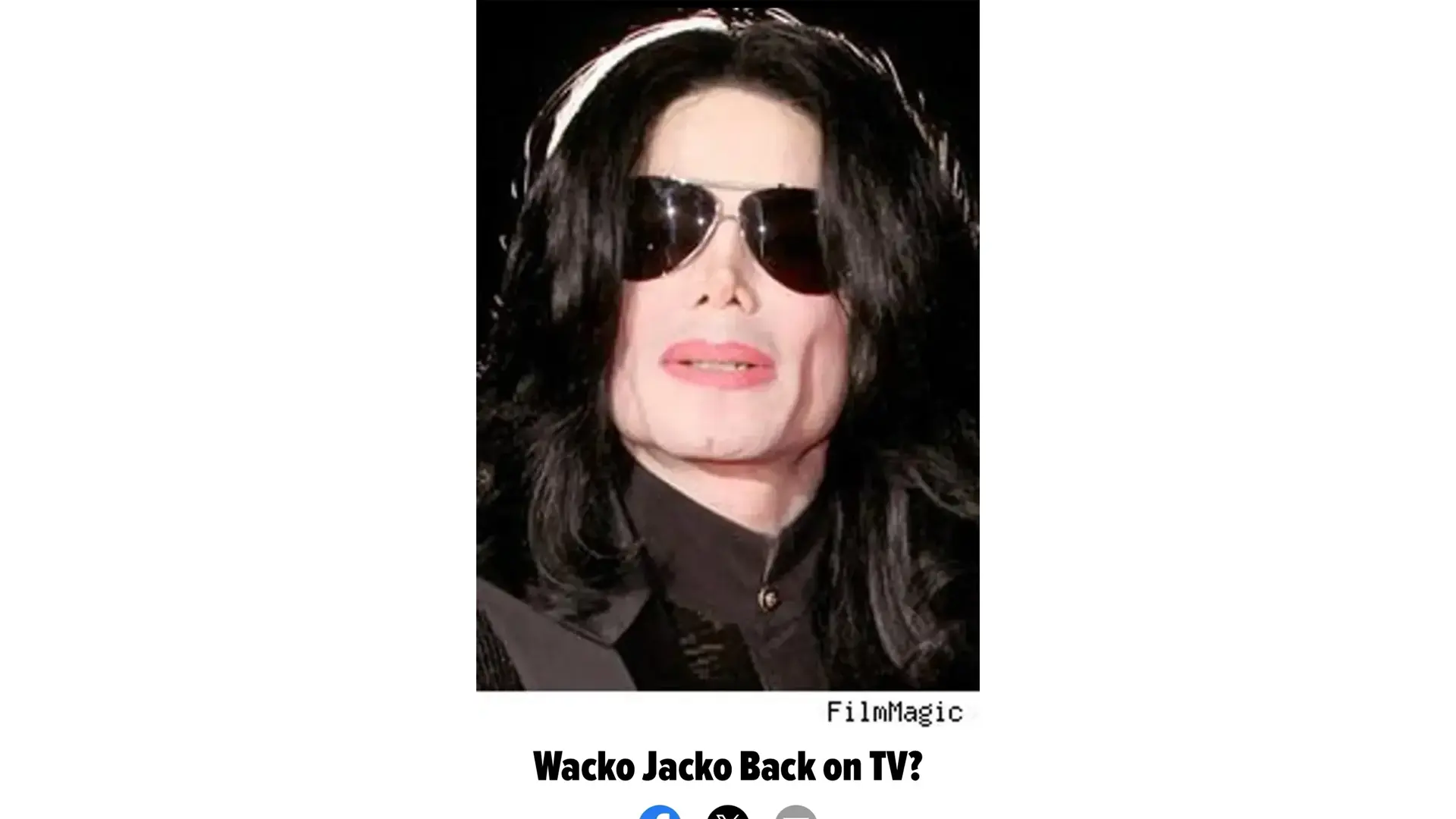
Photo: FilmMagic
And that’s not even the start of it because, as I mentioned earlier, the “Wacko Jacko” references continue to be printed and published to this day. Now, at the beginning of this article, I said I was going to address additional examples of the treatment Jackson received from the mid-1980s on, so here we go.
1980s’ Media Treatment
Apparently, the age-old sentiment of treating others the way you want to be treated has not applied when it comes to the example of Michael Jackson:

Google News Archives
A September 1987 article written by Stephanie Salter of the San Francisco Examiner referred to Jackson as being “the leader of weirdness,” stating that he had “radically elevated the standard of weirdness out of reach.”
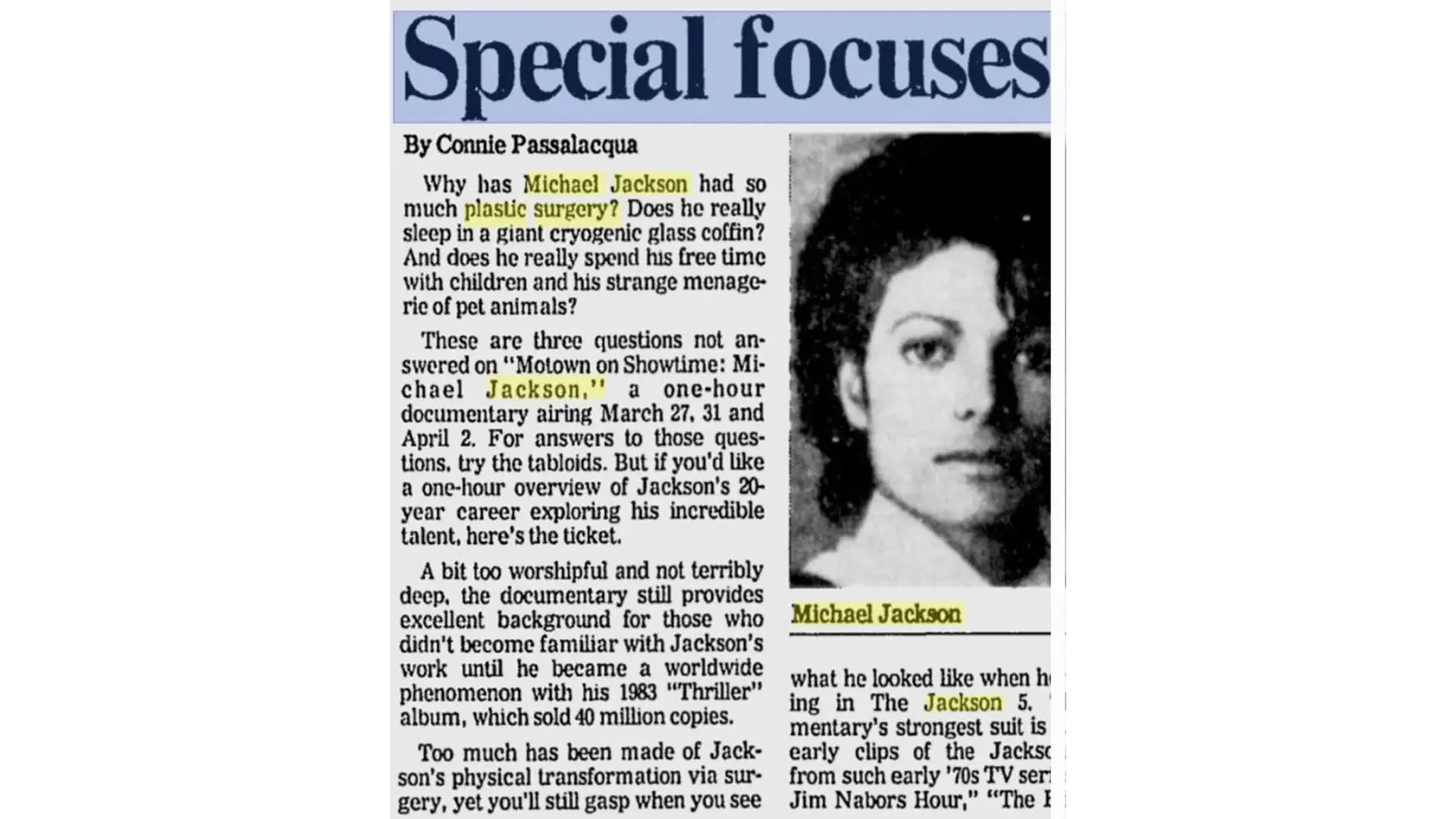
Photo: Google News Archive
A March 1988 report from the Times Daily written by Connie Passalacqua felt the need to ask “Why Michael Jackson had so much plastic surgery done,” (he had not, which we covered last week), “If he really slept in a giant cryogenic glass coffin,” (he had not), and if he “spent his free time with children and strange menagerie of pet animals,” (intentionally worded to make Jackson appear “odd.”)
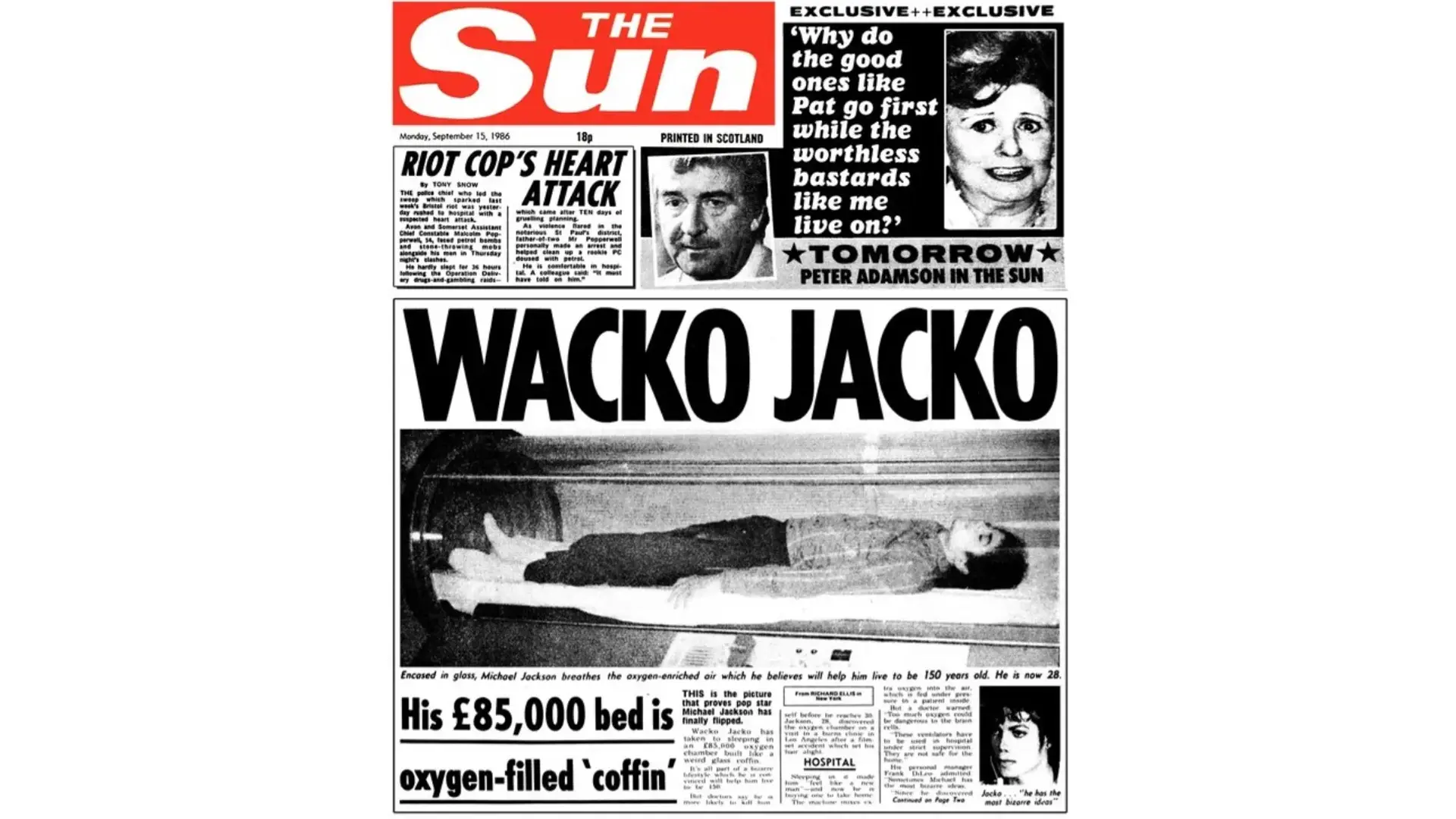
Photo: Google News Archive
Anything from The Sun is self-explanatory, but the statement “Michael Jackson has finally flipped” is utterly ridiculous because what exactly were they talking about? What would qualify something like this (which wasn’t true by the way) as the “final act of flipping?” Being serious about your career? Being private and lowkey (he was rarely seen publicly between the Thriller and Bad eras)? Owning animals? Seriously…
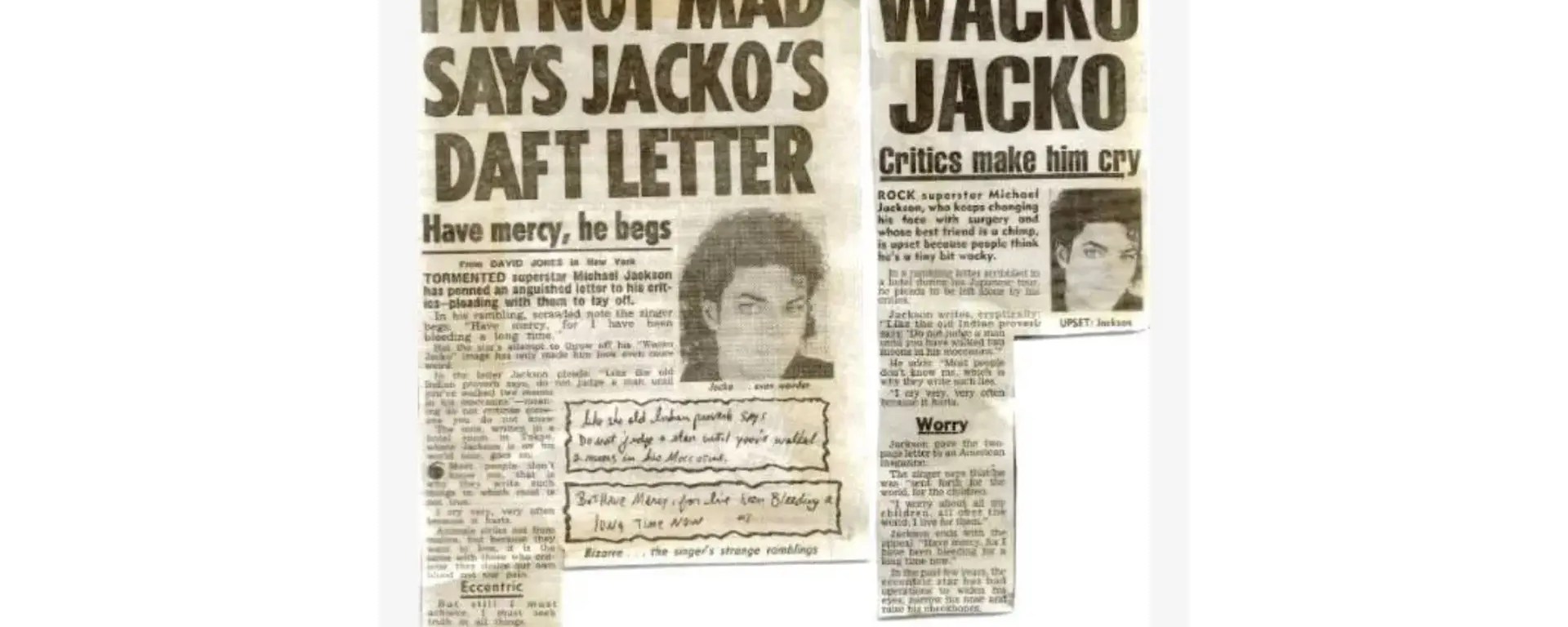
These tabloid clippings are some examples of the press essentially mocking Michael for an open letter he wrote to them begging for them to back off (one publication called the request bizarre). For the record, here is that letter in full:
“Like the old Indian proverb says, do not judge a man until you’ve walked two moons in his moccasins. Most people don’t know me, that is why they write such things, in which most is not true. I cry very, very often because it hurts and I worry about the children, all my children, all over the world. I live for them. If a man could say nothing against a character but what he can prove, history could not be written. Animals strike not from malice, but because they want to live. It is the same with those who criticize; they desire our blood, not our pain. But still I must achieve, I must seek truth in all things. I must endure for the power I was sent forth, for the world, for the children. But have mercy, for I’ve been bleeding a long time now.”
The Bottomline
So, as you can see, the press really began the act of turning Michael Jackson into their personal punching bags circa the mid-1980s, a time period in which print and television journalism were at their height and not as easy to dispute. There wasn’t the benefit of having internet and social platforms for misinformation and lies to get checked like there is now, and back then, media outlets had the ability to fully control the narrative of what the general public thought of an individual. While this treatment didn’t stop Jackson from becoming the greatest and most successful entertainer of all time, it did, unfortunately, have an impact on how he was perceived by some people from that time period on, which in turn made them willing to believe false allegations, lies, and rumors.
And one final thing here: If somebody African American (I’m African American) is saying a name is racist, then that needs to be respected, the same way we should show that same respect towards other races if there is a name that they find offensive. Dismissing that shows privilege and a general disregard for an experience you haven’t lived.
RELATED: Michael Jackson, Media Scapegoats and the Business of Never Moving On
Author Bio
Jael Rucker is the founder of Decked Out Magazine. She has previously worked as the Associate Commerce Editor at PureWow, focusing on analytics and trends to pitch stories and optimize articles that build and engage their audience. Her work has also been seen in Footwear News and WWD. Prior to 2024, she was the style and pop culture editor at ONE37pm for over three years, contributing numerous product reviews, brand profiles and fashion trend reports, which included interviewing Steph Curry, Snoop Dogg and more.
![[THE FILES] 006.5 | The Architecture of Agency: Janet Jackson’s ‘Let’s Wait Awhile’ (1987)](https://deckedoutmagazine.com/wp-content/uploads/2026/04/janet_jackson_lets_wait_a_while_hero_image.webp)