
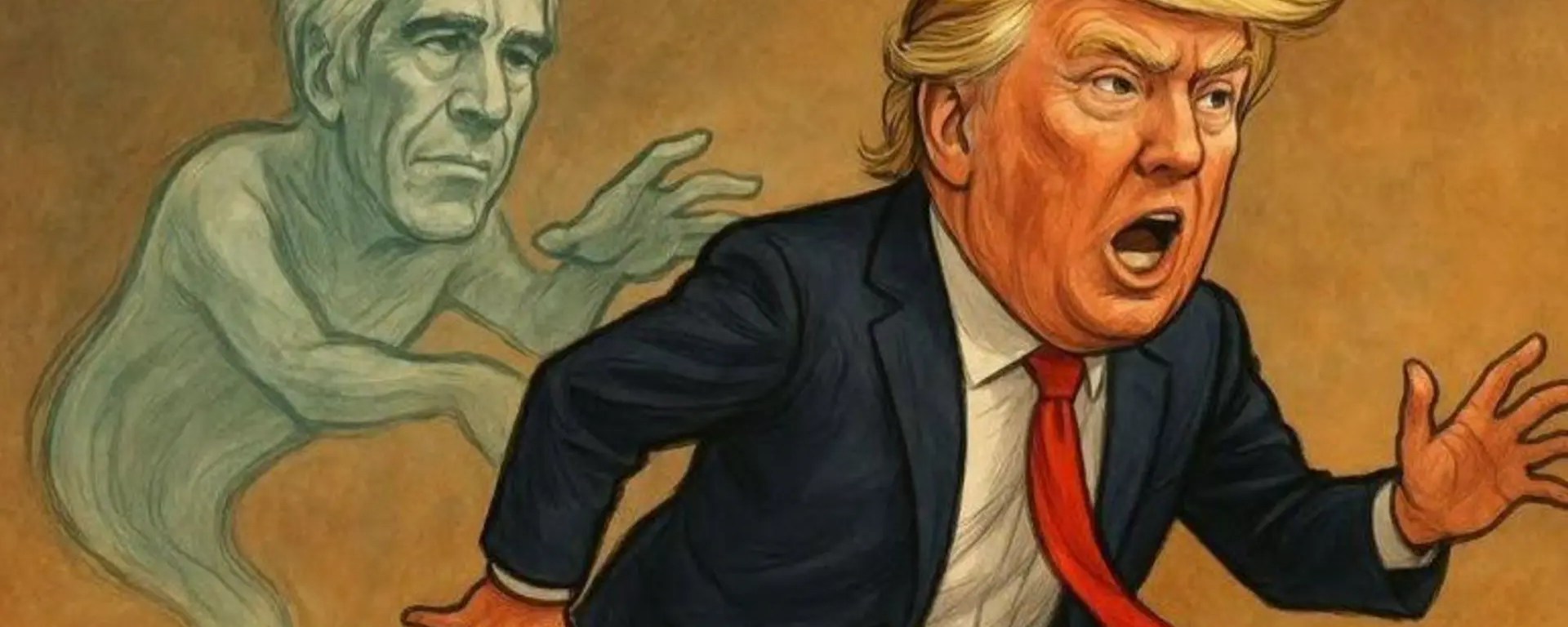
Silence and Redactions: Access Without Accountability
Nothing substantive was gained Monday, and that absence became the story.
Ghislaine Maxwell, appearing remotely from a federal prison in Texas, declined to answer congressional questions about Jeffrey Epstein’s network, invoking constitutional protections that now serve as her final shield. The session was tightly controlled and offered little illumination. On the same day, the Department of Justice opened the door for members of Congress to inspect the full Epstein archive, millions of unredacted files, but only under severe constraints: no staff, no digital copies, no photographs, and only handwritten notes permitted to leave the review room. That arrangement reads like access in name only, transparency with the brakes on.
On Tuesday, Rep. Jamie Raskin reported that President Donald Trump’s name appears over a million times in the unredacted files he reviewed, a figure that dwarfs the roughly 5,300 mentions visible in the heavily redacted public release. Raskin also described an unredacted email exchange between Epstein’s lawyers and Trump’s legal team that undercuts the president’s repeated claim that he “kicked Epstein out” of Mar‑a‑Lago. According to the document Raskin reviewed, Epstein was not a member but was a guest at Mar‑a‑Lago and had not been asked to leave, a detail redacted in the public release for reasons that remain unexplained.
Another document reportedly shows a July 2006 call from Trump to Palm Beach Police Chief Michael Reiter, at the time Epstein’s first criminal case became public, in which Trump allegedly described Epstein’s activities as widely known and referred to Ghislaine Maxwell as Epstein’s “operative.” The White House has not confirmed whether the call took place. Taken together, the redactions and revelations deepen the gap between public statements and the material now under congressional review, intensifying pressure on officials to explain why so much remains hidden.
Survivors, Oversight and the Administration’s Response
Survivors and advocacy groups blasted the DOJ’s handling of the release, saying the partial disclosure retraumatized victims by exposing uncensored images and personal identifying information. In a letter to Attorney General Pam Bondi, survivors described the release as failing to provide closure and instead functioning as a form of intimidation. Those complaints underscore a central tension: transparency that harms survivors is not accountability.
Bondi is scheduled to appear before the House Judiciary Committee this week and will face pointed questions about the department’s review protocols and the rationale behind the current access rules. The administration’s posture has been consistent: frame scrutiny as political harassment and urge the public to move on. When pressed, President Donald Trump dismissed the controversy as a distraction and urged the country to focus elsewhere. That deflection, dismissive and evasive, stands in stark contrast to survivors’ demands and the volume of material now under review.
Procedures that look like safeguards can function as shields for the powerful. The silence from Maxwell, the restrictive terms of DOJ access, and the contradictions in the public record together suggest a pattern of containment rather than a full accounting.
What Comes Next
• Will congressional review produce meaningful oversight, or will access restrictions continue to limit scrutiny?
• Can survivors secure protections and redress while documents remain in a controlled review environment?
• Will further unredacted disclosures force a public reckoning or be managed into obscurity?
Clocked. That’s the tea.
Clocking It: The Political Rundown is a twice-weekly cultural analysis column examining media narratives, power and politics.
Photo Credit: FolsomNatural, CC BY 4.0
RELATED: CLOCKING IT: THE POLITICAL RUNDOWN— Trump’s Week of Reckoning
Author Bio
Andrew Greene is a quality-obsessed, results-driven powerhouse with nearly two decades of experience transforming complexity into clear, actionable solutions. His secret weapon? A mix of analytical sharpness, problem-solving precision and a communication and leadership style that’s equal parts clarity and charisma. From Quality Assurance to political data analysis, you can think of him as the Swiss Army knife of operational excellence, minus the corkscrew (unless it’s a team celebration).
One thought on “Halfway Clocked—Silence and Secrecy: The Epstein Files Keep Circling Trump”