

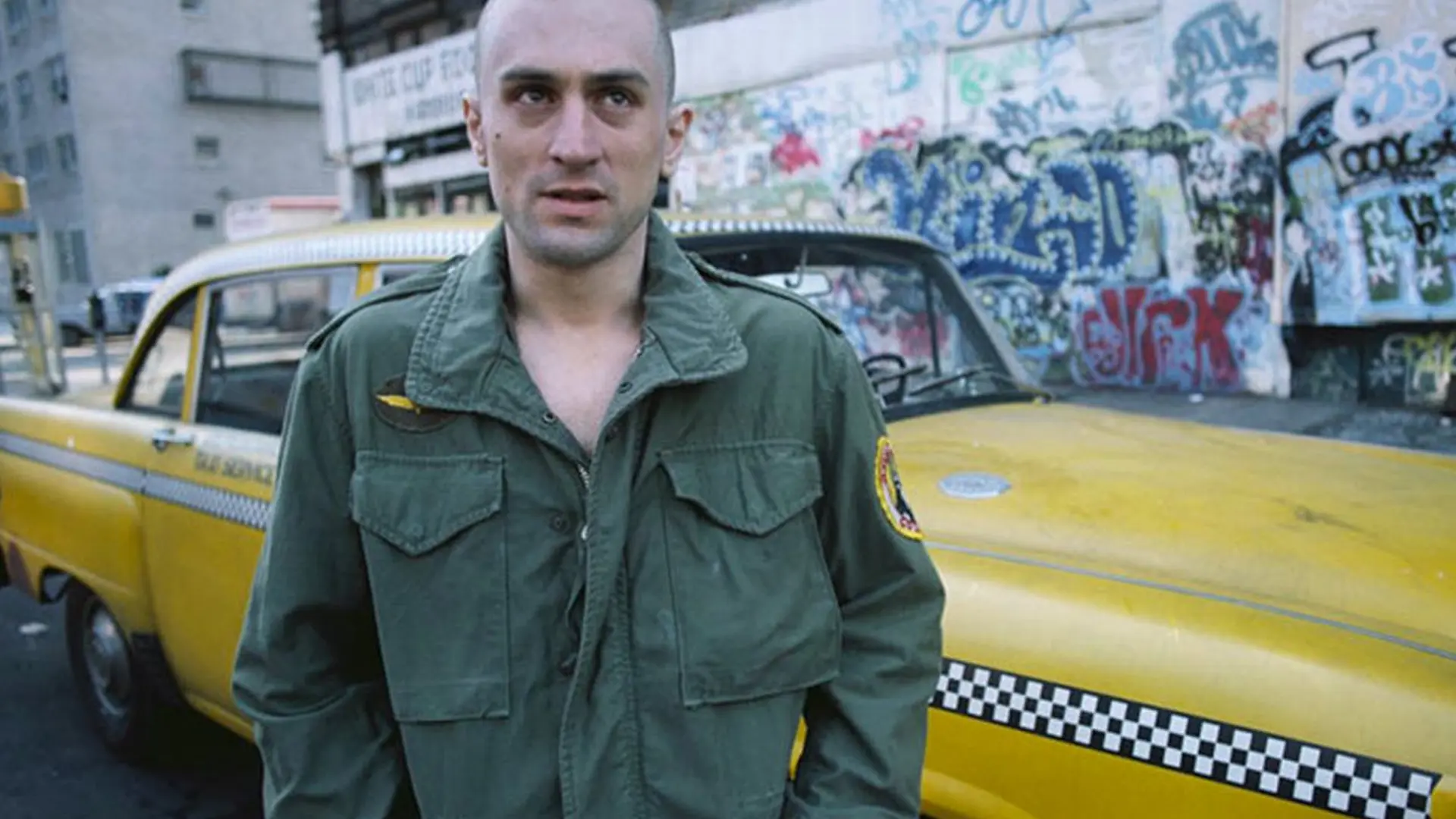
February 8, 2026 — Before it became a shorthand for urban masculinity, alienation, and postwar cool, the M-65 field jacket was simply a piece of military equipment — functional, anonymous, and disposable by design. But when Taxi Driver arrived in 1976, Robert De Niro’s Travis Bickle wore the jacket not as a uniform of service, but as a visual extension of isolation and unraveling. Nearly fifty years later, that single cinematic reframing still defines how the M-65 is seen, worn, and understood — not as surplus, but as cultural symbol.
RELATED: 25 Years of the Duke: How Xbox’s Infamous 2001 Controller Became a Design Blueprint
Table of Contents
The 1975 Checker A11: The Foundation of the Streets
The Checker Cab wasn’t a car; it was a service-grade machine. Unlike the sleek, consumer-focused sedans of Detroit, the A11 was built on a truck-style, X-braced ladder frame.
- The Spec: Powered by a Chevrolet 250 inline-six, the A11 was designed for 24-hour duty cycles.
- The Decked Out Twist: In the film, the taxi is Travis’s “Suite”—his only sanctuary. The high-contrast shots of the wet pavement reflecting off the yellow paint aren’t just aesthetic choices; they are a study in how industrial yellow survives in an urban inferno.
The M-65 Field Jacket: Military-Grade Alienation
The most iconic garment in film history, however, wasn’t a costume; it was the ultimate survival tool. *
- The Hardware: The OG-107 Olive Drab M-65 featured a “Quarpel” treated cotton/nylon shell and heavy brass zippers.
- The Originals Look: Travis Bickle wears the “King Kong Company” patch on his sleeve—a fictional unit that added a layer of “Warrior Heritage” to a man who felt the city had forgotten him. It’s the ultimate “Old School” hardware that became a 50-year fashion staple.
Sony Pictures Entertainment
The “King Kong” Kit: The Smith & Wesson Model 29
When Travis goes into “combat mode,” the film shifts from a character study to a technical masterclass in weaponry.
- The Specification: The .44 Magnum (the most powerful handgun in the world at the time) and the “sleeve-gun” rig Travis builds in his apartment.
- The Logic: Scorsese used “slow-motion POV” to show Travis interacting with these tools, treating the assembly of the “Hardware” with the same reverence a mechanic has for an engine.
The Moment It Turned
The cultural meaning of the M-65 didn’t change gradually — it pivoted the moment Taxi Driver reframed it. On Travis Bickle, the jacket stopped reading as utilitarian military surplus and began functioning as psychological shorthand. Worn loose, unadorned, and detached from any sense of service or hierarchy, it became a visual marker of post-Vietnam disillusionment and urban isolation. This wasn’t a hero’s uniform or a symbol of authority; it was a shell — something to disappear into. From that point forward, the M-65 was no longer just clothing. It was a signal, carrying with it the weight of alienation, menace, and cinematic cool that still echoes through menswear and film today.
RELATED: Why Deion Sanders’ Air Diamond Turf 2 Still Matters
Author Bio
Jael Rucker is the founder of Decked Out Magazine. She has previously worked as the Associate Commerce Editor at PureWow, focusing on analytics and trends to pitch stories and optimize articles that build and engage their audience. Her work has also been seen in Footwear News and WWD. Prior to 2024, she was the style and pop culture editor at ONE37pm for over three years, contributing numerous product reviews, brand profiles and fashion trend reports, which included interviewing Steph Curry, Snoop Dogg and more.

![[THE FILES] 192: The SpongeBob Game Boy Advance SP (2000s)](https://deckedoutmagazine.com/wp-content/uploads/2026/05/Screenshot-2026-05-25-at-8.30.13-PM.webp)
![[THE FILES] 191: Gorillaz — “Clint Eastwood” (2001)](https://deckedoutmagazine.com/wp-content/uploads/2026/05/gorillaz_clint_eastwood_hero_image.webp)