- Week of February 2–7, 2026
- Decked Out Magazine — Politics & Power Desk
If American politics is supposed to be about leadership, this week was about exposure. What unfolded between February 2 and February 7 felt less like a functioning democracy and more like a prolonged confrontation between a public demanding accountability and an administration increasingly incapable of providing it.
Across courtrooms, press briefings, international stages, and even wrestling arenas, the Trump administration found itself under relentless pressure, much of it self-inflicted. The throughline was unmistakable: denial, deflection, and disdain for accountability are no longer landing the way they once did.
THE EPSTEIN FILES: TRANSPARENCY PROMISED, TRUST SHATTERED
The Justice Department’s release of more than three million Epstein-related documents was framed as a milestone for transparency. Instead, it exposed the administration’s deep contradictions and reignited fears that the truth is still being selectively managed.
The cache included photos, videos, sealed court filings, FBI records, and internal DOJ communications. Rather than offering clarity, the release raised alarms about who was protected, who was exposed, and why.
Trump’s Name Appears Thousands of Times
According to reporting, Donald Trump is referenced more than 3,000 times throughout the documents. That alone ensured renewed scrutiny, but what followed was more troubling than the volume of mentions. The presence of Trump’s name coincided with glaring gaps, redactions, and removals that critics say defy coincidence.
Survivors Re-Exposed, Re-Traumatized
Among the most disturbing aspects of the release was the inclusion of uncensored nude images, victims’ full names, and personal identifying information. Survivor advocates condemned the DOJ for retraumatizing victims under the guise of transparency, calling it a gross abdication of responsibility. Transparency that harms survivors is not transparency; it is negligence.
Documents Published, Then Pulled
Snopes confirmed that a document containing allegations involving Trump was briefly published and then removed. The explanation? None that satisfied legal experts or watchdogs. The incident fueled accusations of political interference, reinforcing the perception that transparency applies selectively, especially when powerful Republicans are implicated.
Growing Fears of a Cover-Up
Victims’ advocates and lawmakers told U.S. News they believe documents tied to Trump and other prominent Republicans are still being withheld. The concern is no longer hypothetical: selective disclosure has become a pattern.
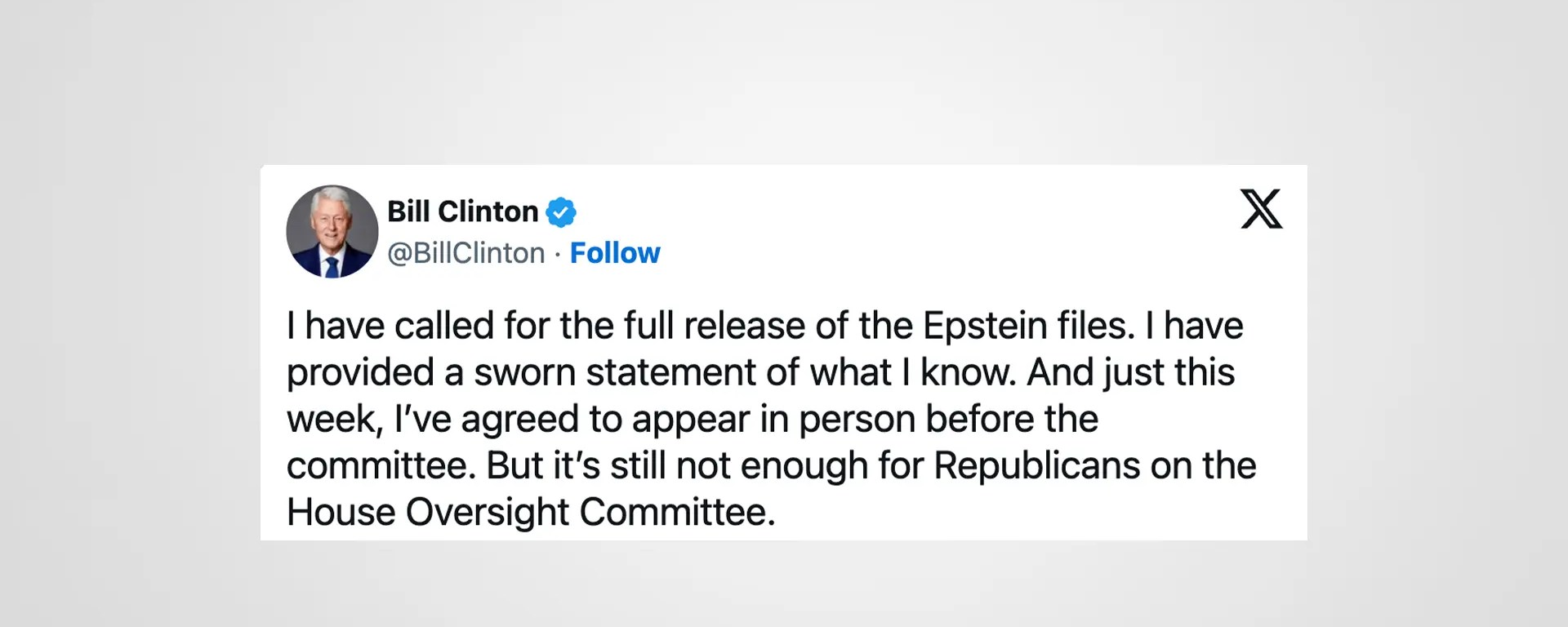
The pressure escalated when former President Bill Clinton released a blistering public statement, accusing House Republicans of orchestrating a “closed-door kangaroo court” instead of a legitimate investigation. His message cut through the noise:
If the truth matters, let the public see it. All of it.
THE WHITE HOUSE MEETS THE PRESS AND COLLAPSES UNDER IT
When CNN’s Kaitlan Collins pressed Trump in the Oval Office on what he would say to Epstein survivors still seeking justice, the response was revealing, not for what it addressed, but for what it dismissed.
Trump waved off the scrutiny as “politically motivated” and urged the country to “move on.”
The exchange went viral almost instantly. Not because it was combative, but because it was hollow. At a moment demanding empathy, accountability, or even seriousness, the president offered none. The refusal to engage underscored what critics have long argued: this administration treats accountability as an inconvenience rather than an obligation.
THE RACIST VIDEO THAT CONSUMED THE NEWS CYCLE
As the Epstein revelations dominated headlines, Trump poured gasoline on an already raging fire by posting a video depicting Barack and Michelle Obama with their faces superimposed onto apes, imagery that civil rights organizations immediately condemned as racist and dehumanizing.
The reaction was swift and overwhelming:
• Civil rights groups denounced the video as overtly racist
• Editorial boards labeled it “morally grotesque”
• Republican Senator Tim Scott publicly condemned it
• The White House initially dismissed the backlash as “fake outrage”
Senator Bernie Sanders took to X to condemn the President’s actions and to declare Trump is a racist while calling on more of his Republican colleagues to quit pandering to Trump:
The video was later quietly deleted without apology.
The damage, however, was done. The episode reinforced longstanding concerns that Trump not only tolerates racist rhetoric but actively deploys it when under pressure. It briefly eclipsed every other political story until the Epstein files forced their way back into the spotlight.
Even 3-time Trump voters are hopping off the bandwagon. In a call to C-SPAN a Trump voter declares, “I voted for Trump, but I really want to apologize. I’m looking at this awful picture he just posted of the Obamas as monkeys. What an embarrassment to our country.”
BOOED ON THE WORLD STAGE: THE VANCES AT THE OLYMPICS
At the opening ceremony of the 2026 Winter Olympics, Vice President JD Vance and Usha Vance were met with loud, sustained boos from the international crowd. The moment, broadcast globally, was impossible to spin.
Public rebukes of U.S. leadership on foreign soil are rare. This one was unmistakable. The reaction raised uncomfortable questions about America’s standing abroad and whether the administration’s isolationist posture and domestic controversies are eroding global respect.
ANTI-ICE CHANTS BREAK THROUGH POP CULTURE
Perhaps the most unexpected moment of the week came not from Washington or Davos, but from an All Elite Wrestling arena.
During a live AEW event, fans erupted into a spontaneous, thunderous “FUCK ICE!” chant. The noise grew so loud that it briefly halted the match and visibly startled one of the performers. The clip spread rapidly online.
This was not an organized protest.
Not a rally.
Not a political event.
It was a wrestling crowd, and even they had reached a breaking point.
The moment captured something polls and pundits often miss: Trump’s immigration crackdown has seeped into spaces that rarely engage with politics at all. When entertainment audiences start chanting against federal agencies, the discontent has gone mainstream.
THE ECONOMY HITS A WALL: LAYOFFS SURGE TO A 17‑YEAR HIGH
The economic alarm bells rang loud this week as new data revealed that U.S. employers announced 108,435 layoffs in January, a staggering 205% jump from December and the worst January for job cuts since 2009.
The numbers paint a grim picture:
• 108,435 layoffs in a single month
• 118% higher than January last year
• 205% higher than December
• Lowest January hiring numbers since tracking began in 2009
• Job openings fell to 6.54 million, the lowest since 2020
Economists say this isn’t seasonal trimming, it’s a warning sign.
A signal that employers are bracing for instability.
A sign that confidence in the administration’s economic direction is slipping.
Andy Challenger of Challenger, Gray & Christmas put it bluntly:
Companies made these decisions at the end of 2025, meaning they entered 2026 “less‑than‑optimistic about the outlook.”
Transportation was hit especially hard, with UPS alone cutting 30,000 jobs, underscoring how deep the uncertainty runs.
For an administration that promised economic strength, the numbers tell a different story, one of a workforce tightening belts, corporations pulling back, and a country bracing for whatever comes next.
THE VERDICT OF THE WEEK
This was not coincidence.
It was convergence.
Across every arena: legal, moral, cultural, international, and now economic, the Trump administration ran headfirst into the consequences of its own conduct.
• A Justice Department release that exposed victims while shielding power, confirming fears of selective justice.
• A president who dismissed survivors on camera, making clear who this administration believes deserves consideration, and who does not.
• Racist propaganda deployed deliberately, then erased without accountability.
• A vice president publicly rejected on the world stage.
• Pop culture spaces erupting in unprompted opposition to ICE, a sign that cruelty has become politically and culturally toxic.
And beneath it all, the economy finally spoke.
Not in rhetoric.
In layoffs.
In hiring freezes.
In corporate decisions made months ago by employers no longer confident in the direction of the country.
The numbers laid out earlier were not a blip, they were a warning flare. A signal that faith in leadership is eroding not just among voters, but among the institutions that actually move the economy. When companies pull back, when entire sectors tighten simultaneously, it reflects a loss of trust that no press conference can spin away.
This is what systemic failure looks like: accountability evaded at the top, pressure absorbed everywhere else.
Taken together, the message of the week is unavoidable. Power is no longer controlling the narrative, reality is. Institutions are straining. Allies are recoiling. Employers are retreating. The public, across demographics and spaces, is no longer waiting to be convinced.
This was not a week of governance.
It was a week of accumulation.
Evidence. Consequences. Exposure.
And for the first time, the reckoning no longer feels abstract.
It feels underway.
Clocked. That’s the tea.
Author Bio
Andrew Greene is a quality-obsessed, results-driven powerhouse with nearly two decades of experience transforming complexity into clear, actionable solutions. His secret weapon? A mix of analytical sharpness, problem-solving precision and a communication and leadership style that’s equal parts clarity and charisma. From Quality Assurance to political data analysis, you can think of him as the Swiss Army knife of operational excellence, minus the corkscrew (unless it’s a team celebration).
![[THE FILES] 128: I, Robot (2004)](https://deckedoutmagazine.com/wp-content/uploads/2026/04/Will-Smith_irobot_hero_dvd_cover.webp)