Rugrats: Studio Tour (1999)
The History
Launching to the original PlayStation landscape on November 10, 1999, Rugrats: Studio Tour stands as a defining monument of late-90s licensed children’s interactive media. Developed by n-Space and deployed under THQ, the game capitalized on the absolute zenith of Nickelodeon’s global animation market share. Diverging from the direct household neighborhood of its 1998 predecessor, Search for Reptar, this sequel shifted the structural environment to a multi-stage Hollywood studio lot layout. The narrative maps Tommy, Chuckie, Phil, Lil, and Angelica as they wander away from an actual studio tour, allowing their hyper-active imaginations to completely re-engineer classic cinematic sets into distinct interactive worlds.
The Numbers
Auditing the processing architecture of Rugrats: Studio Tour reveals an efficient success of fifth-generation consoles. The distinct genre-bending set-pieces: “Captain Reptar” (sci-fi exploration), “Lazy Slurpee” (western racing metrics), “Rutabaga” (fantasy platforming), “Diapies of the Caribbean” (pirate ship navigation), and “The Giant Diaper” (monster movie destruction mechanics). Commercially, the software served as a massive revenue generator within THQ’s premium catalog, quickly securing a permanent spot on Sony’s lucrative “Greatest Hits” physical inventory lines thanks to aggressive holiday retail tracking and high family-demographic retention rates.
Key Facts
- The title seamlessly integrated authentic audio, tracking the original Klasky Csupo television voice cast alongside Mark Mothersbaugh’s legendary, avant-garde synthesized soundtrack motifs.
- n-Space heavily optimized the game’s non-linear design framework, utilizing a mini-golf multiplayer hub station inside the studio lot to bolster replayability metrics for up to four simultaneous users via the PlayStation MultiTap.
- The game’s Western level, “Lazy Slurpee,” famously featured high-friction gold rush tracking telemetry that taught young players basic resource-gathering loops wrapped in arcade physics layers.
- Visually, the title pushed the original hardware’s flat shading and polygonal rendering boundaries, translating signature, intentionally asymmetrical 2D hand-drawn animation frames into early 3D spaces.
- Decades following its physical disk shelf-life, the property remains a fiercely guarded nostalgia node, frequently cited by collectors as a textbook example of highly creative, structurally sound Y2K-era licensed game design.
Related Files
- Rugrats: Search for Reptar (1998)
- Toy Story 2: Buzz Lightyear to the Rescue (1999)
- SpongeBob SquarePants: SuperSponge (2001)
- Crash Bandicoot: Warped (1998)
- A Bug’s Life (1998)
The Trailer
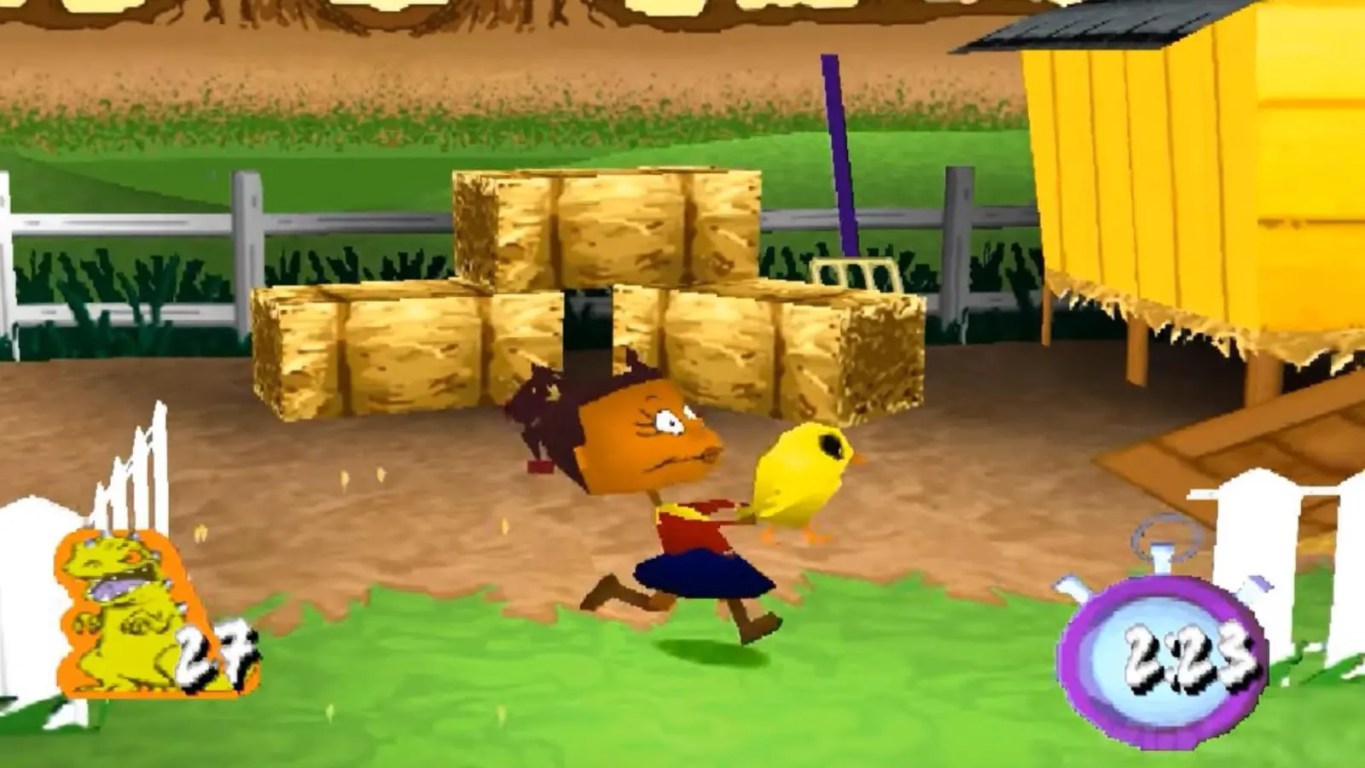
A Still from the Game
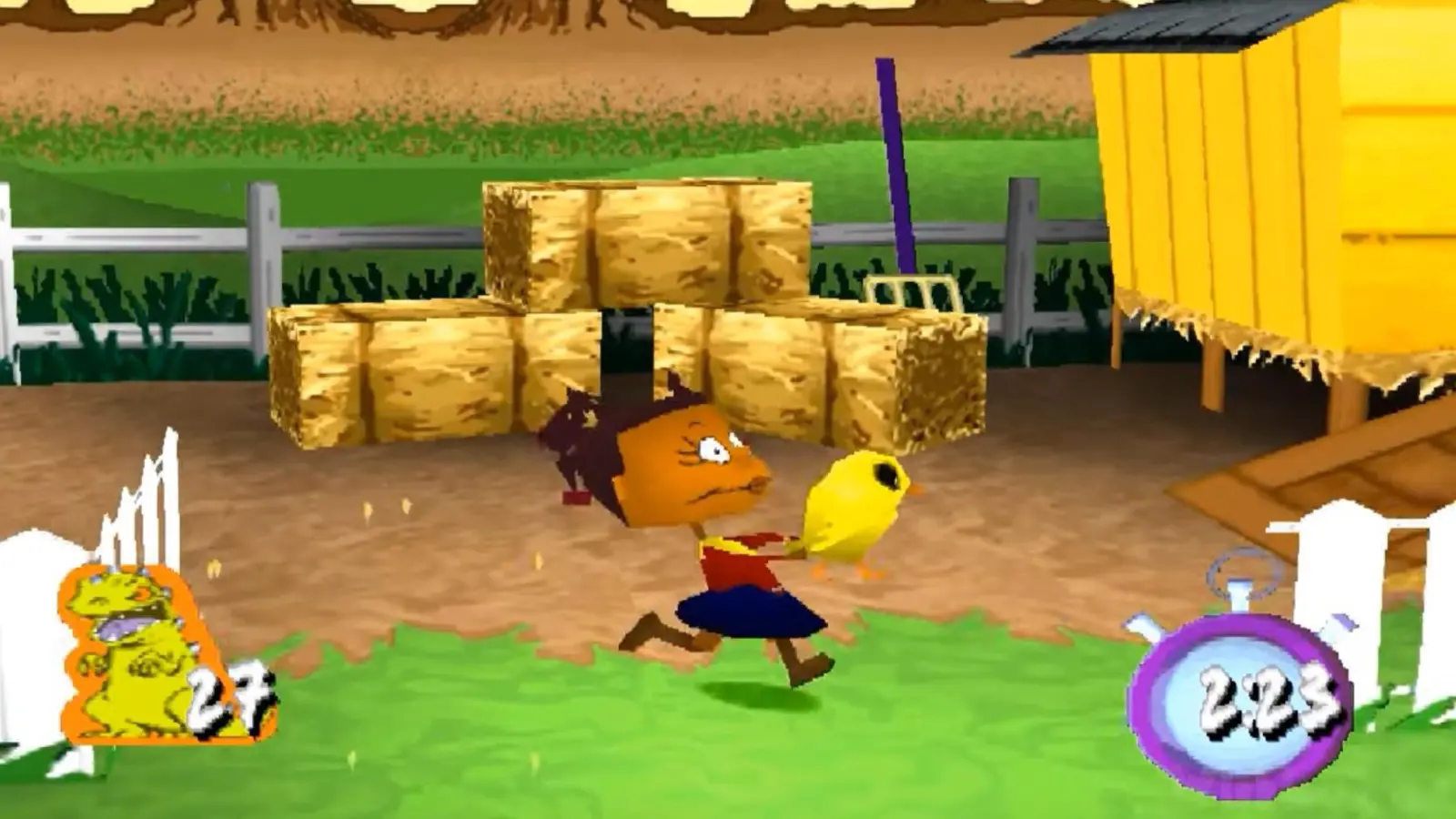
Featured Photo: n-Space