
Judge rightly forces accusers into private arbitration following multimillion-dollar dispute – holding plaintiffs to signed 2019 deal.
August 12, 2026
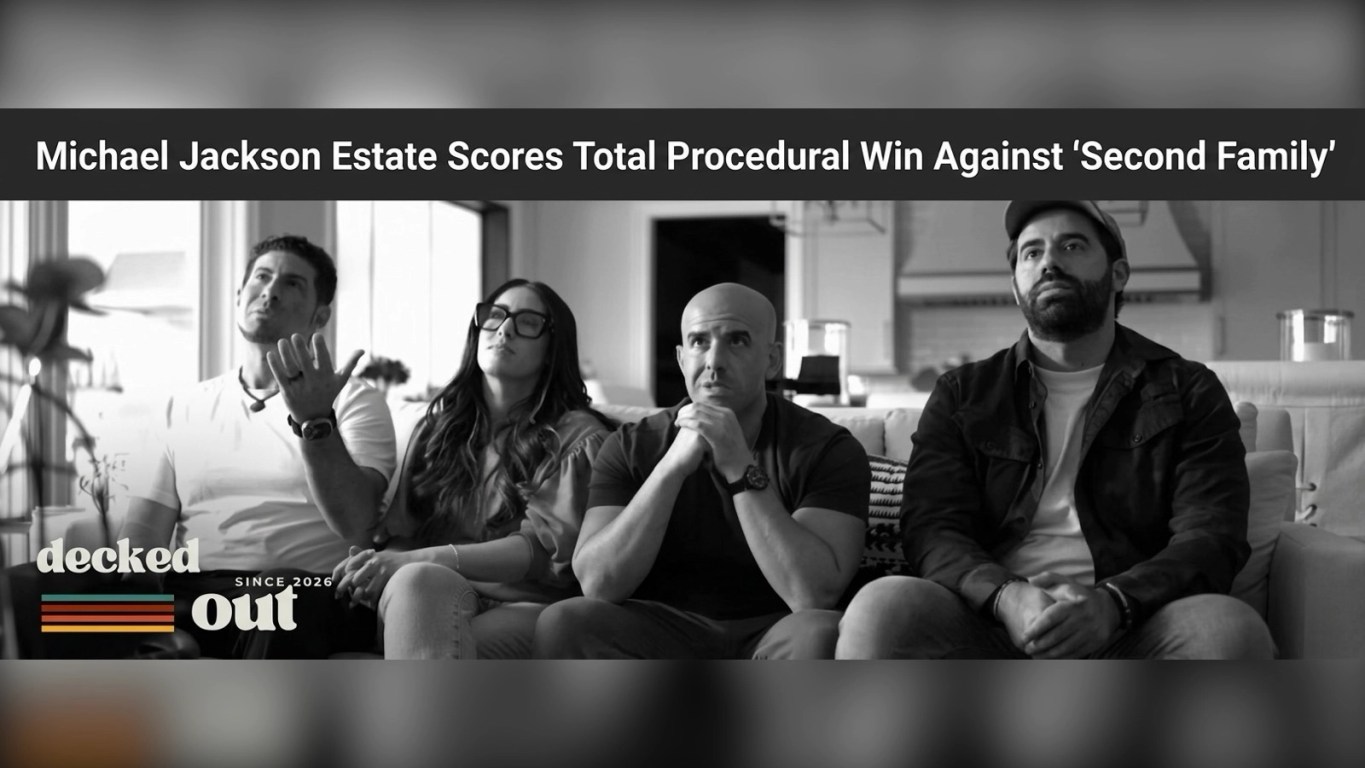
In a sweeping legal victory, a federal judge has officially shut down the latest attempt by a group of Michael Jackson accusers, one woman and three men, all siblings who once referred to themselves as Jackson’s “second family,” to take their claims to a public court trial. The ruling is a decisive win for the Jackson Estate and a firm enforcement of a binding contract signed by four individuals who attempted to bypass their agreement after collecting millions.
Table of Contents
The Verdict: Arbitration, Not Courtroom Drama
U.S. District Judge Hernán D. Vera made the legal reality crystal clear. On August 12, 2026, he granted the Estate’s Motion to Compel Arbitration, kicking the case out of open federal court and into a private arbitration forum.
The court ruled that the plaintiffs, Edward Joseph Cascio, Dominic Savini Cascio, Marie-Nicole Porte, and Aldo Cascio, are bound by the agreement they signed back in December 2019. That contract contained a clear arbitration clause that applies to all disputes arising from the agreement.
As Judge Vera noted in the ruling, “…the Court is without discretion to do aught but enforce the language of the arbitration clause.” Translation: a signed contract is a signed contract.
The EFAA Loophole Attempt: Denied
The plaintiffs tried to deploy the Ending Forced Arbitration of Sexual Assault and Sexual Harassment Act (EFAA) to break free from their contractual obligations. Passed in March 2022, the EFAA invalidates pre-dispute arbitration clauses for sexual assault claims. The plaintiffs argued their dispute didn’t technically “arise” until 2024 when they threatened new litigation.
Judge Vera rejected that timeline.
He ruled that the legal dispute actually arose in the summer of 2019, when the plaintiffs first disclosed their claims to the Estate’s attorneys and engaged in direct negotiations over financial payouts.
The court record shows that after initial offers of $100,000 each, the parties negotiated a structured deal paying out five annual installments of approximately $690,000 per person (with the first payment increased to $800,000), accumulating to over $3.5 million per plaintiff over five years. Because those negotiations and payments occurred in 2019, long before the March 2022 federal law was enacted, the EFAA cannot be applied retroactively.
Millions Paid, Then a New Demand
The court documents reveal the financial timeline behind the battle. After receiving all five years of scheduled payments under the 2019 agreement, the plaintiffs and their brother, Frank Cascio, came back in 2024 demanding a staggering $213 million (later reduced to $44 million) under threat of a public lawsuit.
In response, The Michael Jackson Company (MJC) launched arbitration proceedings for civil extortion and anticipatory breach of contract, winning a petition in Los Angeles Superior Court earlier this year. Now, this federal ruling ensures the entire group must take their claims to the exact same private forum.
What This Means for the Estate
This ruling marks a major victory for Defendants The Michael Jackson Company, John Branca, John McClain, MJJ Productions, and Herman Weisberg. It reaffirms that the 2019 settlement agreement and its releases are legally binding.
The accusers are now forced into private arbitration before a retired judge, where arbitrability and contract enforceability will be determined behind closed doors, exactly as agreed upon in 2019.
Extortion, Not Justice
Let’s be blunt about what this case really is. After collecting every last dollar of their five-year payout, the plaintiffs and their brother, Frank Cascio, returned with an audacious demand: $213 million (later slashed to $44 million), or else they’d go public with a lawsuit.
That’s not a quest for justice. That’s a shakedown.
The Estate had already initiated its own arbitration against Frank Cascio for civil extortion and anticipatory breach of contract. Now, the rest of the crew is headed to the same private arena, far from the cameras, far from the sympathy-baiting press conferences, and far from the jury box they were so desperate to play to.
The Allegations: Old News, Same Playbook
The complaint reads like a script rewritten from Leaving Neverland, lurid accusations of childhood abuse, claims of estate complicity, and the tired narrative of being “deprogrammed” by a documentary. The court acknowledged the allegations are “horrific,” but that didn’t matter one bit.
Why? Because the law is the law, and the contract is the contract. The judge refused to let emotion override the black-and-white terms of a deal these accusers voluntarily signed, had notarized, and happily cashed in on for five straight years.
The Bottom Line
The court saw through the theatrics, upheld the contract, and sent a clear message: you don’t get to take the money and then take the stand in an attempt for more money.
As Judge Vera put it, the motion is granted. All proceedings in federal court are stayed. The accusers will now have to face arbitration – and face the music.
About the Author
Andrew Greene is a quality-obsessed, results-driven powerhouse with nearly two decades of experience transforming complexity into clear, actionable solutions. His secret weapon? A mix of analytical sharpness, problem-solving precision and a communication and leadership style that’s equal parts clarity and charisma. From Quality Assurance to political data analysis, you can think of him as the Swiss Army knife of operational excellence, minus the corkscrew (unless it’s a team celebration).