

ESPN NBA 2Night 2002
Type: Broadcast-Driven Sports Simulation / Early Y2K Multi-Platform Console Release
Timeline: Released February 19, 2002
Studio / Publisher: Konami Studio Osaka / Konami of America
Category: Retro Game File
Overview
Launching on sixth-generation consoles on February 19, 2002, ESPN NBA 2Night 2002 stands as a highly ambitious visual experiment that captured the intense corporate licensing wars of the early-2000s sports gaming landscape. Developed by the team at Konami Computer Entertainment Osaka and published globally under the main corporate umbrella of Konami, the game sought to aggressively disrupt the basketball simulation sector. By completely anchoring its interface within the signature, high-production look of ESPN’s television broadcasts, the software attempted to bridge the gap between TV presentation and realistic, tight half-court gameplay physics across the PlayStation 2 and original Xbox configurations.
Why It Mattered
The game represents a distinctive developmental step where visual style took absolute precedence over arcade simplicity. Rather than leaning into the raw, high-velocity loose handling found in contemporary competitors, Konami co-opted ESPN’s broadcast graphics layouts, stat tickers, and audio overlays to deliver an unprecedented simulation feel. Stuart Scott provided comprehensive audio introductions, while legendary broadcaster Brent Musburger engineered the in-game play-by-play narrative flow. Mechanically, the project pioneered real-time player spacing indicators and an innovative emotional momentum modifier that dynamically adjusted player performance based on crowd noise shifts and consecutive missed shots.
The Production
The integration of broadcast license elements, system-specific graphics upgrades, and retail distribution metrics illustrate its history:
| Production Milestone | Visual & Design Output | Game Project Details |
|---|---|---|
| Licensing Realization | ESPN Graphics Emulation | Konami designers spent significant R&D tracking real-time ESPN television broadcasts, replicating the network’s on-screen score overlays, stat banners, and camera transition wipes perfectly within the game engine loops. |
| Audio Presentation | The Musburger Commentary Engine | The production team executed extensive vocal recording sessions with Brent Musburger, compiling a deep library of context-sensitive phrases designed to mimic authentic television pacing. |
| Xbox Port Variant | DirectX Feature Expansion | The Xbox edition capitalized on Microsoft’s superior graphics memory, pushing higher-resolution player face models, real-time uniform crease physics, and sharper arena floor reflections. |
| Roster Integration | Y2K League Time Capsule | The code locked in historical player data from the 2001-2002 season, tracking the peak physical styles of early-2000s icon configurations, including prime Chris Webber Sacramento eras and Vince Carter Toronto squads. |
Key Facts
- The Signature Mechanic: Introduced a unique “Street Mode” option separate from the broadcast matches, shifting the gameplay to urban locations and changing the soundtrack to rhythmic early-2000s instrumental loops.
- The Franchise Fallout: Despite massive marketing budgets and dominant initial distribution networks, intense market competition from EA’s NBA Live and Sega’s rising NBA 2K franchise ultimately forced Konami to retire its domestic basketball simulation division shortly after launch.
- The Audio Capsule: Marked one of the final instances where legacy sportscaster voices were captured for a major third-party basketball project, leaving behind a highly specific pop-culture sound history.
Related Files
- NBA 2K2 (2001)
- Midnight Club II (2003)
The Trailer
A Still from the Game
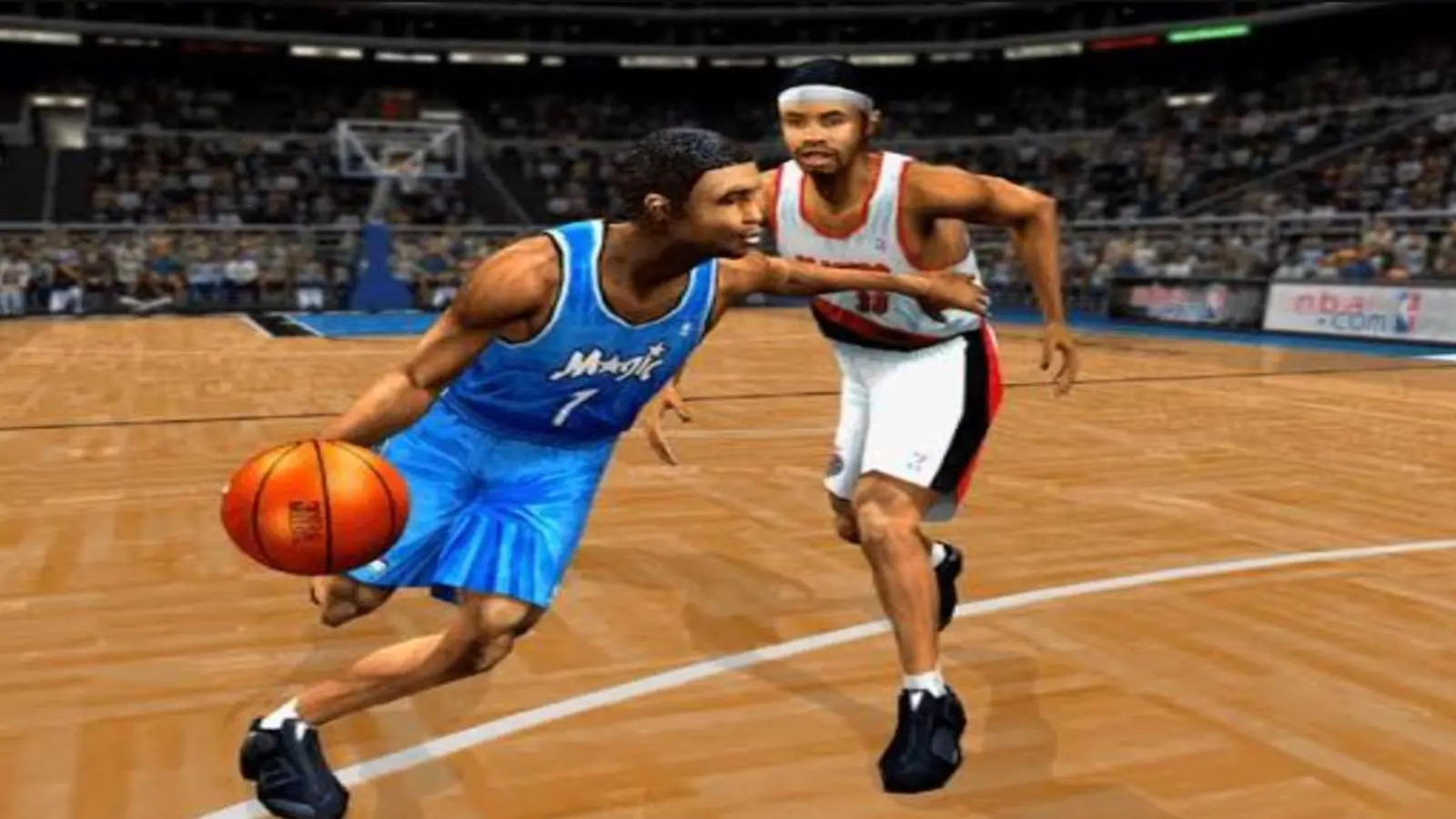
Featured Photo: Konami Studio Osaka
RELATED: [THE FILES] : NBA 2K2 (2001)


![[THE FILES]: Queen of the Damned (2002)](https://deckedoutmagazine.com/wp-content/uploads/2026/07/queen_of_the_damned_hero_image.webp)