
- Official Release Date: June 19, 2026
- Production Budget: $250 million
- Box Office Tracking: Projected record-breaking $150+ million domestic opening weekend.
- Core Creative Team: Directed by Andrew Stanton, co-directed by Kenna Harris, and produced by Lindsey Collins.
Pixar’s Toy Story 5 hits theaters today, and while industry analysts are hyper-focused on the film’s massive $150 million-plus opening weekend tracking data, the true scope of the project extends far beyond theater seating charts. This latest entry in the Toy Story franchise represents a masterclass in modern corporate strategy—acting as the core multi-platform engine designed to anchor Disney’s global retail ecosystem, theme park footprint, and licensing dominance for the fiscal year.
In short, there’s a lot of money to be made.
RELATED: Every Returning Character Confirmed for Toy Story 5 — and the Fan Favorites Still Missing
Table of Contents
Plastic vs. Pixels
Developed and written by Andrew Stanton—the filmmaker behind Finding Nemo and WALL-E—the synopsis centers on Woody, Buzz, Jessie and the gang going head-to-head with the ultimate threat to traditional playtime: smart tablets and personal electronics. As eight-year-old Bonnie loses her imagination to a new device named Lilypad (Greta Lee), the toys must fight for her attention. The toys have always had to “compete,” but by positioning the film around children’s growing screen-time obsession, Disney is very clearly (and cleverly) using its premier franchise to champion the emotional importance of physical toys—a narrative that directly serves its retail partners.
The Merchandising Machine & Toy-Aisle Dominance
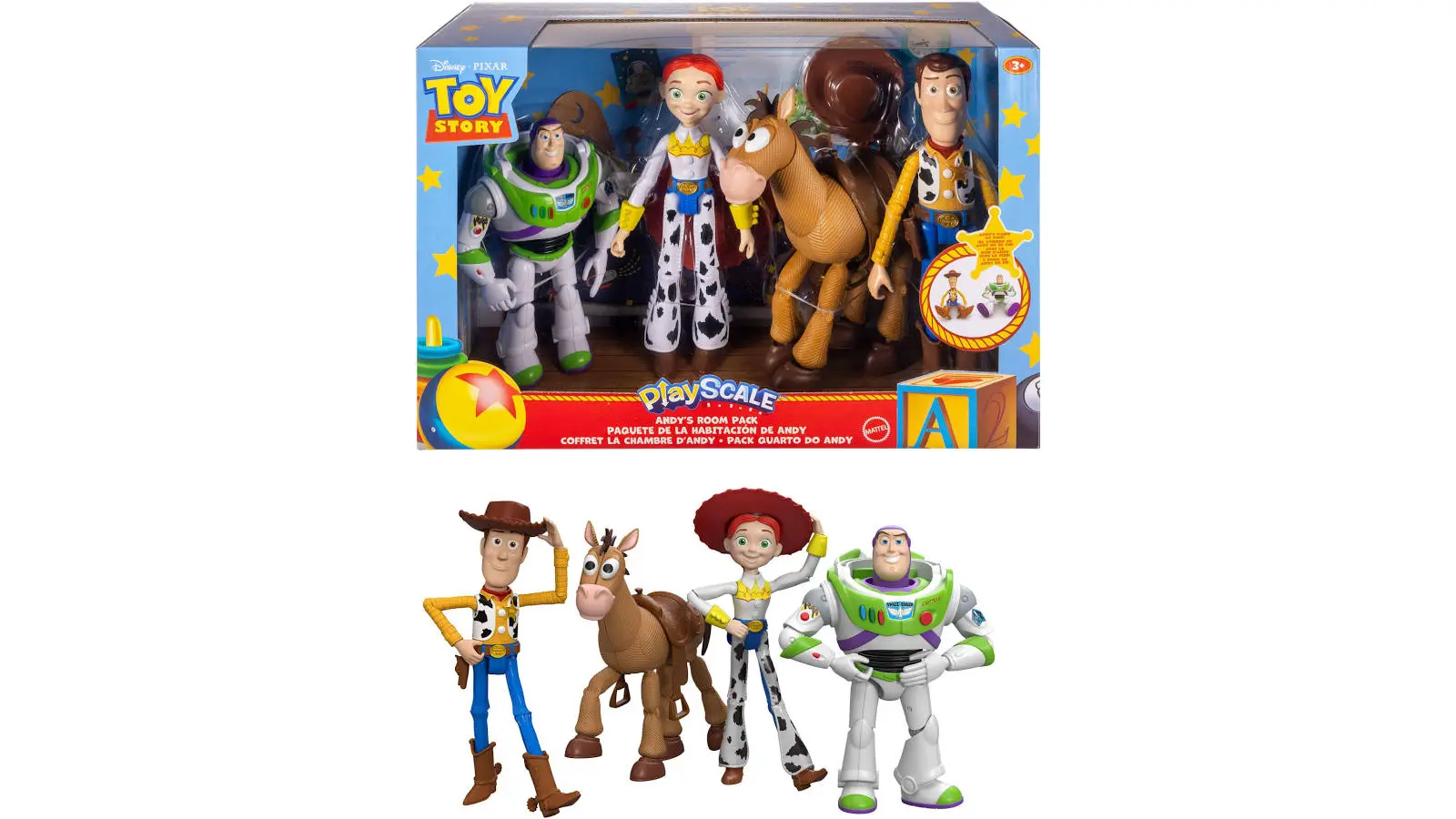
Photo: Walmart
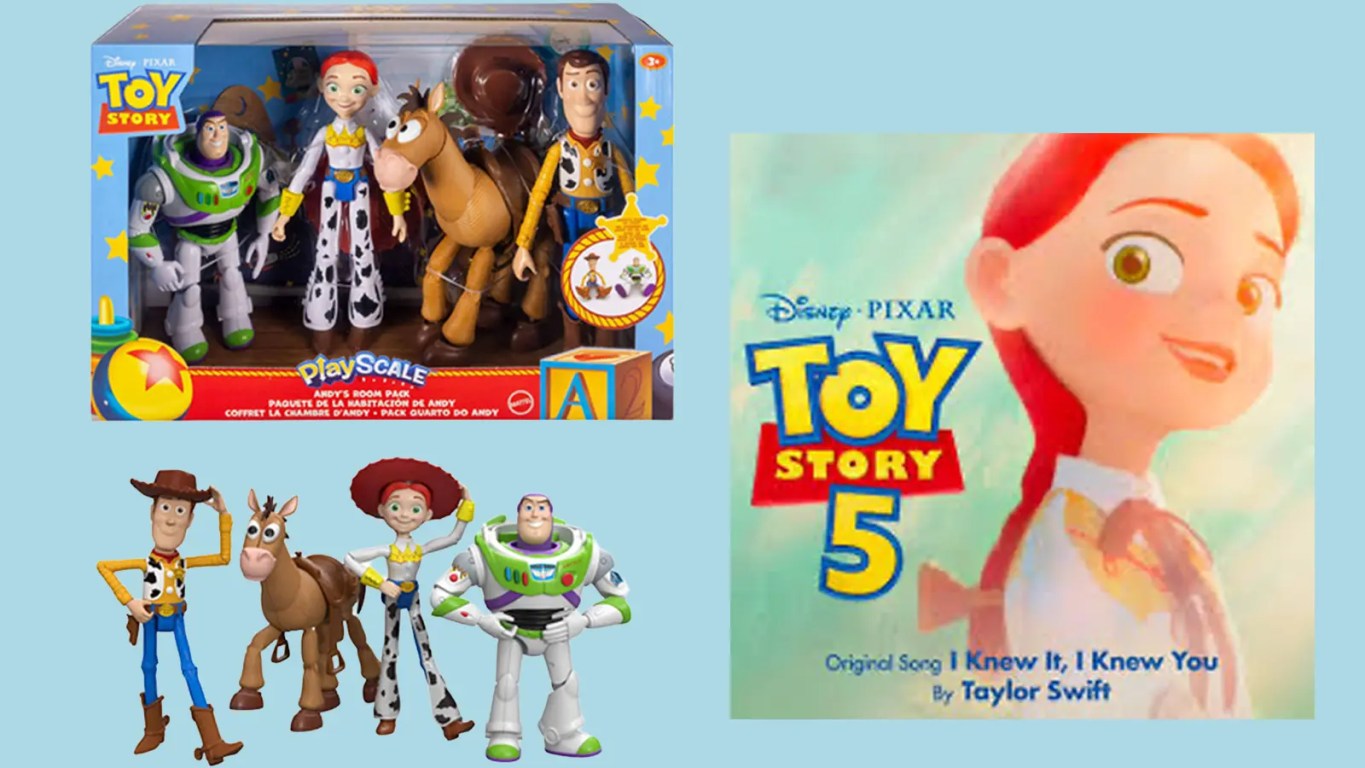
Make no mistake, Toy Story has never been just a movie franchise; it is a multi-billion dollar lifestyle brand. Launching the sequel on a hefty $250 million production budget ensures that Disney locks down prime real estate in big-box toy aisles like Target and Walmart. The film introduces a flurry of newly designed, highly sellable physical characters, ensuring an immediate wave of fresh merchandise skus, keeping the consumer products division highly profitable at a time when original IPs face intense uphill retail battles.
The Multi-Platform Cultural Blitz
To guarantee Toy Story 5 remains an unavoidable cultural moment, Disney’s marketing playbook has executed a brilliant multi-industry cross-over campaign. The musical backdrop is anchored by a brand-new original song from pop titan Taylor Swift titled “I Knew It, I Knew You,” which dropped alongside behind-the-scenes studio footage. Combined with a massive presence inside Disney Parks—where attractions and character experiences have been systematically updated to reflect the new characters—the film serves as a cross-divisional blueprint designed to maximize consumer spending across music streams, theatrical tickets and physical merchandise.
Toy Story 5 is in theaters today.
Featured Photo: Walmart; Disney Music
RELATED: [THE FILES] : Toy Story 2 (1999)

![[THE FILES] : Britney’s Dance Beat (2002)](https://deckedoutmagazine.com/wp-content/uploads/2026/06/britneys_dance_beat_video_game_history_hero.webp)
