
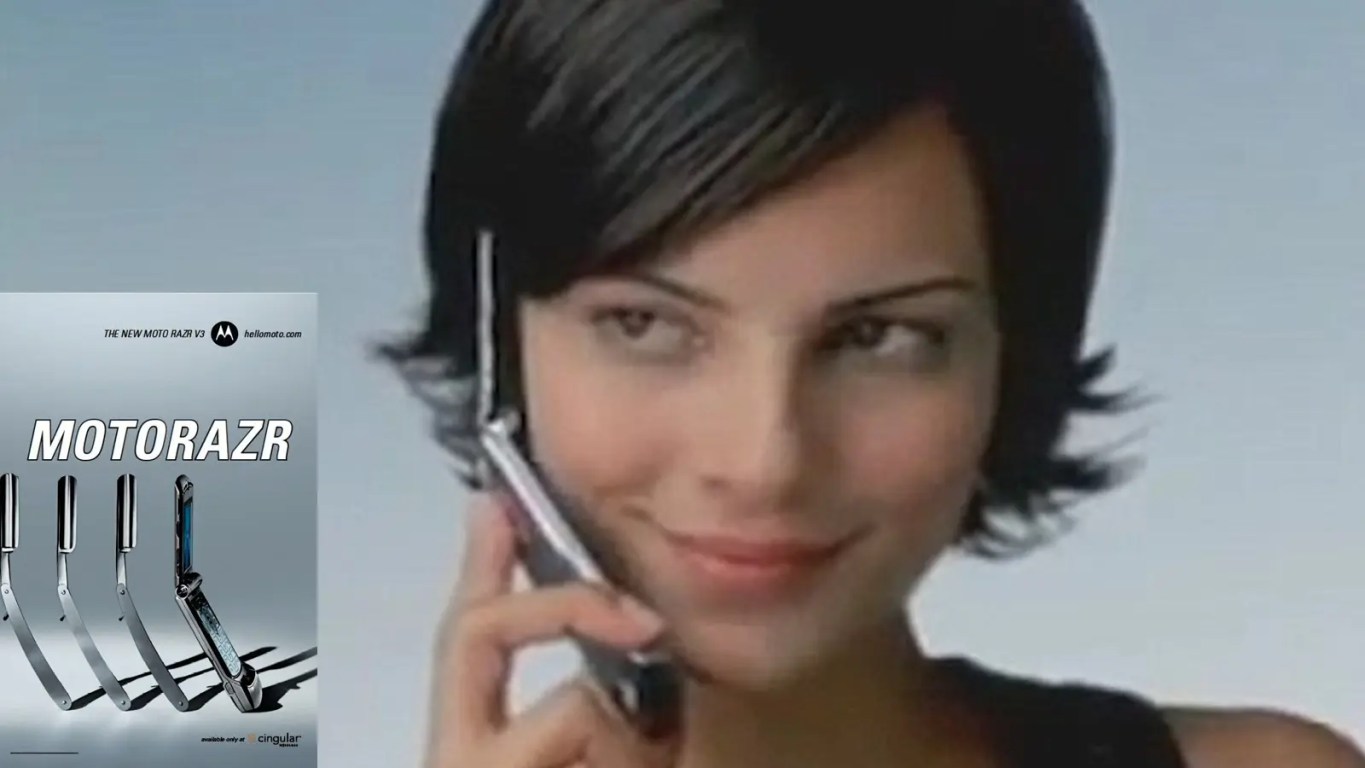
- The Deployment: November 2004
- The Mission: Turn a communication device into a premium fashion accessory
- The Hardware: Anodized aluminum body, nickel-plated keypad, and a dual-screen clamshell design
- The Price Tag: $449 USD (at launch)
- The Legacy: The best-selling clamshell phone in history
In 2004, phones were chunky, plastic and utilitarian. Then Motorola dropped the Razr V3, a device so thin it felt almost abnormal at the time. Make no mistake, the Razr V3 didn’t just compete on specs when it came to other phones at that time; it also operated on how the device physically felt in your hand. Opening a Razr was a haptic experience—the cold touch of the aluminum and the satisfying snap of the hinge became the universal sound of the 2000s elite.
The Razr V3 is the next file entry in our library.
RELATED: [THE FILES] 089 | The History of Xbox: From Project Midway to the 25th Anniversary
Table of Contents
Design Hardware: The Anodized Aesthetic
The Razr was the first phone to prioritize an industrialized design over raw functionality.
- The Profile: At only 13.9mm thick, it earned its “Razor” codename.
- The Keypad: A single sheet of nickel-plated chemically etched metal with electroluminescent blue backlighting. It looked like something pulled from a Ridley Scott set.
- The External Signal: The 4,096-color sub-display allowed users to check notifications without “booting up” the main screen—a precursor to the Always-On displays of 2026.
Cultural Patch: The Celebrity Approval
The Razr V3 was also the first phone to achieve “Celebrity Tier” status.
- The Oscars Hook: In 2005, Motorola distributed special “Black” versions in the Academy Awards gift bags, immediately hard-coding the phone into the Hollywood lifestyle.
- The Pink Expansion: The “Hot Pink” variant (Magenta) launched in late 2005, becoming the primary hardware for the “Y2K” pop-culture aesthetic. If you were a musician, athlete, or socialite in 2006, the Razr was your primary uplink.
The System
By current standards, the V3’s internals may seem like they fall short, but in 2004, they were the standard.
- The Camera: A VGA (0.3 MP) sensor. No video at launch, just grainy, low-res selfies that defined the early MySpace era.
- The Storage: A massive 5.5MB of non-expandable internal memory. You could store roughly two MP3s or a dozen low-res photos.
- The Connectivity: Bluetooth 1.2 and mini-USB—cutting-edge protocols for the mid-aughts.
The ‘Decked Out’ Verdict
Looking back from 2026, the V3’s influence is everywhere. From the Motorola Razr Fold to the 18GB RAM “flip-ship” leaks we’re seeing today, the “Clamshell OS” is back in style. The Razr proved that consumers don’t just want a tool; they want a collectible.
Featured Photo: Motorola
Author Bio
Jael Rucker is the founder of Decked Out Magazine. She has previously worked as the Associate Commerce Editor at PureWow, focusing on analytics and trends to pitch stories and optimize articles that build and engage their audience. Her work has also been seen in Footwear News and WWD. Prior to 2024, she was the style and pop culture editor at ONE37pm for over three years, contributing numerous product reviews, brand profiles and fashion trend reports, which included interviewing Steph Curry, Snoop Dogg and more.
![[THE FILES] 250 : Rugrats Search for Reptar (1998)](https://deckedoutmagazine.com/wp-content/uploads/2026/06/rugrats_search_for_reptar_video_game_history.webp)

![[THE FILES] 249 : Silent Hill (1999)](https://deckedoutmagazine.com/wp-content/uploads/2026/06/silent_hill_video_game_history_hero.webp)
![[THE FILES] 248 : Thick as Thieves (1999)](https://deckedoutmagazine.com/wp-content/uploads/2026/06/thick_as_thieves_hero_image.webp)