
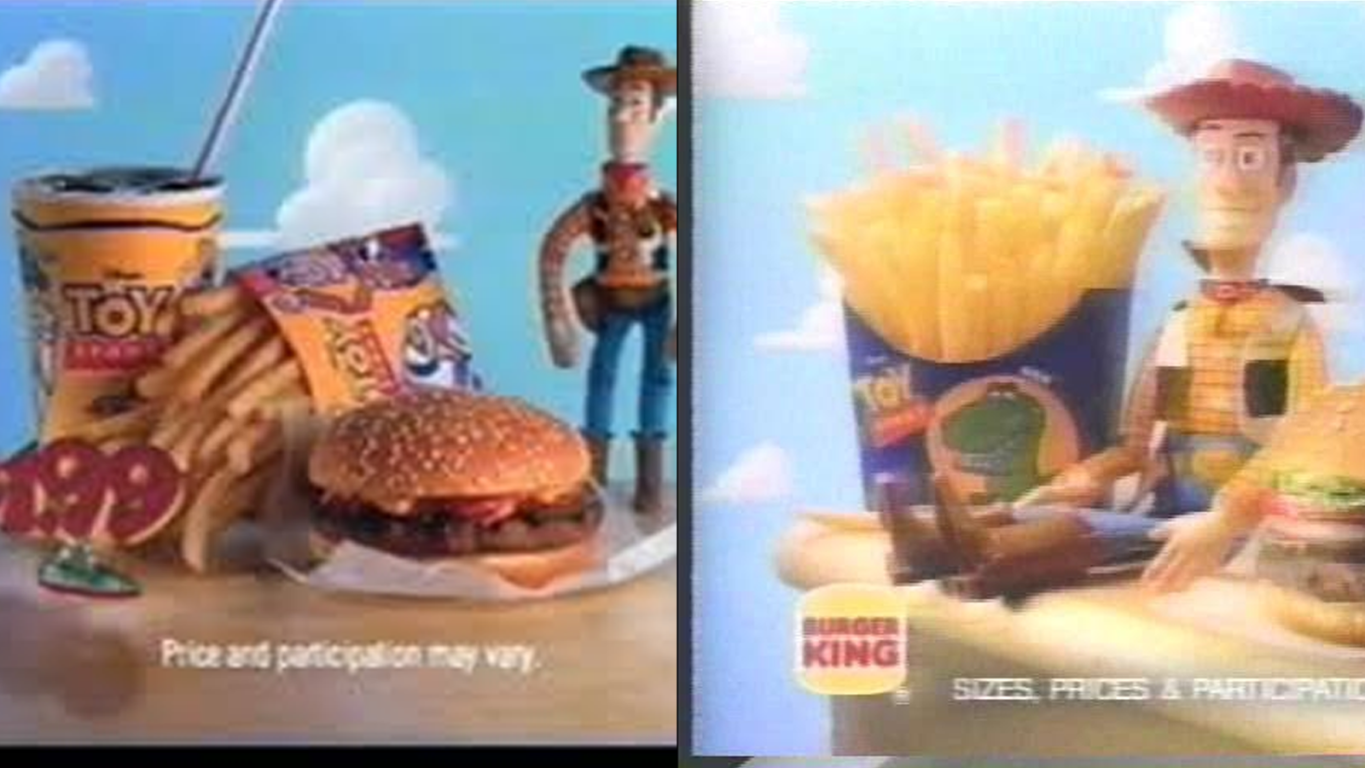
- The Release: November 22, 1995.
- The Technical Spec: The first feature-length film created entirely with 3D computer-generated imagery (CGI).
- The Render Power: Rendered on a “RenderFarm” of 117 Sun Microsystems workstations running 24 hours a day. Each frame took anywhere from 45 minutes to 30 hours to compute.
- The Box Office Payload: Opened at #1 with $29.1 million on Thanksgiving weekend. It went on to gross $373 million worldwide, becoming the highest-grossing domestic film of 1995.
- The Legacy Patch: Toy Story didn’t just win at the box office; it forced the entire animation industry to revamp, effectively ending the dominance of hand-drawn 2D features in a single weekend.
In 1995, “Computer Animation” was a term for flight simulators and tech demos. To the average moviegoer, polygons felt cold and digital. Disney’s marketing task was to bridge the Uncanny Valley by turning cold digital data into tangible childhood friends. They didn’t just sell a movie; they sold a “New Reality” through a massive network of fast-food synergy and tactical retail scarcity.
Continuing our Toy Story deep dive, let’s take a look into the marketing behind the magic.
RELATED: [THE FILES] 096 | Toy Story (1995) – The Hardware That Deleted the 2D Era
The Fast Food Frontline: The Burger King Patch
The partnership with Burger King was the lucky star for the movie. Since McDonald’s was locked into other contracts, Burger King stepped in to create a high-frequency marketing loop.
- The Global Reach: The $20 million campaign was paired with $125 million in promotional tie-ins from partners like Frito-Lay and General Mills, ensuring that the “Toy Story” brand was unavoidable in every grocery aisle in America.
- The Tangible Bridge: BK released six characters, including a cloth-bodied Woody and a “wheeled” Rex. By letting kids hold the plastic versions of the characters before the film premiered, Disney ensured the on-screen versions didn’t feel like “cold math.”
The Thinkway Shortage
One of the greatest marketing mistakes in history came from the legacy giants. . Mattel and Hasbro famously turned down the project, believing that computer-generated characters wouldn’t translate into successful toy sales.
- The Market Crash: When the film opened at #1, demand skyrocketed instantly. The Buzz Lightyear “Talker” became the most valuable piece of plastic on earth. By December 1995, parents were flying to different states to secure the “hardware,” creating a secondary market that predated modern “Hype” culture.
- The Underdog: Disney turned to Thinkway Toys, a small company based in Toronto. With only eight months to produce the line, Thinkway initially created a conservative run of about 200,000 Woody dolls and 50,000 Buzz Lightyears.
The ‘Decked Out’ Verdict for Modern Hype
The marketing of Toy Story established the blockbuster formula that’s still being used now: an aggressive mix of fast-food synergy, retail scarcity and cross-platform visibility, proving that if the story and word of mouth is strong enough, the hype and numbers will follow.
Featured Image: Burger King
RELATED: [THE FILES] 065 | Finding Nemo (2003): The Ultimate Rendering of an Ocean
Author Bio
Jael Rucker is the founder of Decked Out Magazine. She has previously worked as the Associate Commerce Editor at PureWow, focusing on analytics and trends to pitch stories and optimize articles that build and engage their audience. Her work has also been seen in Footwear News and WWD. Prior to 2024, she was the style and pop culture editor at ONE37pm for over three years, contributing numerous product reviews, brand profiles and fashion trend reports, which included interviewing Steph Curry, Snoop Dogg and more.

![[THE FILES] : Christina Milian: AM to PM (2001) : Single Overview, Background, Impact](https://deckedoutmagazine.com/wp-content/uploads/2026/07/IMG_5133.webp)