
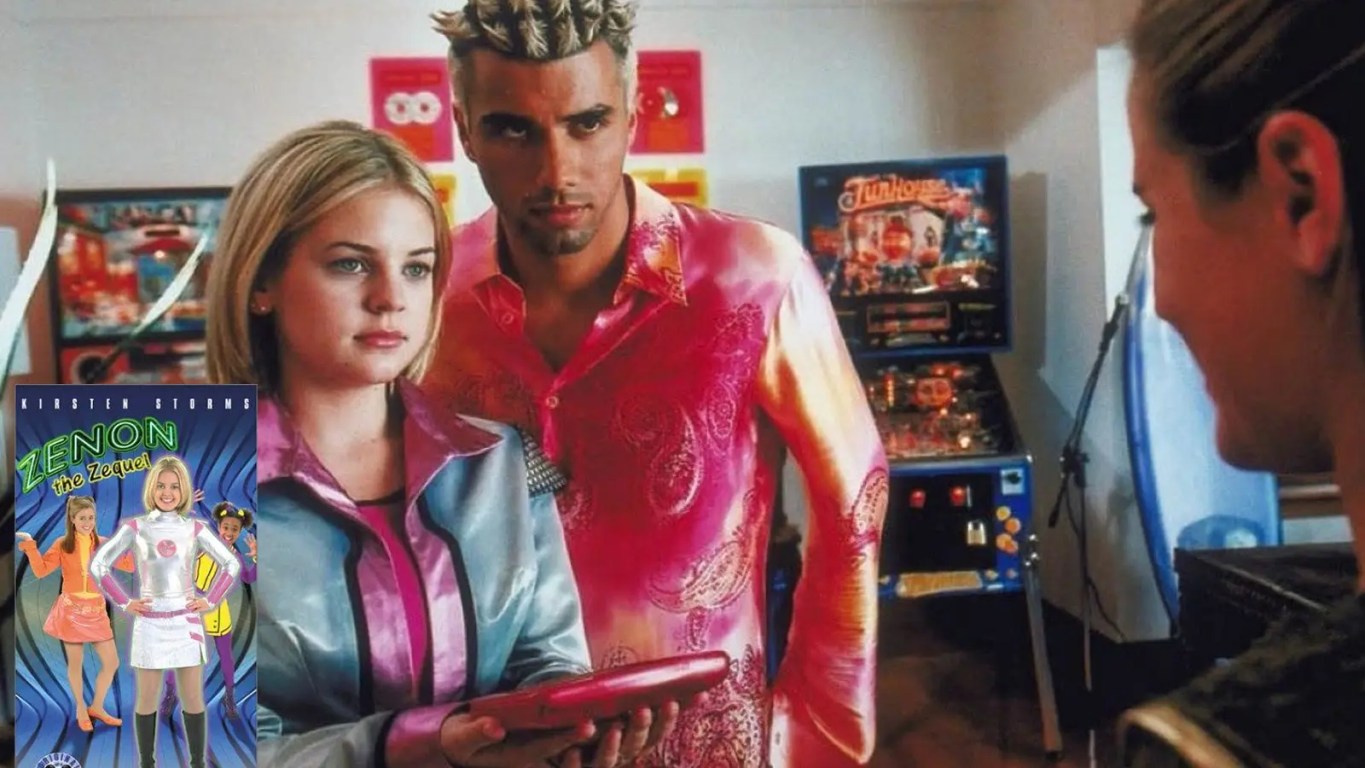
- The Subject: Zenon: The Zequel
- Release Date: January 12, 2001
- The Lead: Kirsten Storms, Shadia Simmons, Phillip Rhys
- The Logic: It’s 2051. Zenon is 15, the Space-Stay is under military occupation, and the “Supernova Girl” melody is being hummed back from the deep reaches of space
In 2001, Disney Channel proved that its “Original Movie” brand could sustain a legitimate sci-fi mythology. The Zequel wasn’t just a repeat of the first film; it was an escalation. It introduced a darker tone (the decommissioning of the station), a new Nebula (recast with Shadia Simmons), and a surprisingly philosophical take on how we communicate with the “Unknown.” For File 060, we’re breaking down the technology that defined the start of the new millennium.
You guessed it—Zenon: The Zequel is the next file to enter our library.
RELATED: [THE FILES] 044 | Archive: Zenon: Girl of the 21st Century (1999)
The Hardware: The Zap-Pad Evolution
If the first film predicted the tablet, Zequel predicted what would eventually become our social network reality.
- The Zap-Pad 2.0: By 2051 (or 2001 in reality), the Zap-Pads became more than just video-call devices. They were used for gaming and intercepted communications. Zenon’s “accidental” destruction of Commander Plank’s office happened because she was trying to show Nebula a new game—a very relatable 2026 problem.
- Alien Patrol (AP) Lab: Zenon’s punishment—monitoring the “silent” deep space signals—is where the film’s technical heart lies. The visualization of the alien “map” and the rhythmic radio signals were the high-tech highlights of the film’s $4 million budget.
The Conflict: Military vs. Discovery
The Zequel traded the corporate villain of the first film for a more intimidating force: General Hammond.
- The Military Occupation: The Space-Stay being placed under military authority was a sharp pivot for a DCOM. It shifted the stakes from “saving a home” to “defending a lifestyle.”
- The Nemesis-to-Ally Arc: Returning to Earth meant facing Margie Hammond again. The evolution of their relationship—from blackmailer to reluctant co-conspirator—remains one of the best-written character arcs in the trilogy.
The Software: ‘The Galaxy Is Ours’
You can’t talk about The Zequel without the follow-up to the greatest fictional pop song in history.
- Proto Zoa’s Breakdown: The “Software” of the film focuses on Proto Zoa (Phillip Rhys) hiding out on Earth, burnt out by fame.
- The Finale: The performance of “The Galaxy Is Ours” is a 2000s cultural milestone. It wasn’t just a concert; it was the signal that brought the aliens to the station to fix the damage. It proved that in the Zenon universe, music is the universal language of the stars.
The Verdict: Fun, but Still Not Original
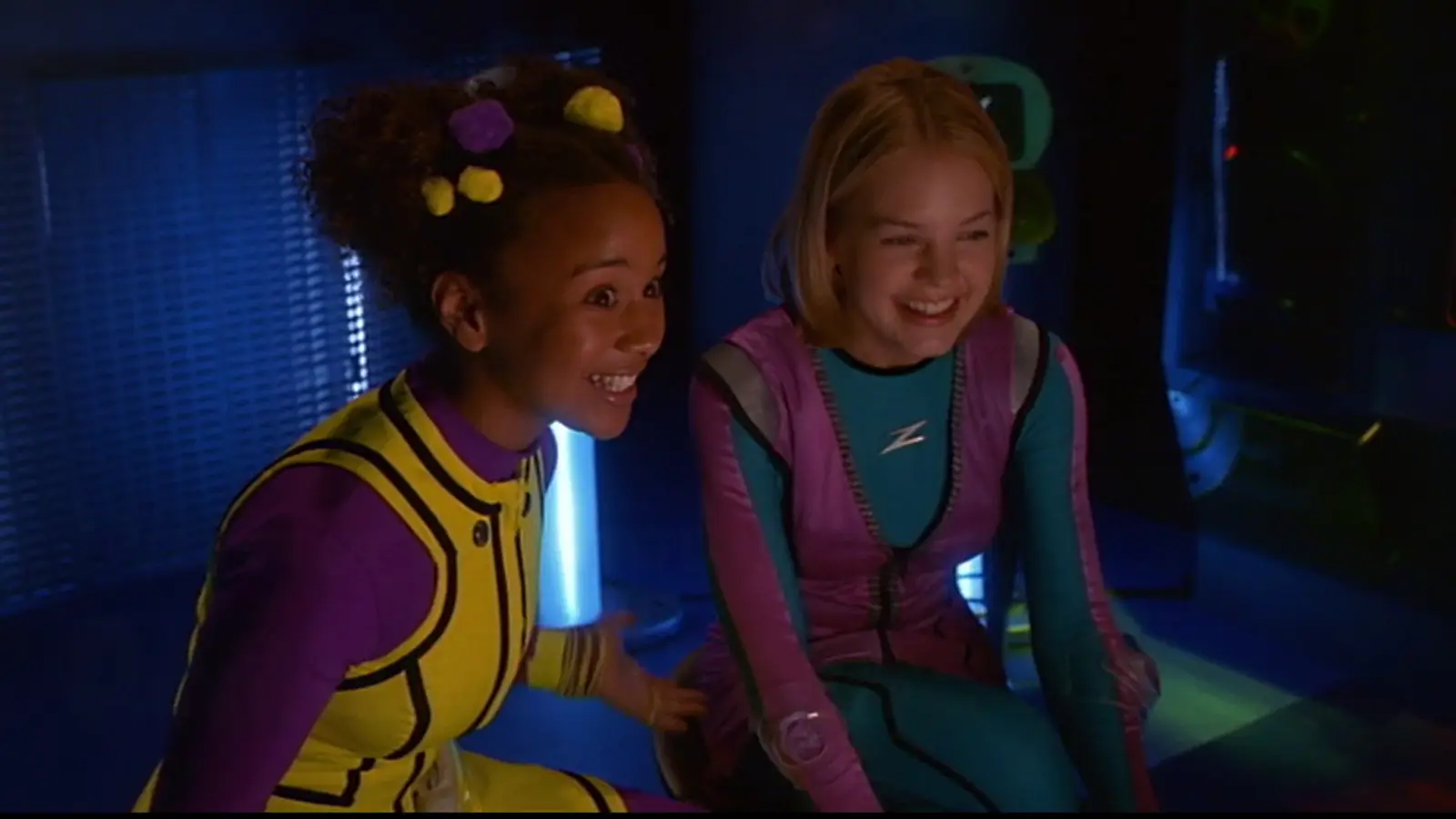
Photo: Disney Channel
Zenon: The Zequel succeeded because it dared to let Zenon grow up, putting her in a commander role, but…I still don’t think it trumps the original (or perhaps I’m biased because the original is one of my favorite childhood movies). Biased or not, I still think Zequel is an enjoyable film, and her haircut is *so* 2000s.
Featured Photo: Disney Channel
RELATED: [THE FILES] 040 | Blueprint: The “Close Order Drill” Mechanics of ‘Cadet Kelly’ (2002)
RELATED: [THE FILES] 034 | The Heritage Engine: A Technical Review of The Luck of the Irish (2001)
Author Bio
Jael Rucker is the founder of Decked Out Magazine. She has previously worked as the Associate Commerce Editor at PureWow, focusing on analytics and trends to pitch stories and optimize articles that build and engage their audience. Her work has also been seen in Footwear News and WWD. Prior to 2024, she was the style and pop culture editor at ONE37pm for over three years, contributing numerous product reviews, brand profiles and fashion trend reports, which included interviewing Steph Curry, Snoop Dogg and more.
![[THE FILES] 178 : Jennifer Lopez & Ja Rule: “I’m Real (Murder Inc. Remix)” (2001)](https://deckedoutmagazine.com/wp-content/uploads/2026/05/jennifer_lopez_im_real_remix_hero_image.webp)


![[THE FILES] 177 : Def Jam: Fight for NY (2004)](https://deckedoutmagazine.com/wp-content/uploads/2026/05/def_jam_fight_for_ny_hero_image.webp)