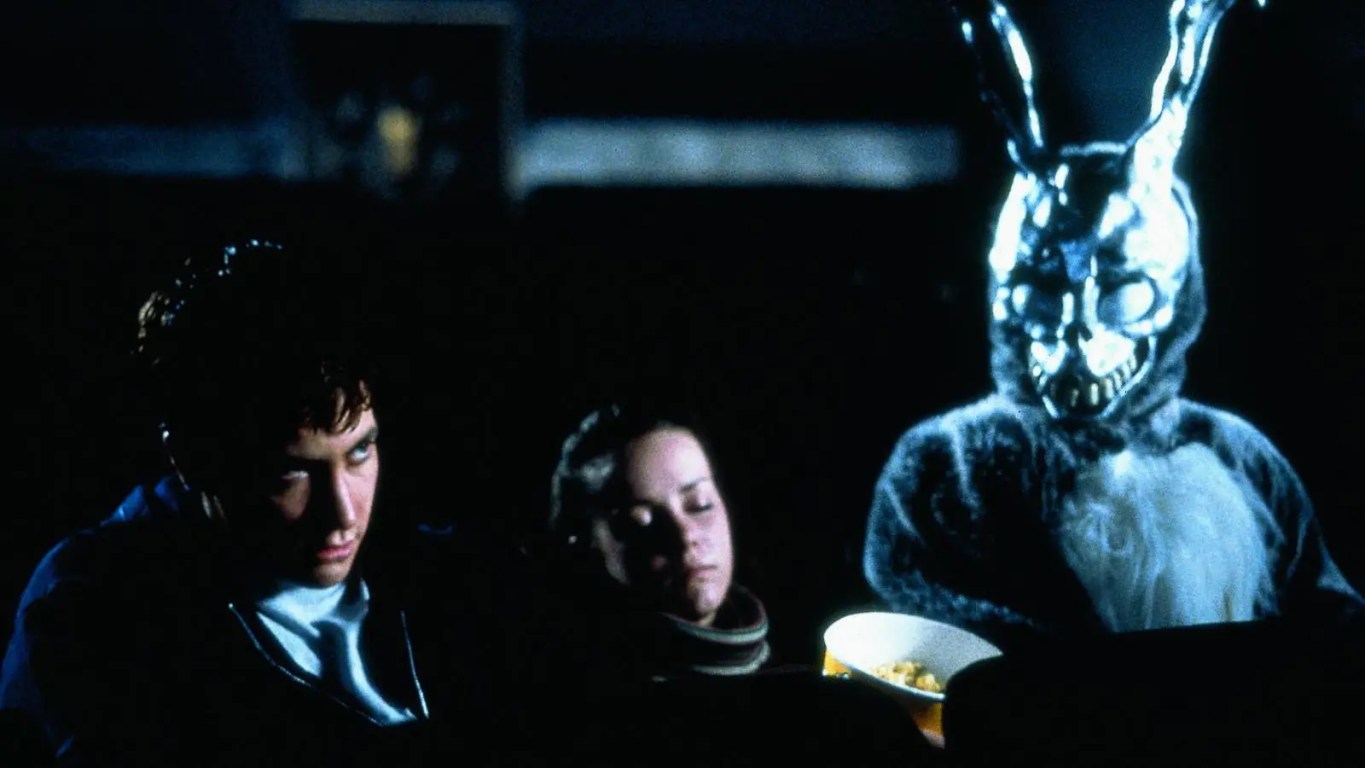
In the delicate framework of late-90s and early-2000s independent cinema, major studios were aggressively searching for hyper-stylized narrative architectures that could capture the psychological anxieties of the shifting millennium. This volatile corporate gold rush culminated in the legendary, turbulent production of 2001’s Donnie Darko. Written and directed by 26-year-old newcomer Richard Kelly, the project was structured as an ambitious indie darling before colliding with extreme logistical and financial bottlenecks. Armed with a lean $4.5 million production budget and a frantic 28-day shooting schedule, the film faced immediate system failure when line producers flatly refused to fund the massive lighting rigs required to shoot in the expansive Panavision Anamorphic format (2.35:1). To secure the premium look he envisioned, cinematographer Steven Poster executed a legendary technical bluff: he told production executives that Kodak had engineered a revolutionary, hyper-sensitive tungsten film stock—Kodak Vision 800T—that could capture crisp night scenes with almost zero electrical lighting footprint. Poster had never actually run a test strip of it through a gate. The bluff worked, making Donnie Darko the only feature film in cinema history shot entirely on Vision 800T, giving the picture its signature, dream-state photochemical grain structure. This volatile chemical texture was paired with vintage Panavision Primo Anamorphic lenses, which softened modern digital sharpness and threw stunning horizontal blue streak flares across suburban interiors. Furthermore, the film’s liquid translucent “time spears” had to be hand-drawn frame-by-frame on legacy Silicon Graphics (SGI) workstations because early 2000s computing lacked automated ray-tracing pipelines, fusing the digital artifacts seamlessly into the physical film environment.
The Numbers
The commercial architectural trajectory of Donnie Darko remains one of the most fascinating anomalies in the history of physical media capitalization and secondary market redemption. After a disastrous initial theatrical rollout that brought in a catastrophic, dead-on-arrival box office return of just $517,375 domestically—stifled heavily by the film’s unfortunate promotional timing alongside the socio-political trauma of September 11—the asset appeared destined for permanent obscurity. However, rather than disappearing into the studio vault, the title was acquired for home video distribution and propelled entirely by decentralized, peer-to-peer word-of-mouth recommendations across early internet forums. The project found massive durability on the international theatrical circuit, anchored by an unbroken 16-week midnight movie run at London’s Pioneer Cinema that racked up an additional $7.5 million. Driven by its immense residency on Blockbuster Video rental tracking grids and specialty physical media collector circles, the film transformed into an ironclad multi-million dollar cult powerhouse. On the secondary market, promotional original double-disc DVD packages, factory-sealed VHS copies, and high-grade 25th-anniversary 4K restorations have emerged as premium targets among Gen-Y film preservationists looking to archive the physical hardware of the cult video era, with original physical media routinely fetching $20.00 to $45.00 USD.
The Verdict
“A spectacular monument to the raw, democratic power of the home video ecosystem. By fully bypassing traditional corporate gate



![[THE FILES] : Mary J. Blige – Family Affair (2001)](https://deckedoutmagazine.com/wp-content/uploads/2026/06/mary_j_bligefamily_affair.webp)