Artificial intelligence is moving faster than the rules meant to govern it. As governments debate regulation, companies deploy new systems, and AI tools expand into policing, healthcare, hiring, and public services, a growing body of evidence is raising the same urgent question: who is being harmed while this technology scales? For Black communities, the answer is no longer hypothetical. Researchers, journalists, and civil rights groups are documenting real-world consequences, from wrongful arrests to unequal medical care, unfolding in real time.
RELATED: The Cost of Loyalty: Trump’s Economic Lies, Tariff Taxes and the $64 Trillion Time Bomb
Table of Contents
The Myth of Machine Neutrality
The tech industry sells artificial intelligence as objective decision‑making, math replacing bias, data replacing discrimination.
But AI systems do not emerge from nowhere. They are trained on historical records produced by institutions shaped by unequal policing, unequal healthcare access, unequal hiring patterns, and unequal surveillance. According to the Office of the United Nations High Commissioner for Human Rights (OHCHR), machine‑learning systems can reproduce and entrench discrimination when trained on historically biased data.
In other words: AI does not remove inequality. It operationalizes it.
When Machines Get Faces Wrong, and the Law Acts Anyway
Few technologies illustrate algorithmic bias more clearly than facial recognition.
According to extensive testing conducted by the National Institute of Standards and Technology (NIST), hundreds of facial recognition algorithms showed significant demographic accuracy gaps. Many systems produced dramatically higher false‑positive rates for Black and Asian faces compared with white faces.
Scientific reporting summarized by Scientific American links these disparities to training datasets that underrepresent darker‑skinned individuals and to uneven exposure patterns in surveillance data.
These accuracy gaps have real‑world consequences. According to reporting by The Washington Post, multiple wrongful arrests have occurred after police relied on facial recognition matches that incorrectly identified innocent Black individuals. Officers treated probabilistic algorithmic outputs as investigative certainty.
Technology marketed as precision policing has introduced algorithmic suspicion into criminal procedure. Automation did not reduce risk. It redistributed it unevenly.
Healthcare Algorithms That Quietly Deny Care
Bias in AI does not stop at policing. It reaches into life‑and‑death decisions.
A major peer‑reviewed study published in Science examined a widely used U.S. healthcare risk algorithm that determined which patients would receive additional medical support. According to the researchers, the system used healthcare spending as a proxy for medical need.
Because Black patients historically receive less care, and therefore generate lower medical costs, the algorithm concluded they were healthier than they actually were. The study found that correcting the bias would more than double the number of Black patients flagged for high‑risk care management.
The algorithm did exactly what it was designed to do: predict future spending.
The problem is that spending was never a neutral measure of need. Structural inequality entered the model as a variable, and emerged as a decision.
Predictive Justice and the Automation of Risk
Criminal justice risk‑assessment tools follow the same pattern: historical patterns become predictive signals.
According to a landmark investigation by ProPublica, one widely used risk‑prediction system falsely labeled Black defendants as high risk at nearly twice the rate of white defendants who did not reoffend.
These tools influence bail decisions, sentencing recommendations, and supervision levels across U.S. jurisdictions. When algorithms inform punishment, statistical disparities become institutional power. Automation does not neutralize human bias. It standardizes it across entire systems.
Who Builds AI — and Who Gets Left Out
Technology does not design itself. People design it.
Workforce diversity reporting from major technology firms, including Google and Meta Platforms, shows persistent underrepresentation of Black professionals in technical roles.
Advocacy and research communities such as Black in AI argue that homogeneity in development teams increases the likelihood that harmful outcomes affecting marginalized populations go undetected during system design and testing.
Perspective shapes problem definition. Problem definition shapes system behavior. When lived experience is absent from design, blind spots become built‑in features.
Why Distrust Isn’t Irrational, It’s Historical
Public concern about AI is often framed as fear of innovation.
But mistrust does not arise in a vacuum. It emerges from historical experience with institutions that have repeatedly produced unequal outcomes.
According to scholars studying healthcare algorithms and community response patterns, historical discrimination shapes present‑day trust in automated systems. New technology deployed within old power structures does not look like reform. It looks like continuity.
The Growing Fight Over Algorithmic Power
Researchers and policymakers are increasingly pushing for oversight of high‑risk AI systems.
According to research initiatives such as Stanford Human‑Centered AI (HAI) and policy positions advanced by the Congressional Black Caucus, proposed reforms include:
• independent algorithmic audits
• civil rights impact assessments
• transparency mandates
• limits on facial recognition deployment
• community governance of high‑risk systems
The emerging policy consensus is clear:
Technical fixes alone cannot solve structural inequality. Governance must change, or outcomes will not.
The Structural Reality Technology Cannot Escape
Artificial intelligence is not inherently discriminatory. But it is structurally dependent on human data, human institutions, and human priorities.
The OHCHR warns that without oversight, AI risks entrenching discrimination across essential systems, including policing, healthcare, employment, and public services.
That warning reflects what the evidence already shows. AI reflects the world that trains it. It reflects the systems that deploy it. It reflects the values of those who build it. And when inequality shapes those inputs, inequality shapes the outputs.
Automation Is Scaling Inequality
Artificial intelligence is moving faster than the rules meant to govern it. As governments debate regulation, companies deploy new systems, and AI tools expand into policing, healthcare, hiring, and public services, a growing body of evidence is raising the same urgent question: who is being harmed while this technology scales? For Black communities, the answer is no longer hypothetical. Researchers, journalists, and civil rights groups are documenting real-world consequences, from wrongful arrests to unequal medical care, unfolding in real time.
The debate, then, is no longer about whether artificial intelligence can produce unequal outcomes, that question has already been answered by reality. Bias is not theoretical. It is measurable. It appears in risk-assessment software that predicts who is more likely to reoffend, in automated hiring filters that quietly screen out qualified candidates, in healthcare allocation systems that determine who receives priority care, and in predictive policing models that concentrate surveillance in the same communities that have historically been over-policed. These outcomes are not technical anomalies or isolated failures. They are the logical result of systems trained on historical data shaped by unequal societies. When the past is biased, the pattern becomes the prediction.
What remains unsettled is not the technology’s capability, but society’s willingness to confront its consequences. Regulation continues to lag behind deployment. Oversight mechanisms remain fragmented. Transparency is often voluntary. And accountability frequently dissolves into technical complexity that few policymakers, or members of the public, are equipped to challenge. In that vacuum, automated decision-making does not merely reflect existing disparities; it standardizes them, scales them, and embeds them into institutional processes that operate faster and with greater authority than any human bureaucracy ever could.
Artificial intelligence does not need intent to produce injustice. It only needs permission to operate without constraint. Until governance catches up with capability, AI will not simply mirror inequality. It will systematize it, normalize it, and distribute it with industrial efficiency. The question is no longer whether harm is possible. The question is how much of it society is prepared to automate.
Selected Sources:
• National Institute of Standards and Technology (NIST), Face Recognition Vendor Test (FRVT)
• Scientific American reporting on facial recognition bias
• The Washington Post reporting on wrongful arrests linked to facial recognition
• Obermeyer et al., Science (2019), “Dissecting racial bias in an algorithm used to manage the health of populations”
• ProPublica, “Machine Bias”
• OHCHR, “Racism, Technology, and Human Rights”
• Google & Meta Diversity Reports
• Black in AI, advocacy and research publications
• Stanford Human‑Centered AI (HAI)
• Congressional Black Caucus AI policy statements
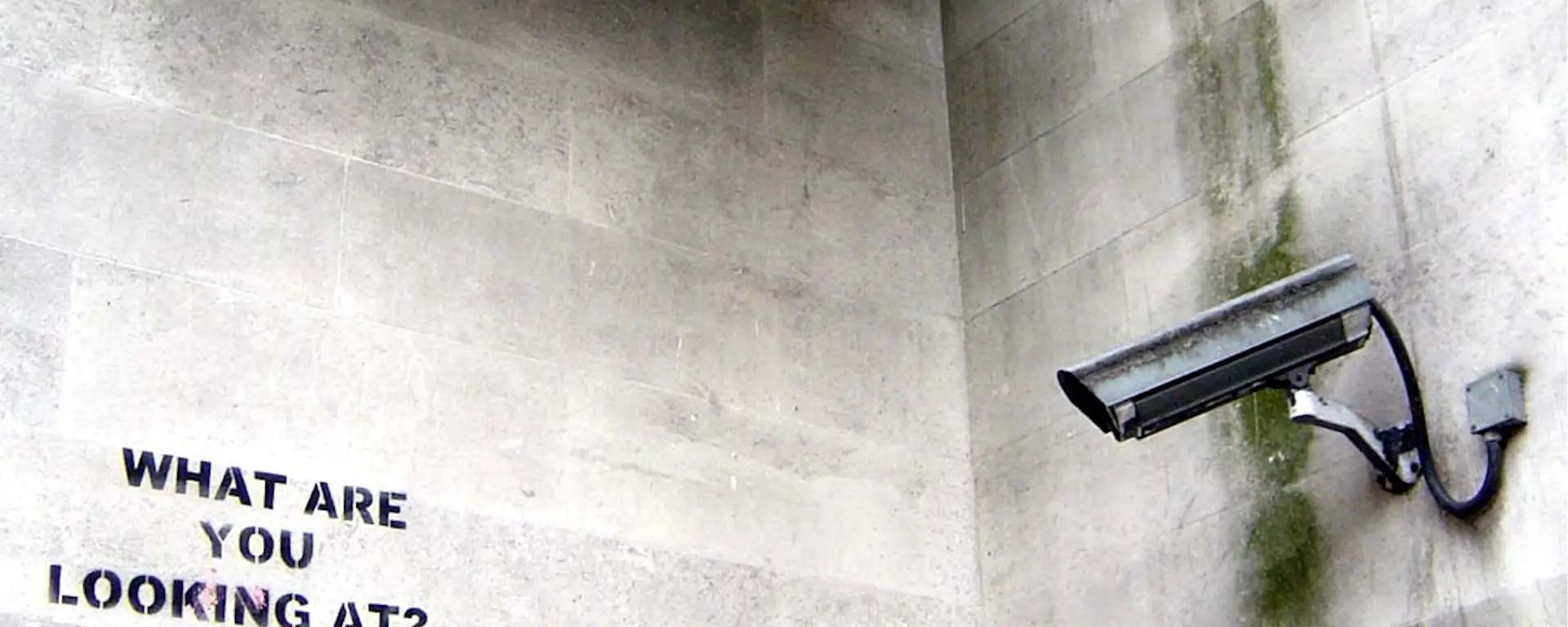
Photo Credit: nolifebeforecoffee, CC BY 2.0.
Author Bio
Andrew Greene is a quality-obsessed, results-driven powerhouse with nearly two decades of experience transforming complexity into clear, actionable solutions. His secret weapon? A mix of analytical sharpness, problem-solving precision and a communication and leadership style that’s equal parts clarity and charisma. From Quality Assurance to political data analysis, you can think of him as the Swiss Army knife of operational excellence, minus the corkscrew (unless it’s a team celebration).