
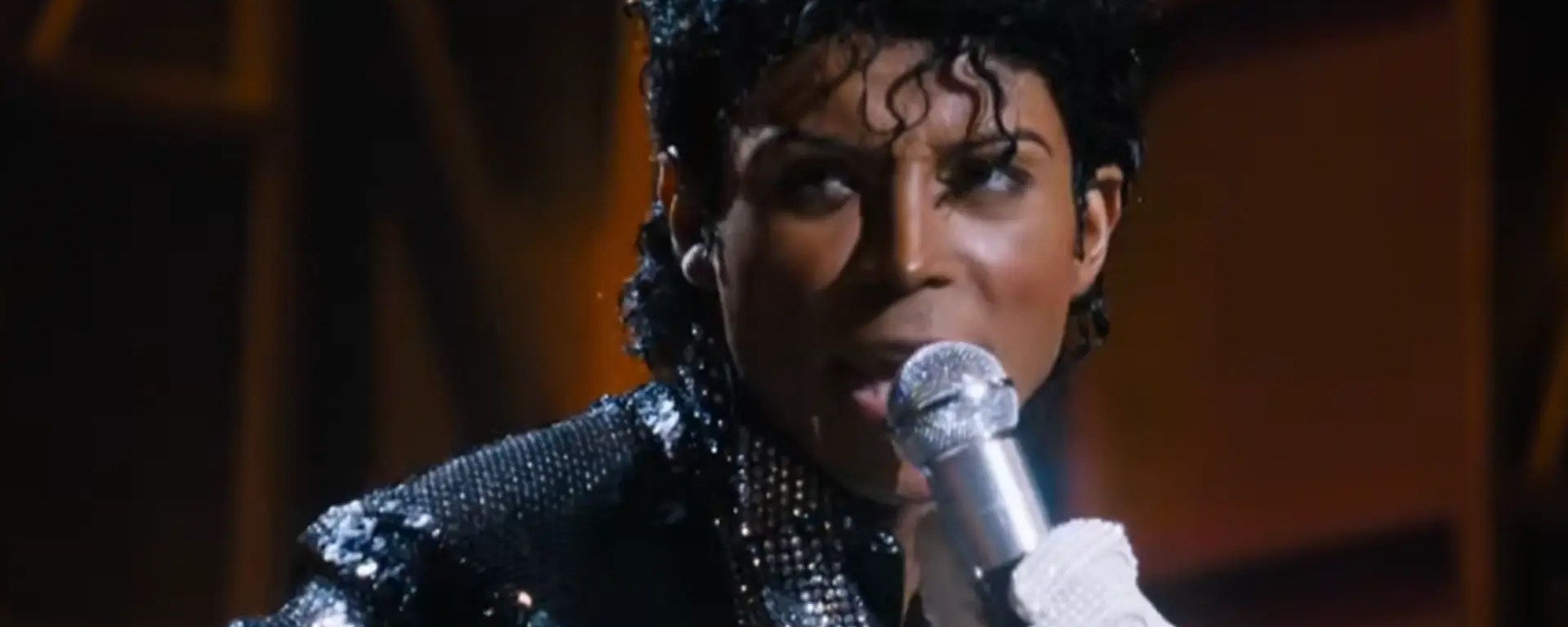
UNITED KINGDOM — Antoine Fuqua’s Michael trailer dropped today, revealing something unexpected: a film that might actually have the spine to examine what it cost to be Michael Jackson rather than just celebrating what he achieved.
The trailer’s throughline establishes its origins in economic hardship. We see Joe Jackson return home through falling snow to a modest yellow clapboard house in Gary, Indiana, his figure darkened, head hanging, carrying a lunch pail. The contrast between the cold blue darkness of the street and the yellow warmth of the house he’s returning to establishes the thematic territory: the man who works brutal hours in the steel mill, who comes home tired and angry, who will channel that frustration into driving his children toward escape from this exact life.
RELATED: Keeper of the Vault: Remembering Michael Jackson’s ‘Dangerous’ Collaborator Bryan Loren
Table of Contents
A Jackson 5 performance sequence establishes the compliance training this system requires. Joe’s demand at the kitchen table, Y’all willin’ to fight for it?”, the call for a louder response, the collective “Yes, sir!” from his boys, is a verbal contract that will bind his children to a life of servitude in the name of stardom. With that set, the training begins in the Jacksons’ living room. On close inspection, we see Joe holding a shoe as he watches his sons perform. And what’s evident is that the trailer doesn’t soften Joe’s language or hide his transactional relationship with his children’s talents. Joe’s goal is explicit, as we hear him say: “We need to capitalise on Michael’s success.”
The Early Years
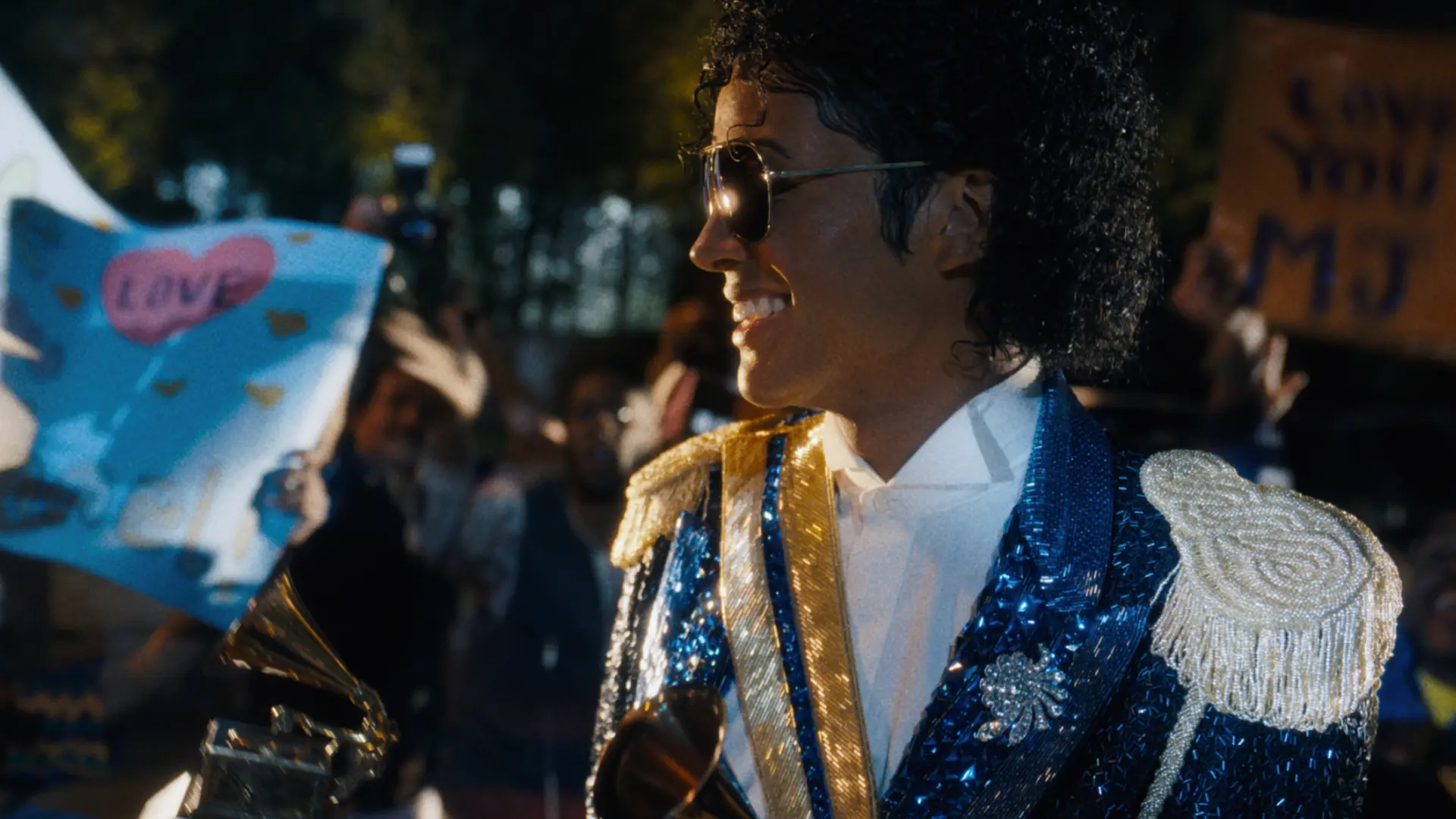
Photo: Lionsgate
When Joe says about his own offspring, “That’s our Coca-Cola. And we need to start sellin’,” the trailer isn’t asking audiences to admire his strategic thinking, but it is showing the moment a father reduced his child to a product, and trusting viewers to recognise what that means. Then we see a close-up on a young Michael’s watchful face through the window, perhaps capturing the cost, as we know Jackson admitted he would watch other children play across the street whilst he was busy working. It then cuts to an older Michael, looking out the window toward the golden horizon — the supposed payoff for his childhood sacrifices.
The Path to Going Solo

Lionsgate
Quincy Jones’s appearance signals Michael’s transition to solo artistry, and the trailer handles this shift with nuance. “Ready whenever you are, Michael” sounds respectful, and perhaps it was. But the film seems aware that benevolent mentorship still involves a power imbalance, still frames the artist as an instrument that needs to be activated; however, when it does, those years of creative suppression come bursting through.
Then there’s the Jackson family meeting sequence, where the trailer is all about the eyes. Joe announces his international tour plans. Michael attempts autonomy: “I need to think.” Joe’s response cuts through the frame: “I told you what to think.” The man’s lion-like eyes could melt steel, and it gave me chills. Colman Domingo is doing remarkable work in just seconds of screen time. Katherine (Nia Long) looks at Michael, then down, her silence saying everything it needs to say about the power dynamics. Then the camera holds on young Michael’s face as he slowly turns toward his father, eyes glossing over with something between fear and resignation.
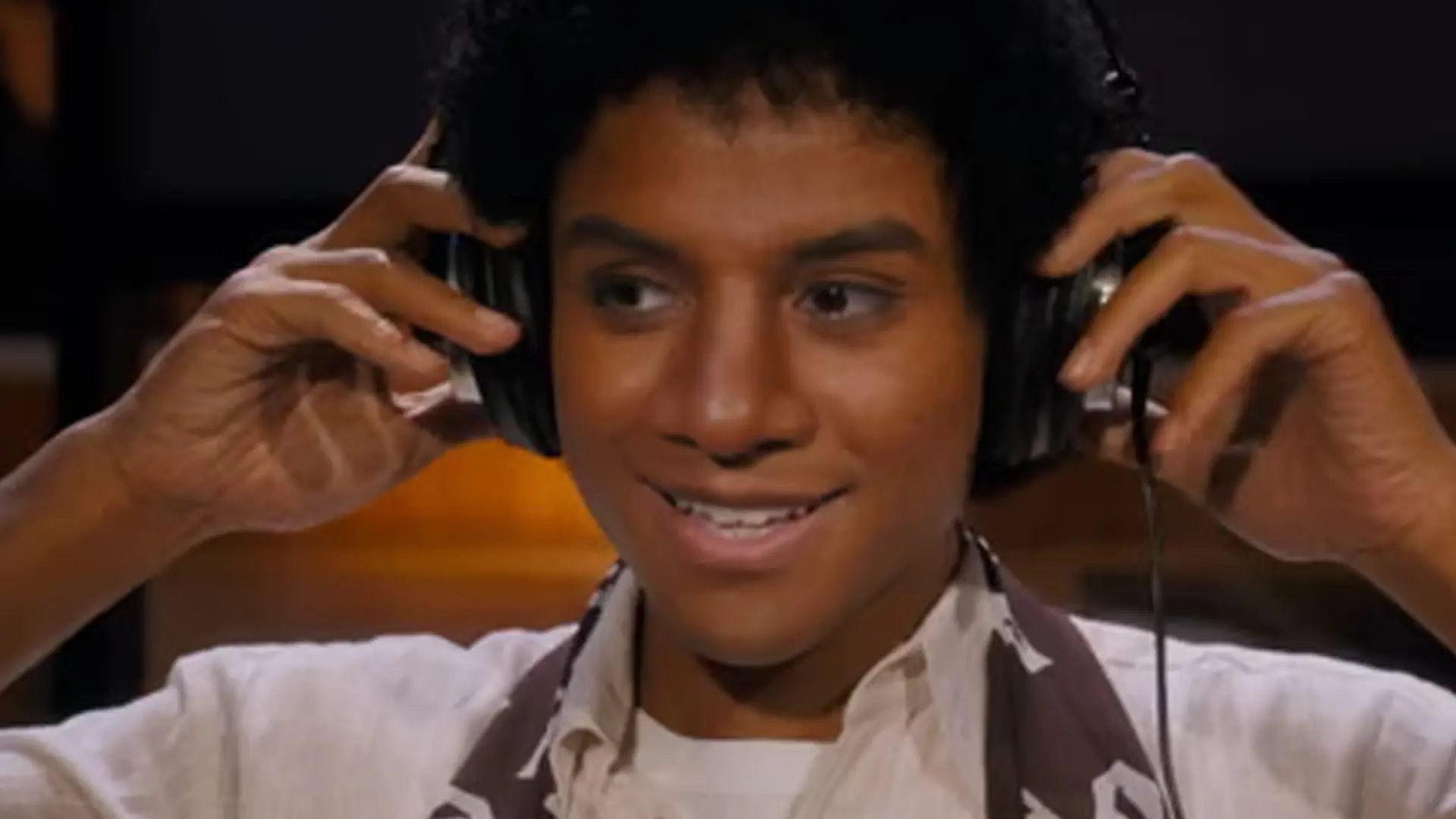
And for a newcomer, Jaafar Jackson conveys more in that single reaction shot than many established actors manage in entire scenes. He’s holding the frame between two powerhouse performers, and the weight doesn’t crush him. You can see the exact moment Michael’s attempt at independence dies, not through dialogue but through that look: the child who’s learned that speaking up only brings consequences. The creative process material walks a careful line. Michael, alone at night, leaving his Hayvenhurst compound: “Just have all these ideas in my head.” He travels inside to his studio, where we see a wall plastered with dozens of yellow notes that relate to his music. The compulsion is visible: “Just gotta get ’em out,” he says.
Jaafar Jackson Shines Bright
Lionsgate
The film presents this as both a genuine creative drive and a potential symptom of overwhelm. We’re watching Jackson work in the early hours whilst most of the world around him slumbers. On a deeper reading, this could be a sign of the chronic insomnia that plagued him, the result of a mind so used to the inconsistent lifestyle of touring and working, and so vivid and racing wildly with imagination. But it feels sophisticated enough to hold both readings simultaneously rather than choosing one. We’ll have to wait to see the final result. But what is for sure is that there’s a price for possessing a creative, restless mind; the off switch is significantly harder to find amongst the clutter.
That sequence is intertwined with a golden hour desert scene that shows Michael with Bill Bray, his longtime bodyguard and father figure, sitting on the bonnet of a dark sedan against the Los Angeles hills. Michael’s confession: “I love my family, but I just wanna do my own thing.” Bill’s response validates him: “Then do it, Michael. You’re not a little boy anymore.” After watching Joe crush Michael’s attempt at independence, the film positions Bill as the father figure who actually encourages agency.
The following sequence shows where that independence led. The frame captures Michael’s world at Hayvenhurst: in the foreground, a magician’s set sits alongside toy cars scattered across the carpet, and colourful feather boas are draped over furniture. Michael reads Peter Pan to Bubbles the chimpanzee (rendered in what appears to be CGI, complete with nappy). Katherine provides the blessing: “I knew you were different the moment you were born.”
The juxtaposition raises the question that the film seems willing to examine. Bill just told Michael he wasn’t a little boy anymore, validating his right to independence. Katherine frames that difference as destiny written at birth. Was Michael’s retreat into constructed childhood inevitable, or the predictable result of stolen normalcy? Or both? What’s clear before us is someone who was granted permission to be an adult but never given the tools.
His Story Begins
Then comes the mission statement sequence, where the trailer’s architecture reaches its most ambitious heights. Michael articulates his humanitarian vision: “I believe music could change the world.” The “Beat It” choreography, the New York street scene with crowds stretching down the avenue, the ecstatic concert faces – the film presents these as evidence that Michael achieved part of what he set out to do. “Spread love.” “Joy.” But then: “And peace.” The trailer cuts to an aerial shot of an ambulance. Michael lies on a stretcher after the 1984 Pepsi commercial fire, with second and third-degree scalp burns requiring multiple reconstructive surgeries. The turning point where peace shifted from difficult to impossible, the beginning of a pain medication dependency that would shadow the rest of his life. After showing love and joy to audiences since childhood, peace is revealed as unattainable because the machinery around him prioritised profit over protection.
The final beats maintain this balance. Close-up of Michael looking upward: “That is what I want the world to feel.” Overexposed shot, backlit, hand reaching toward camera: “Magic.” “Magic” as the final word is more complex than it appears. Magic requires illusion, misdirection, and the audience’s willingness to accept what they’re shown rather than examining the mechanics behind it.
There seems to be an awareness within the film that Michael Jackson, the cultural figure, was constructed as much as reality, but that awareness opens space for critical examination rather than demanding uncritical celebration, which is quite a bold move on the part of Jackson’s estate. The visual approach demonstrates technical competence in period recreation, but more importantly, it proves thematic coherence. The through line isn’t “difficult circumstances produced greatness” but rather “examine what was sacrificed, what was extracted, and what was denied in the pursuit of transcendence, autonomy, and escapism.”
Judging by this trailer alone, they, alongside Lionsgate, director Antoine Fuqua, producer Graham King, and writer John Logan, are not holding back their punches with the material they have. And with rumours of a part two on the horizon, it seems inevitable that this will continue.
RELATED: Why the BAPE x Adidas World Cup 2026 Collab Is the First True “Must-Have” of the Year
Author Bio
As a freelance journalist, Ryan Smith’s work is driven by a commitment to restoring what has long been absent from institutions meant to uphold truth and accountability: honesty and transparency
Alongside his analysis works on the life, career, trials and tribulations of Michael Jackson, whose unfair treatment over the years paved the way for the path he is on, Smith also dissects and examines popular culture, such as books, movies and video games, always aiming to shed light on what’s beneath the surface.

![[THE FILES] : Agent Cody Banks (2003)](https://deckedoutmagazine.com/wp-content/uploads/2026/04/agent_cody_banks_hero_image.webp)