
03/21/2026
Clocking It: The Political Rundown — The Verdict
Earlier this week Halfway Clocked laid out the early warning signs: a president who promised to end wars starting one, becoming the GOP’s disastrous and indefensible war in Iran. A coalition showing its first real cracks. An economic promise, lower prices, colliding with the reality of spiking gas costs.
Today, the verdict is in. And it is not subtle.
The Iran war has entered its fourth week with no end in sight. Iran is now targeting energy infrastructure across the Gulf, global oil markets are in turmoil, and the Trump administration is quietly acknowledging what its critics have been saying since Day One: this conflict was not planned for, not prepared for, and not sustainable.
But the real story, the one that will determine the 2026 midterms and the future of the Republican Party, is not happening in Tehran. It is happening in the polling numbers, in the gas lines, and in the empty spaces where a governing agenda used to be.
The Trap Has Closed
Let’s begin with where the war stands at the moment.
On Thursday, Iran’s Revolutionary Guards claimed they had struck a U.S. F-35 stealth fighter jet over central Iran, the first time American aircraft has been hit since the conflict began. The jet made an emergency landing at a U.S. base in West Asia. Hours earlier, Iran targeted energy facilities across the Gulf, threatening “complete destruction” of allied infrastructure if its own energy sector is attacked again.
The Strait of Hormuz, through which 20% of global oil passes, remains effectively closed. Qatar’s main gas facility, the world’s largest, sustained “extensive damage” from a missile strike. Saudi Arabia intercepted drones targeting its eastern energy infrastructure. Brent crude, which traded at roughly $70 per barrel before the war, is now hovering above $100 and spiking daily.
And Americans are paying the price… literally.
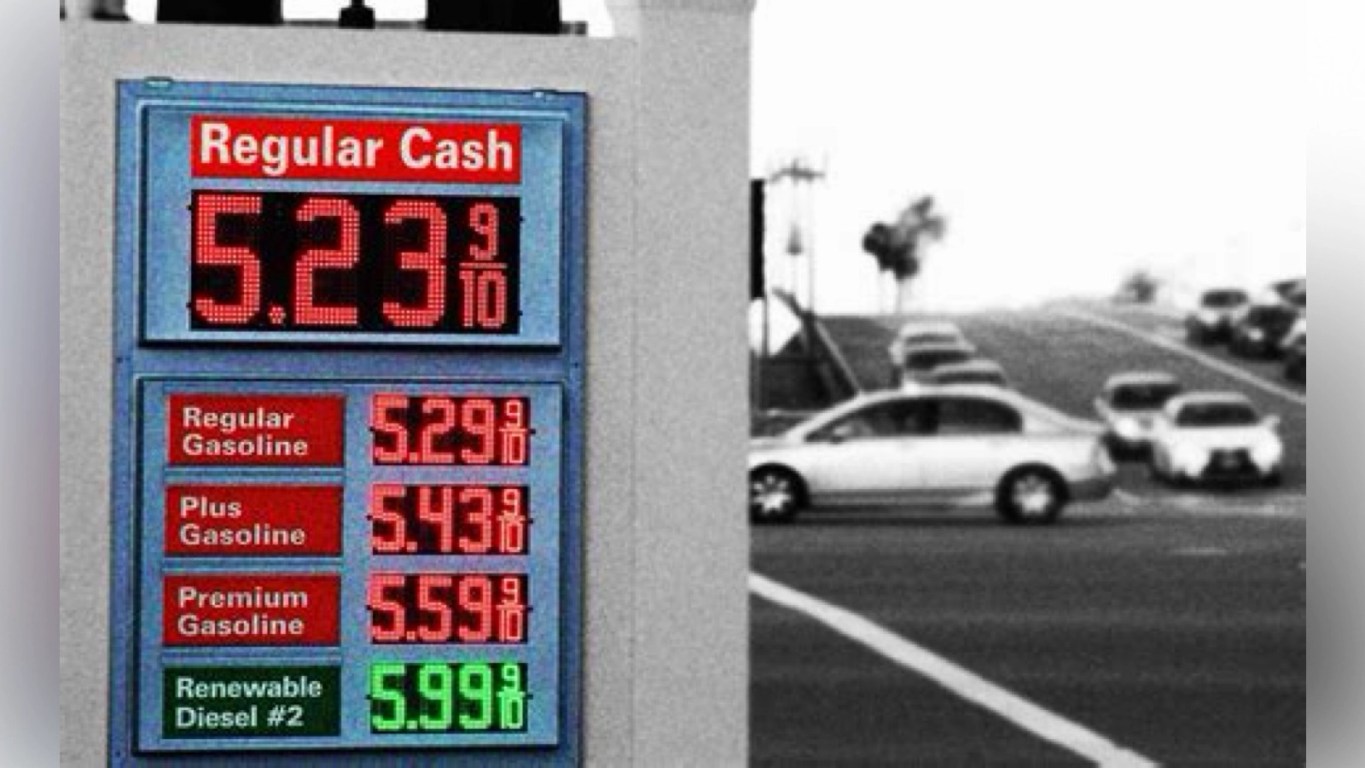
Gas prices have surged 80 cents per gallon in a single month. In California, drivers are paying over $5.20 at the pump. The average family has absorbed $1,200 in additional expenses since Trump took office, with another $2,100 projected over the next year.
But here is the number that should terrify every Republican strategist: according to a Reuters/Ipsos poll released this week, 65% of Americans believe Trump will order troops into a major ground war in Iran. Only 7% support the idea. Senator Elizabeth Warren warned Trump on Friday about ordering American boots on the ground:
Let that sink in. Nearly two-thirds of the country expects the worst. Almost no one wants it. And the president, the man who campaigned on ending wars, has offered no clear explanation for why we are in this one.
What the Polls Actually Show
The political damage is no longer theoretical. It is measurable.
A March 18 Reuters/Ipsos poll finds Trump’s overall approval rating largely unchanged at 40%, up just one point from the days immediately following the strike. But static approval is not good news when you are at war. Wartime presidents typically see rally-around-the-flag effects that boost their numbers. Trump did not get one.
Worse, his coalition is now openly fractured:
· Only 46% of non-college-educated white men, his core demographic, approve of his handling of Iran
· Just 68% of white evangelicals support the war, significantly lower than their support on other issues
· One in five Republicans now disapprove of the war outright
The Economic Noose Tightens
The war’s economic toll is accelerating.
The Department of Defense told Congress last week that the first six days of the war alone cost $11.3 billion . That is roughly $2 billion per day. At that burn rate, a three-month conflict would cost nearly $200 billion, before accounting for the economic drag of sustained high energy prices.
And the prices are not just high. They are destabilizing.
According to Al Jazeera’s analysis, Brent crude could reach $200 per barrel if the conflict continues another three months. Gasoline prices, which lag crude, will keep climbing. Inflation, which had been slowly cooling, is now under renewed pressure. The Federal Reserve, which was expected to cut rates by mid-year, may be forced to hold steady or even raise them.
For working families, this is not abstract. It is the difference between making rent and falling behind.
House Democratic Caucus Chair Pete Aguilar put it bluntly: “This war is not just claiming the lives of men and women in uniform abroad. It’s costing hardworking American taxpayers here at home.”
And here is the cruelty baked into the numbers: the top 15 billionaires got $1 trillion richer in 2025, according to Oxfam. Meanwhile, 33% of American consumers now define financial success as simply being debt-free. The gap between those benefiting from the war economy, defense contractors, oil companies, and those paying for it has never been wider.
The GOP’s Impossible Position
Which brings us to the question at the heart of The Verdict: What, exactly, are Republicans supposed to run on in November?
They cannot run on the economy. Consumer sentiment is near record lows. Job creation in 2025 fell to less than a third of what Democrats delivered the year before. Household debt spiked by half a trillion dollars in the first three quarters of 2025. And now gas prices are eroding whatever purchasing power remained.
They cannot run on tariffs. The Supreme Court just ruled most of Trump’s trade policies illegal under the International Emergency Economic Powers Act. The tariffs that were supposed to protect American workers have been struck down, and refunds are already being processed.
They cannot run on the war. Fifty-nine percent of Americans disapprove of the military action. Sixty-two percent believe Trump should seek congressional approval for any further escalation . Even among Republicans, support is conditional, 42% say they would turn against the war if it leads to significant U.S. casualties. And with 13 service members already dead and 140 injured, that threshold is being crossed in real time. The GOP even ignoring the opportunity to limit Trump’s war powers or even to bring an end to the war:
They cannot even run on the talking points. House Speaker Mike Johnson insists the war is justified because Iran posed an “imminent threat.” But National Counterterrorism Center Director Joe Kent just resigned, citing concerns about that very justification. When your own intelligence officials are quitting over the premise of the war, the messaging collapses.
What is left?
Senate Republicans this week blocked yet another Democratic-led war powers resolution, this one sponsored by Cory Booker, that would have forced public testimony from Secretary of State Marco Rubio and Secretary of War Pete Hegseth . Senator Lindsey Graham called the effort “an abuse of the process” and “cheap politics” .
But blocking debate is not governing. And it is certainly not campaigning.
The GOP’s midterm strategy, insofar as one exists, seems to be a collective shrug and an “oops.”
“We need to focus on what the issues of the people are,” Booker said before the vote, “and put before them a president who promised to bring your prices down and keep us out of wars, who is now bringing us into more wars and driving up our prices as a result.”
That is the message. And the GOP has no answer to it.
The Verdict
Here is the cultural reality beneath the political numbers.
Earlier this week, Halfway Clocked asked what happens when a president who promised to end wars starts one he cannot explain. Three weeks later, we have the answer: nothing happens. No accountability. No course correction. No mechanism that forces a wartime president to justify his choices to the people who are paying for them.
The Senate debates. The resolutions fail. The war continues. The prices rise. The casualties mount. And the party in power, the party that controls both chambers of Congress, offers nothing but procedural obstruction and defensive talking points.
This is not governance. This is damage control dressed up as strategy.
But you cannot campaign on damage control. You cannot go to voters in November and say, “We broke it, but trust us, we’ll manage the fallout.” That is not a platform. It is an admission.
And the voters are already responding. Sixty-five percent expect ground troops. Only 7% want them. Fifty-six percent think Trump is too quick to use force. Only 27% think he exhausted diplomatic options before launching the war.
The gap between what the administration is doing and what the public wants has rarely been wider. And in a democracy, that gap eventually closes, one way or another.
The verdict, then, is not about the war. It is about what the war reveals.
It reveals a president who promised peace and delivered conflict. It reveals a party that promised lower prices and delivered higher ones. It reveals a Congress that has abdicated its constitutional role and now offers nothing but procedural games while service members die and families struggle.
And it reveals a public that is watching, waiting, and remembering.
You cannot vote for “oops.” You can only vote against the people who broke what they promised to protect.
That is the cultural signal this week has sent. Not that the system failed, but that the system’s guardians have stopped even pretending to guard it.
Halfway Clocked laid out the data. This week confirmed the trajectory. And the verdict is final: the GOP is trapped, the war is bleeding, and the only question left is whether voters will deliver the judgment that Congress refuses to render.
Clocked. That’s the tea.
Sources
· BSS/AFP. “Iran targets Gulf energy sites after gas field strike.” March 19, 2026
· Reuters/Ipsos via Vijesti. “Poll shows: About 65 percent of Americans believe Trump will order troops to go to a major ground war in Iran.” March 19, 2026
· Bernama/Anadolu. “Oil Prices Skyrocket, Pushing Gas Prices In US To Surge Amid West Asia Tensions.” March 10, 2026
· Spectrum News/AP. “House GOP insist Iran war is justified, Dems deride costs.” March 17, 2026
· GTV News/CNN. “IRGC Claims First Strike on US F-35 in Central Airspace.” March 19, 2026
· Newsweek. “How Donald Trump’s Approval Rating Has Changed Since Launching Iran War.” March 3, 2026
· Al Jazeera. “How badly has the Iran war hit the global economy? The tell-tale signs.” March 16, 2026
· Fox News. “GOP blocks Booker-led push to curb Trump’s military authority in Iran.” March 18, 2026
About the Author
Andrew Greene is a quality-obsessed, results-driven powerhouse with nearly two decades of experience transforming complexity into clear, actionable solutions. His secret weapon? A mix of analytical sharpness, problem-solving precision and a communication and leadership style that’s equal parts clarity and charisma. From Quality Assurance to political data analysis, you can think of him as the Swiss Army knife of operational excellence, minus the corkscrew (unless it’s a team celebration).